M&A

August 27, 2026 · Jimmy Cho
APS Innovation Buys Irae: Why K-Beauty's Real Bottleneck Is Line Changeover, Not Formulation
A KOSDAQ-listed maker of secondary-battery and display equipment has bought a cosmetics filling-and-packaging automation company for USD 17.7 million, in a deal brokered by a Korean state credit-guarantee fund. It is a small transaction, and it describes where the K-beauty industry's constraint actually sits far better than the export figures do. The thing that stops an indie brand scaling into a new market is almost never the formulation. It is the filling line.

August 26, 2026 · Jimmy Cho
LG H&H Sells Avon North America to Regent for $6 Million: What the Price Actually Measures
LG Household & Health Care agreed on 24 August 2026 to sell The Avon Company, its entire North American Avon business, to Stratford Worldwide, an affiliate of the investment firm Regent, for a reported USD 6 million. LG H&H paid USD 125 million for the business in April 2019 and subsequently lent it a further USD 205.5 million, which it is now converting to equity. The price is not evidence that direct selling has failed — Mary Kay announced an expansion of the same model three days earlier — but evidence that the Avon brand was never a single asset, and that what each buyer actually paid for was the selling operation underneath the name.

August 24, 2026 · Jimmy Cho
Estée Lauder's Dr.Jart+ Writedown: What a Strategic Exit Actually Buys a Korean Founder
Estée Lauder wrote USD 375 million off Dr.Jart+ in fiscal 2025, then ran a sale process for the brand, took bids, and decided in July 2026 to keep it and shrink the team instead. The company's fiscal 2026 results, published on 19 August 2026, name Dr.Jart+ in exactly two places. This is the clearest public record of what happens to a Korean brand after the exit everyone treats as the finish line.

August 21, 2026 · Jimmy Cho
CVC Capital's $212m Silicon2 Deal: Why Global PE Bought K-Beauty's Distribution Layer
On 18 August, CVC Capital Partners subscribed KRW 300bn of new Silicon2 shares — about USD 212m — at a premium, taking 9.23% of a company that owns no beauty brand at all. Six months earlier, Goodai Global had bought the distributor Hansung USA to take its North American supply chain in-house. This piece reads the two deals as the same structural problem solved from opposite ends, and sets out what the aggregator model actually leaves a Korean brand holding.
August 17, 2026 · Jimmy Cho
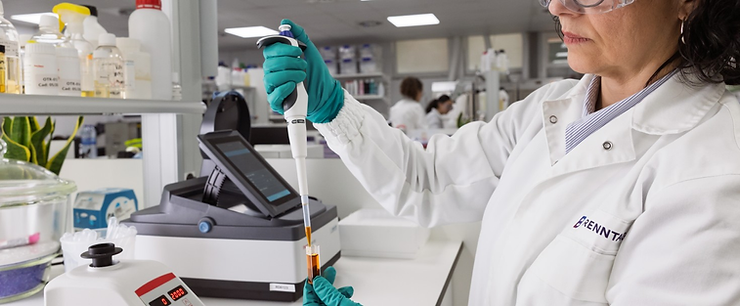
Brenntag's Woojin Trading Deal: Why Global Capital Is Buying the K-Beauty Supply Chain, Not K-Beauty Brands
On 3 August 2026, Germany's Brenntag agreed to acquire Woojin Trading, a Korean beauty ingredients distributor, at an enterprise value KED Global reported at about $35 million. It is the latest in a run of foreign acquisitions targeting the K-beauty supply chain rather than K-beauty brands. The track record of returns over the past three years suggests the buyers have this the right way round: Korean brands bought by global strategics have seen earnings fall, while the packaging and ingredients companies that supply every brand in the category have delivered some of the strongest private equity exits in Korea.

August 16, 2026 · Jimmy Cho
ANVISA Registration Is the Real K-Beauty Bottleneck in Brazil, Not Demand
Korean cosmetics exports to Brazil rose 86.4% in the first half of 2026 to $43.36 million, and President Lee Jae Myung named K-beauty one of three pillars of the Korea–Brazil partnership. But demand was never the constraint. Every cosmetic sold in Brazil must be registered with ANVISA first, and, by the industry's own account, a sunscreen dossier takes six to twelve months — which is the number that actually determines whether Korean brands reach Brazilian shelves.
August 8, 2026 · Jimmy Cho
Kolmar Korea's ReefTox Verification: Why Korean ODMs Now Sell Certification, Not Formulas
Kolmar Korea announced on 6 August 2026 that it is the first Korean company to establish a scientific verification system for coral reef sunscreen safety, through French testing organisation ReefTox. The commercially significant part is not the environmental result but the business model: Korean contract manufacturers are increasingly selling clients the ability to make a defensible claim, rather than selling a formulation. This is the same logic behind Kolmar's thirteen-year investment in US FDA over-the-counter certification ahead of the June 2026 bemotrizinol decision.