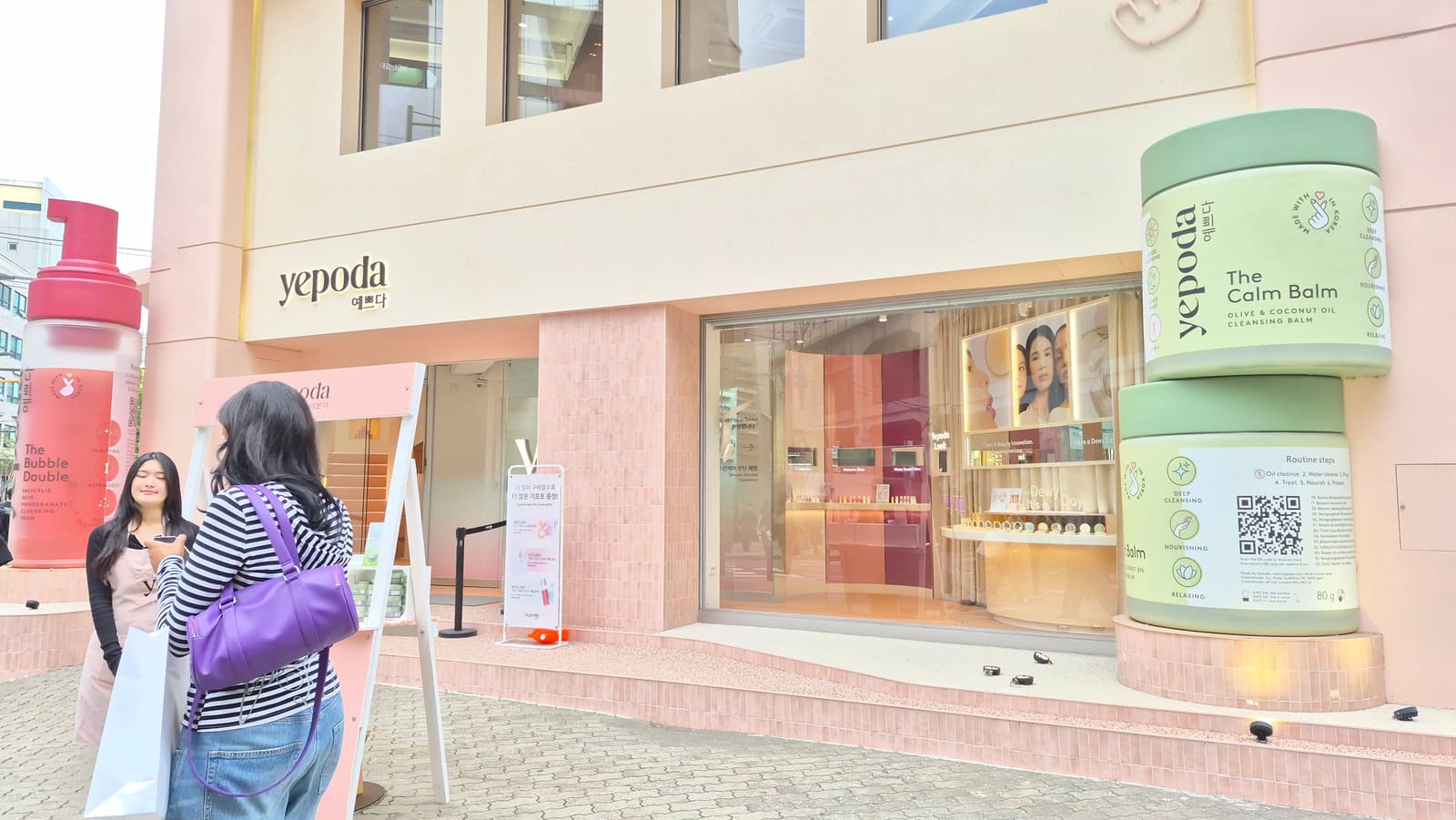
What did Daiso open in Gwangjin-gu on 29 August?
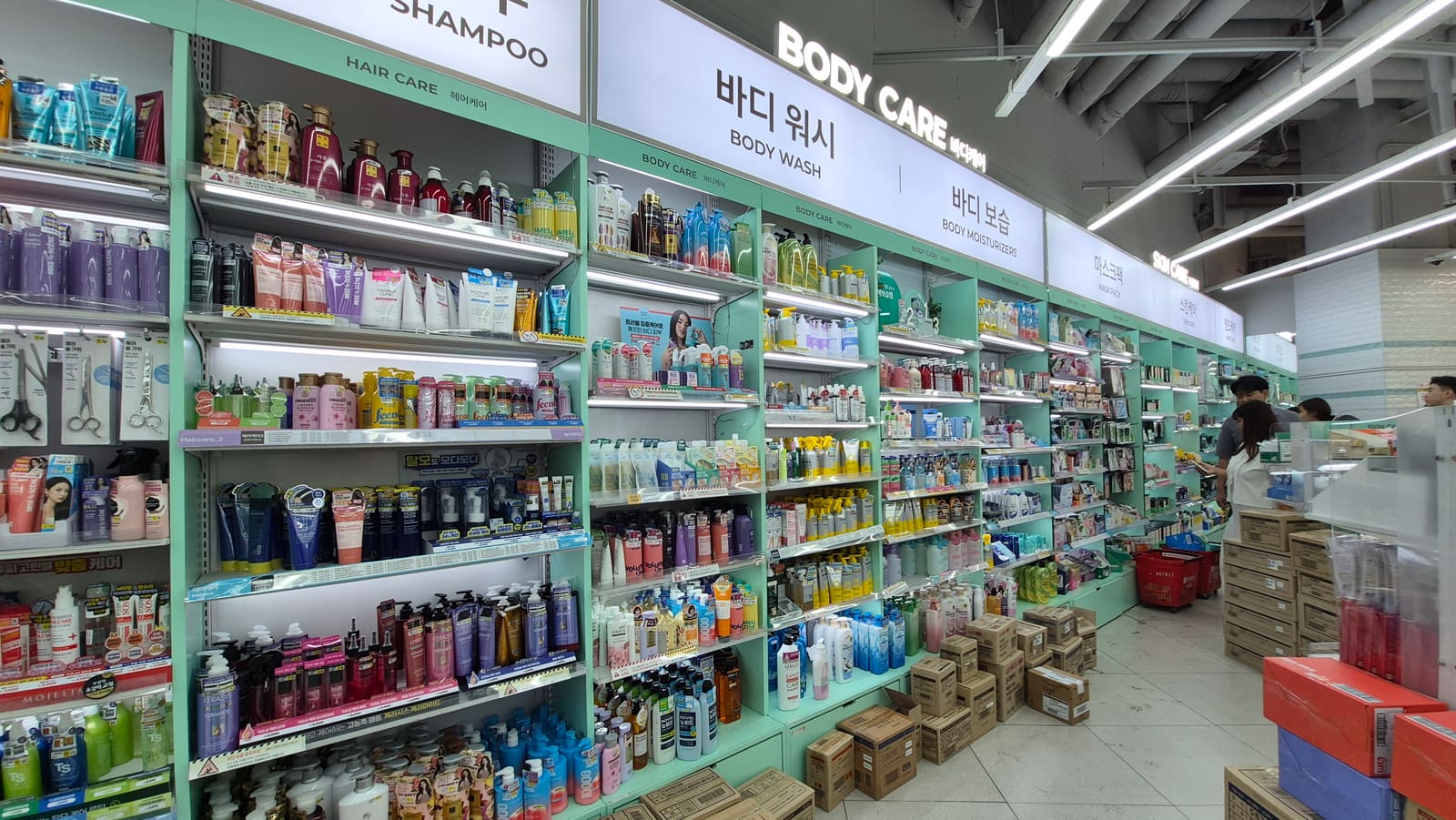
A shop of about 20 pyeong in Jayang-dong, carrying roughly 1,800 different products, about 80% of them beauty.
Both Korean outlets that covered it report that this is the first time the chain has built a store around a single category since the first fixed-price shop in 1997. It is worth being precise about that anchor: the 1997 store traded as Asco Even Plaza under Asung Industries, and the Daiso name only arrives in 2001. The 29-year line is the reporters', not the company's.
The remaining fifth of the range is health supplements, digital accessories, hygiene products and snacks.

Why do two Korean outlets describe the same store differently?
Because they are describing two different things, and only one of them can be the operative account.
Daehan Kyungjae ran an exclusive at 08:39 saying Daiso will pilot the store and then segment its store-opening strategy on the strength of it. Smart Biz published at 12:18 the same morning with the company on the record: Asung Daiso said this opening is not the start of scaling beauty-specialised stores up in earnest, that nothing has been decided about pet or household-goods equivalents, that the Konkuk store is "a shop opened to fit that catchment", and that "nothing has been settled about specialised stores in future".
A pilot that informs a segmented estate strategy, and a one-off fitted to one crossing, are not the same object. The ordering is suggestive — the exclusive first, the company four hours later — but nobody outside Daiso can currently say which account is the operative one, and it would be dishonest to pretend otherwise.
Why does the difference matter commercially?
Because the stakes sit in the arithmetic.
Daiso runs about 1,600 stores in Korea. On the first account, one of them has just become a template and the estate starts differentiating. On the second, one of them has an unusual range and the other 1,599 do not.
A supplier planning next year's Korean distribution needs to know which. Today, it cannot.
How was the product range actually chosen?
This part both outlets agree on, and it is the most concrete thing in the story.
Asung Daiso said the range was set from sales data at two shops it already runs in the same district — the Konkuk University Station store and the Star City Konkuk store — where beauty demand was high. (These are pre-existing shops, not the new one. The new store is the Konkuk store; one of the two outlets conflates the names.)
It narrowed further on the site itself. The shop sits by the crossing linking Konkuk University to the main commercial strip, where a university district meets a restaurant alley and the traffic is students, office workers, women in their twenties and thirties, and foreign tourists. The remaining fifth of the range is what a person on that particular pavement also buys.
An unnamed Daiso official called it selection and concentration, given the size of the store.
For a chain whose proposition has been that every branch carries everything, that is not a small sentence.
Why did beauty get the first category store?
The demand data answers this more clearly than the strategy does.
COS'IN, reporting Embrain's receipt-based purchase panel of 20,000 individuals, put estimated Daiso beauty purchases in the year to March 2026 at 361.96bn won, up 39.6%.
Daehan Kyungjae adds that Daiso's beauty sales rose about 30% between January and July.
These are the numbers that make a beauty-led assortment an obvious thing to try somewhere. They are not, on their own, an argument for trying it everywhere.
Which Daiso-exclusive beauty brands are growing fastest?
The second brands — the Daiso-only lines that established cosmetics companies have built to sit inside the 500-to-5,000 won ladder — grew faster than the category as a whole, up 58.2% to an estimated 85.30bn won.
Those named are Mimo by Mamonde from Amorepacific, CNP by od-td from LG Household & Health Care, BONCEPT from Tonymoly, TAG from Too Cool For School, and 2aN by LUNA from Aekyung.
Women accounted for 71.8% of that and shoppers in their twenties were the largest single band. The steep movements were at the edges: purchases by men up 112.9%, and by shoppers in their sixties up 114.3%.
One caution, and it matters. These are modelled estimates from a consumer panel, not sales. The outlet reporting them headlined the 58.2% as revenue growth, which it is not, and Daiso has published no such figure.
Why the Konkuk district, and where is Olive Young?
Daehan Kyungjae supplies the detail that makes the site selection legible: Konkuk is a district where Olive Young does not operate a flagship, unlike Myeongdong or Seongsu.
So the first category store went into a catchment with demonstrated demand and no dominant incumbent fixture.
That is a sensible place to try something. It is also, by construction, not a representative one — which is worth holding on to before reading the result as evidence about anywhere else.
What does this change for a brand listed in Daiso?
This is a question rather than a forecast, and it should be put to your buyer rather than inferred from a press cycle.
Every second brand named above was built against a national constant: clear the price ceiling and you are in. That is a single decision, taken once, centrally.
A catchment-chosen assortment is not a constant. If Daiso is now setting range from local sell-through — and one store fitted to one crossing is evidence of a method, not of a policy — then does being listed stay one decision, or does it become something closer to 1,600, taken branch by branch on data no supplier can see?
Nothing published answers that. But it is the difference between a distribution plan that works and one that quietly does not.

Is this the start of a rollout?
The company says nothing has been decided — not for beauty, not for pet, not for household goods.
The exclusive says otherwise.
Whichever turns out to be right, a second store, if the Konkuk numbers hold, will probably not be announced as a strategy either. Watch the openings, not the announcements.