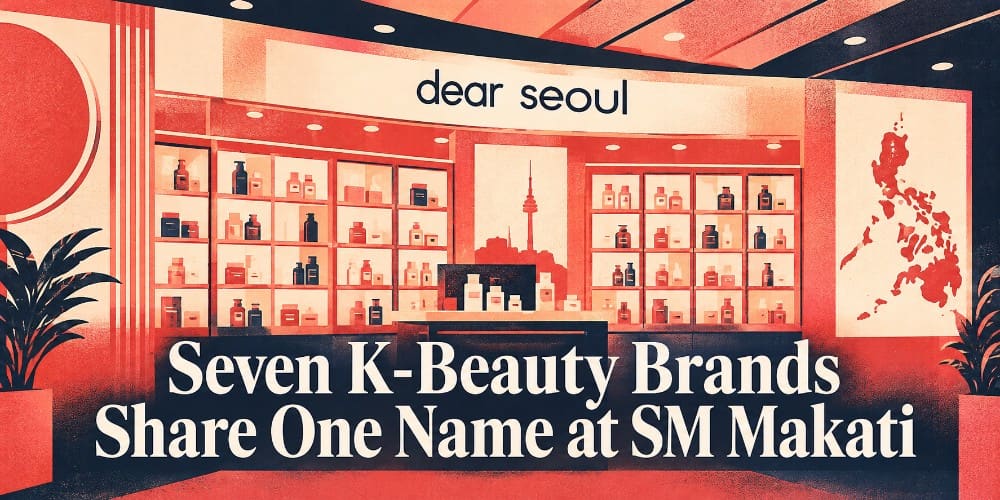
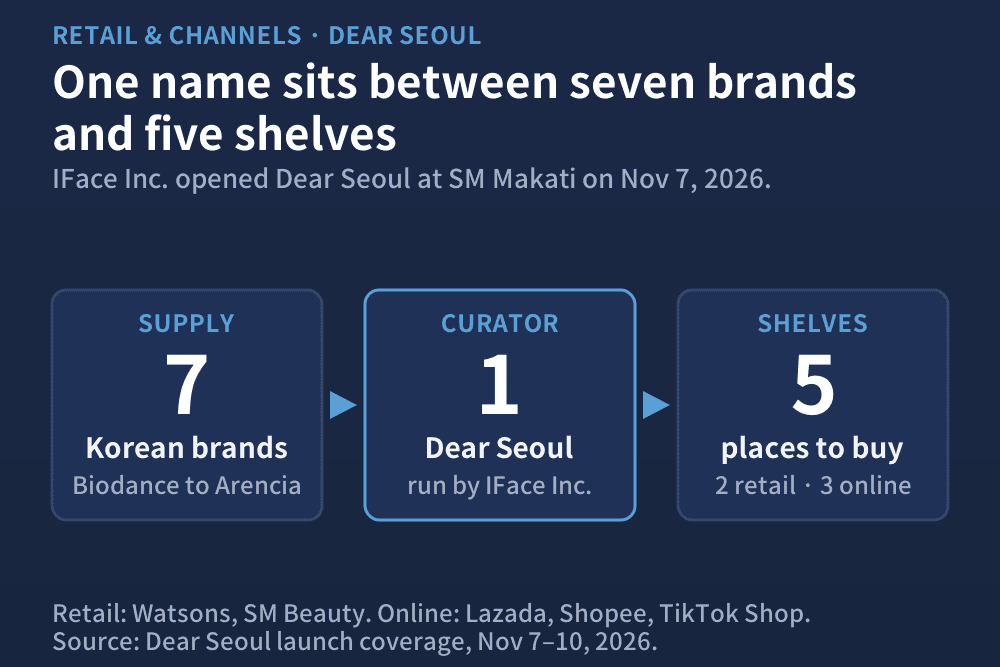
On November 7, 2026, IFace Inc. opened Dear Seoul at SM Makati: seven Korean brands, Biodance and Dear Klairs among them, under one name and sold only through Watsons and SM Beauty stores in the Philippines. Watsons Philippines ended 2024 with 1,166 stores. The seven brands supply the products. The name on the door, the three marketplace storefronts, and the right to rotate the lineup belong to the curator. In this channel, the name a shopper learns is not any of the seven.
What opened at SM Makati on November 7, 2026?
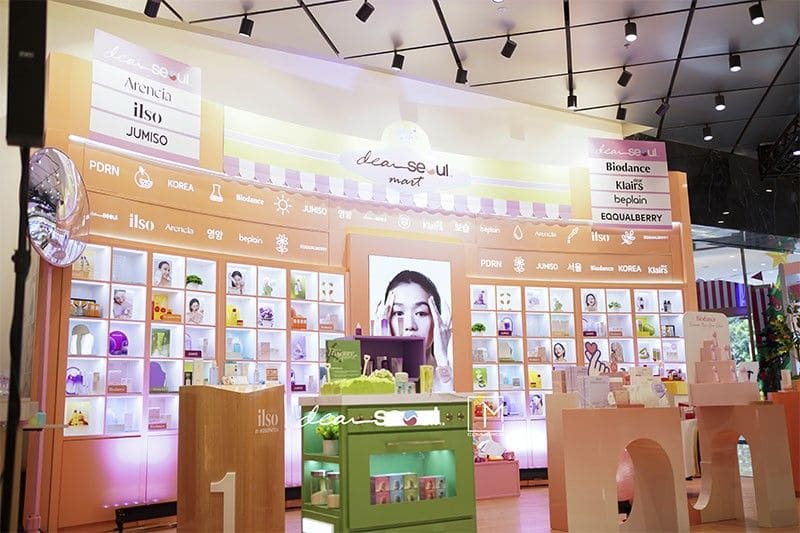
Dear Seoul opened at SM Makati on November 7, 2026. IFace Inc. runs it, and it is billed as a curated Korean skincare concept store, a term that here means a store organized around a selection rather than around one brand's identity. Seven Korean brands sit inside it at launch.
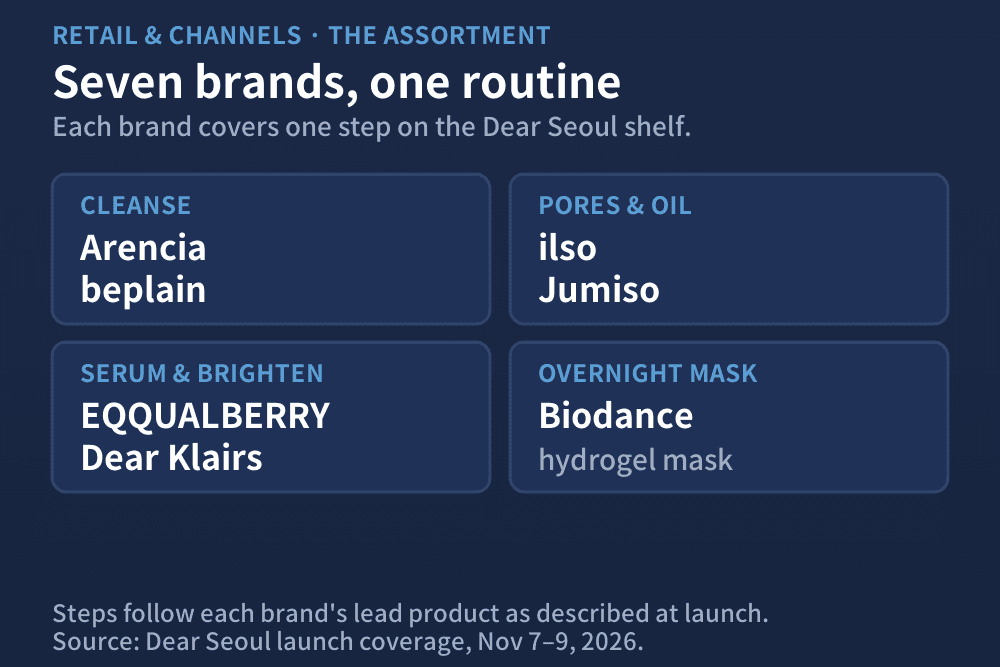
The seven are Biodance, Dear Klairs, EQQUALBERRY, beplain, ilso, Jumiso, and Arencia. Each arrives with one clear job. Biodance brings a hydrogel overnight mask, Dear Klairs vitamin C brightening, and EQQUALBERRY serums. Beplain contributes a mung bean cleansing and soothing line, ilso pore care, and Jumiso niacinamide products for oil control, pores, and dark spots. Arencia sells a three-in-one rice mochi cleanser that works as a wash, an exfoliator, and a mask.
Read as a product list, that is a routine: cleanse, treat, brighten, mask. The assortment is built the way a shopper builds a regimen, by concern, not by brand.
Who stands behind the Dear Seoul name?
IFace Inc. Its chief commercial officer, Angie Goyena, said the store was built to bring the best of Korea to Watsons Philippines. That sentence names the project's customer, and the customer is a retailer, not a shopper.
IFace sits between seven Korean labels and a Philippine retail chain. In retail terms it is a curator, the party that chooses what goes on the shelf and answers for the mix. Goyena said IFace curates the brands that matter right now. The seven are IFace's selection, and the name over them is IFace's too.
A banner is the name a retail format trades under, the sign a shopper recognizes before recognizing any single product. The brands supply the products. The banner supplies the reason to walk in.
Why does “only at Watsons and SM Beauty” matter?
Among physical retailers, Dear Seoul is sold only at Watsons and SM Beauty stores. Exclusivity is the structural fact of the launch: the seven brands reach shoppers through one pair of doors.
Those doors belong to one group. Watsons Philippines operates under a joint venture between the SM Group and Hong Kong-based A.S. Watson & Co. Ltd., and runs three store formats: Watsons Pharmacy, LOOK, and SM Beauty. A Korean brand that wants the Dear Seoul shelf deals with a curator. The curator deals with a retailer built on a joint venture with the SM Group. Every link in that chain is a single counterpart, and the brand sees only the first.
How big is the door?
Watsons Philippines ended 2024 with 1,166 stores, after opening 80 that year, more than 50 of them outside Metro Manila. In the same January 2025 count, SM Beauty operated in 76 SM Stores.
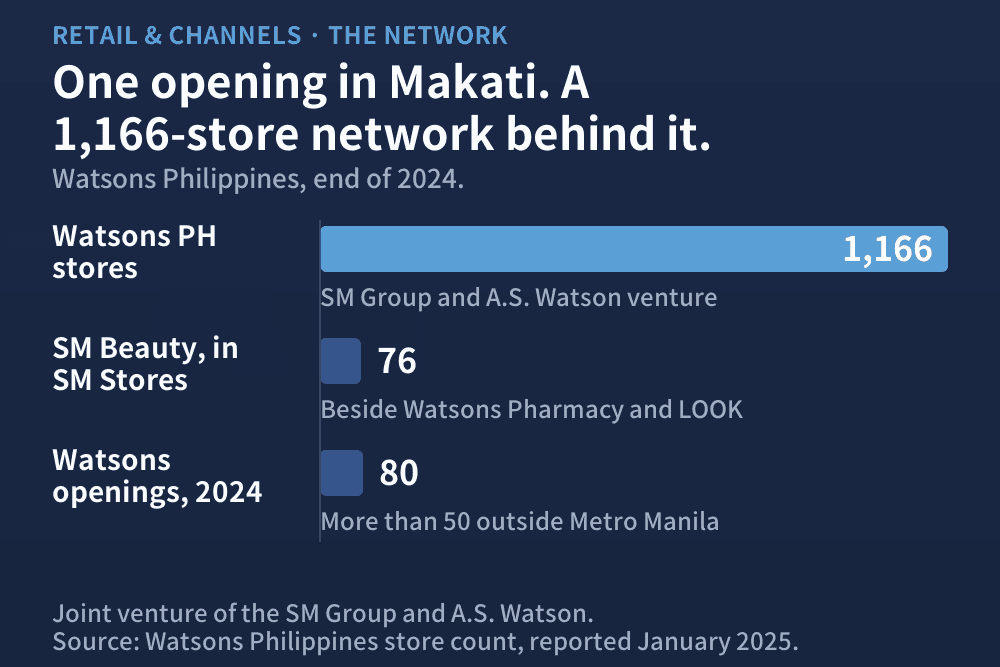
Those figures describe the network behind the banner, not the banner's own footprint. The Makati opening is one location. The network is the asset, and whatever Dear Seoul becomes moves through it, because that network is where the banner is sold.
The provincial expansion belongs in the same picture. More than 50 of the 80 stores Watsons opened in 2024 were outside Metro Manila, so the chain's growth is adding shelves in provincial markets, not only in the capital region. A banner that rides the chain rides that growth.
What does “curated” mean when the lineup is built to change?
The launch coverage says the lineup will change as new Korean trends emerge. Goyena framed the selection the same way: the brands that matter right now. Both statements make one point. Seven is a starting set, not a roster.
A rotating lineup changes the relationship between a brand and the shelf. A brand in a fixed distribution deal expects its place to persist. A brand in a curated banner holds a slot that the curator reviews against what is trending in Korea. The banner stays. The brands move through it.
That is why the name matters more than any single label. A shopper who learns Dear Seoul can follow it to the next brand. A shopper who learns Jumiso can follow only Jumiso.
What are the three marketplace storefronts for?
Dear Seoul also has official stores on Lazada, Shopee, and TikTok Shop. A marketplace storefront is a seller's page inside someone else's platform, with its own reviews, followers, and search ranking.
Count the surfaces: Watsons, SM Beauty, Lazada, Shopee, TikTok Shop. Five places, one name. Each marketplace runs its own ranking and keeps its own review history, so a single storefront name collects a separate record in each. Whatever recognition builds on those pages builds for Dear Seoul, not for the seven brands inside it.
How is a curator's banner different from a retailer that stocks brands?
A retailer that stocks brands competes on assortment and price, and each brand keeps its own name in front of the shopper. A banner competes on its own name, and the brands appear under it. Dear Seoul is the second kind.
For Watsons, the arrangement adds a Korean-specialist layer assembled by someone else. For IFace, it supplies a ready-made network. The country name in the banner does the positioning work: Dear Seoul says Korea in two words, while the seven brand names say it only to shoppers who already know them.
What does each side give and get?
A brand gets entry to the Watsons and SM Beauty network and to three marketplace storefronts through a single counterpart. It gives up the lead name on the shelf and a permanent slot.
The curator gets the name, the selection, and the relationship with the retailer. It carries the job of keeping the selection current, because the banner's value is its choosing.
The retailer gets a Korean assortment shaped by a specialist and commits shelf space to it.
Where do the positions split?
Brands and manufacturers read a banner as distribution. A brand gains reach, and the test is whether its own name travels beyond the shelf it was placed on. A manufacturer behind any of the seven reads it as demand routed through one buyer.
Retailers and channel operators read it as category management with an outside editor. The test is whether the rotation keeps the shelf current faster than the retailer's own buying team can keep it.
Investors and deal teams read it as an ownership question. The asset is the curator's name plus the access it holds, and the equity of each Korean brand sits with that brand.
The shelf name is IFace's. The seven are what is on it.