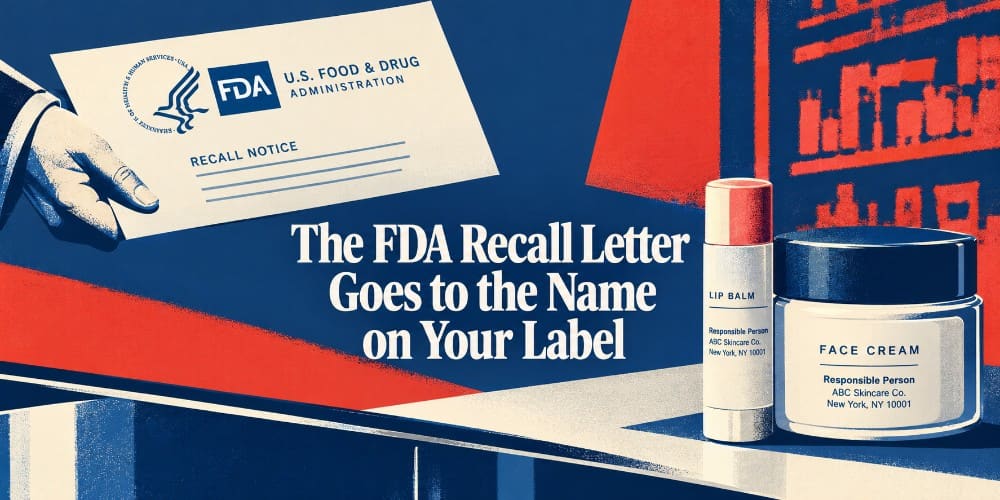
On October 22, 2026, the FDA finalized its guidance on mandatory cosmetics recalls. What is new is the written playbook, and its first rule is short: the responsible person is the manufacturer, packer, or distributor whose name is on the label. That name receives the FDA's first notice. If it goes unanswered, a cease-distribution order follows, and an informal hearing happens within 10 days. The line that decides a recall is not in the contract. It is printed on the package.
What did the FDA actually publish?
On October 22, 2026, the FDA released the final version of its guidance titled Questions and Answers Regarding Mandatory Cosmetics Recalls. It explains how the agency will use a power Congress gave it under MoCRA, the Modernization of Cosmetics Regulation Act of 2022, the US law that expanded FDA authority over cosmetics.
Before MoCRA, a cosmetics recall was a request. The FDA asked, publicized, and pressured, but had no power to order. Now it has that power, and this document is the manual for how.
A draft appeared in December 2025. Trade press reported that the final text carries no substantive changes from it. Anyone who read the draft has read the final.
Is this a new power, or just new paperwork?
The power is not new. It has been in the statute since 2022. The paperwork is the news: for the first time, the procedure is written out in plain steps, in public, with the FDA's name on it.
Guidance does not create new legal duties. It shows how the agency reads the duties that already exist. That is exactly why it matters. A company can no longer say it did not know how this would work.
When can the FDA order a recall?
Not for every mistake. Two things must both be true. The product is adulterated or misbranded, and the FDA finds a reasonable probability that using it will cause serious adverse health consequences or death. Adulterated means unsafe in what is inside, such as contamination. Misbranded means the label is false, misleading, or missing what the law requires.
A typo on a label does not meet the second half. A contaminated batch is the kind of case the second half is written for. The bar is high on purpose, so most brands will never receive an order. The ones that do will not get much time.
Who is the “responsible person”?
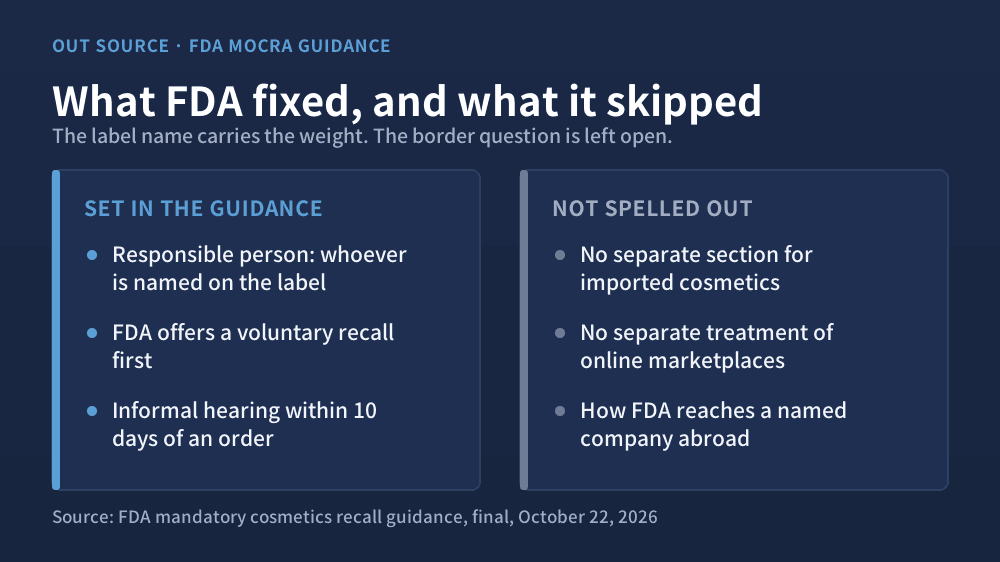
The guidance answers in one line: the manufacturer, packer, or distributor whose name is on the cosmetic’s label. It is a legal label, not a job title. Nobody is appointed. The company picks the name when it designs the package.
Two things follow. A company can be the responsible person without making anything: a distributor whose name is on the label carries the duty. And a brand can carry it without owning a factory. Most K-beauty is built by ODMs, original design manufacturers that develop and produce a product for another company’s brand. Using an ODM does not move the duty to the factory. The duty follows the name on the pack, not the production line.
What happens once the FDA decides to act?
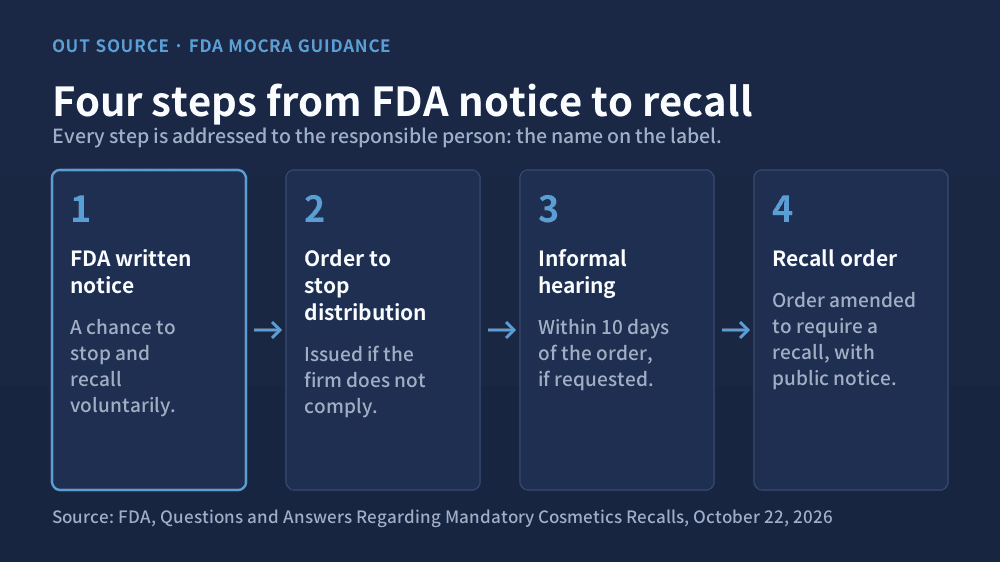
The guidance lays out a sequence. In order:
- The FDA gives the responsible person written notice and a chance to stop distribution and recall the product voluntarily.
- If the company does not comply in the time and manner the FDA sets, the FDA can order it to immediately cease distribution.
- The company can ask for an informal hearing. If one is granted, it takes place within 10 days of the order and covers whether the evidence supports it.
- After the hearing, the FDA can drop the order, keep it in place for a set period, or amend it to require a recall, with notification requirements, a timetable, and progress updates.
The FDA also says it intends to require notice to the public and to those who make, distribute, import, or sell the product, and it can publish its own press release. Ignoring an order can lead to an injunction or criminal prosecution.
What does the guidance leave out?
Imports. The guidance has no separate section for foreign or imported cosmetics. Its rules apply to any product that meets the legal definition of a cosmetic. It does not single out online marketplaces either.
That silence matters because of where K-beauty sells. Amazon told an audience in Seoul on October 27, 2026, that 44% of US K-beauty sales in 2025 went through its store. That is a company figure. Even so, a large share of the category reaches American shoppers through a marketplace, in a package printed overseas. When the FDA’s letter goes looking for the name on that package, the answer to “where is that company, and who reads its mail?” decides how much of the 10 days is left.
Why does the label matter more than the contract?
Because the FDA does not read your distribution agreement. It reads the package. A brand can sign a contract that makes a US importer responsible for recalls. If the brand’s own name is on the label, the brand is still the name the FDA finds. The contract decides who pays whom afterward. The label decides who gets the letter first.
The same name carries other clocks. The FDA’s MoCRA page says the responsible person must report serious adverse events within 15 business days and must list each marketed product with the agency. One name, three obligations. Printing it on a package is a standing promise to answer the phone.
What changes on Monday morning?
Nothing in the law. Plenty in routine. Four checks take an afternoon:
- Read the label. Find the company named as manufacturer, packer, or distributor. That is who the FDA writes to.
- Test the contact. Send a message to the contact printed on the package. See who answers and how long it takes.
- Name one decision-maker. One person who can stop shipments and notify retailers in days, including outside the home office’s working hours.
- Rehearse the order. A hearing inside 10 days leaves no time to write a plan. Write it before the first complaint.
Who carries the cost of an unanswered letter?
The answer depends on where you sit.
- Manufacturers. A contract factory wants clarity on whose name goes on the label, because that name carries the duty. Recall clauses, batch records, and retention periods belong on the first page of a contract, not in the footnotes.
- Brands and buyers. A retailer or marketplace seller wants to know who the FDA will write to before the shelf is filled. A brand wants a name on the pack that can answer within days, wherever the company sits.
- Regulators and investors. The FDA has written its procedure and left the border question to practice. The first mandatory recall of an imported cosmetic will show how that gap is filled. Until then, the diligence question is short: whose name is on the package, and who answers for it?
The FDA writes to the label. Everything else is a footnote.