What opened in Hongdae on 11 September?
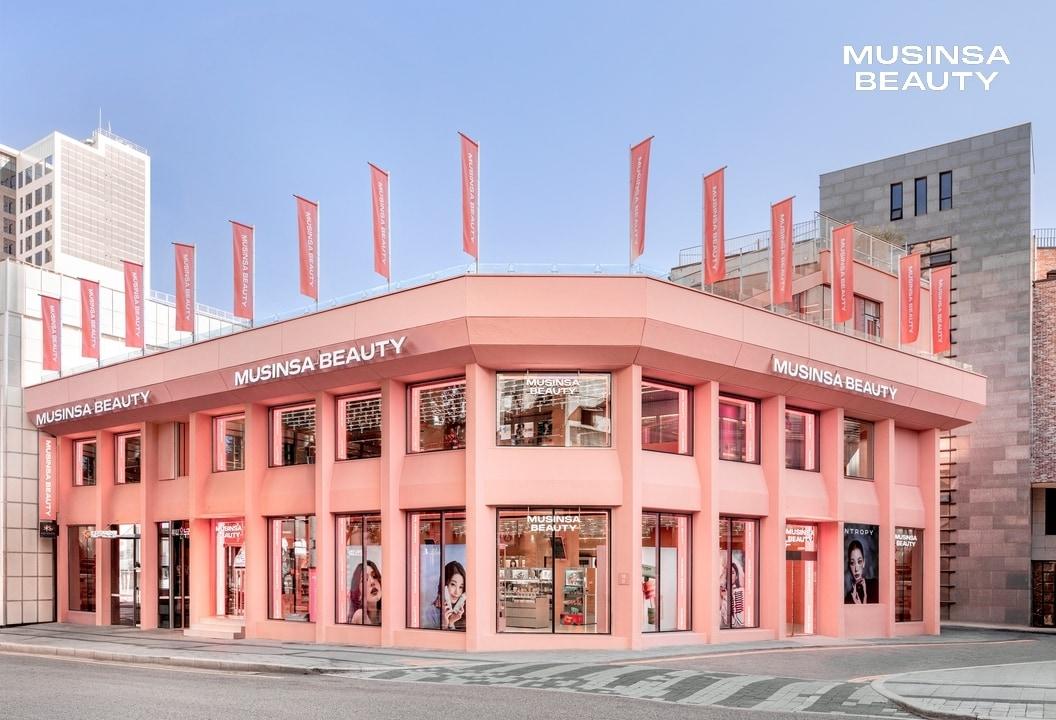
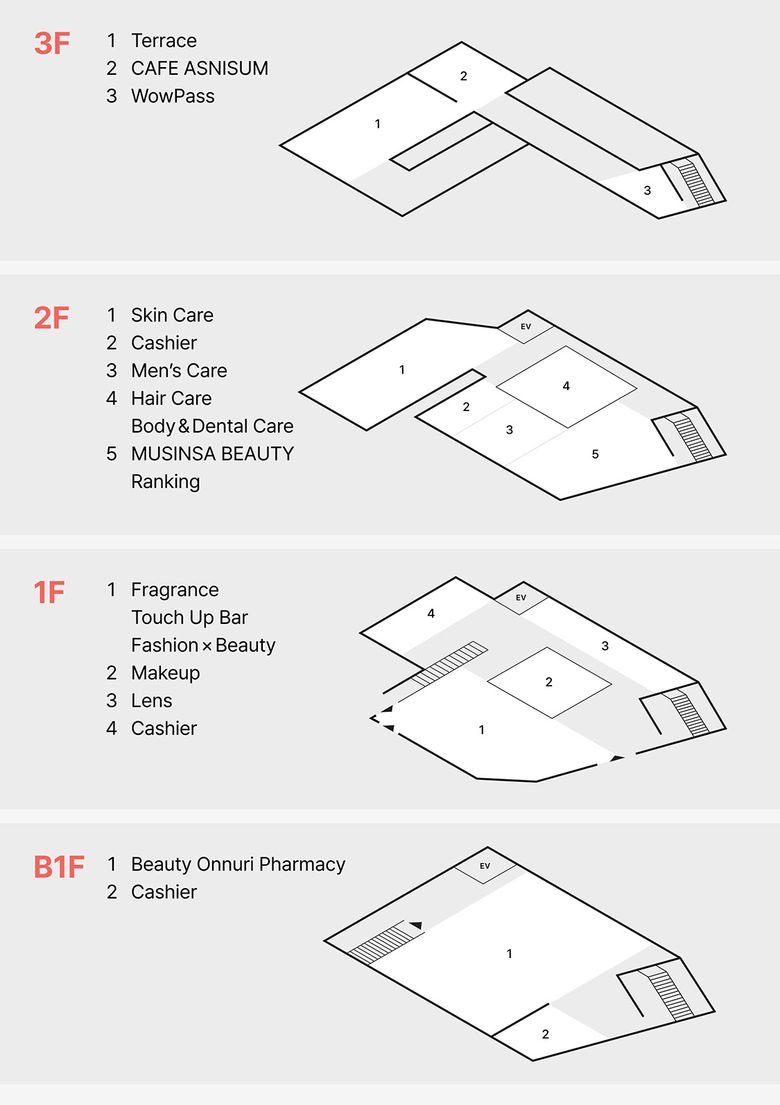
Musinsa Beauty is the beauty arm of Musinsa, the Korean fashion platform. Its first standalone store runs from the first basement level to the third floor, 1,262 square metres in total, carrying roughly 870 brands and about 12,000 products. Around 600 of those brands are curated by Musinsa itself, and about 70% of that curated set are indie labels, meaning brands with little or no offline distribution of their own.
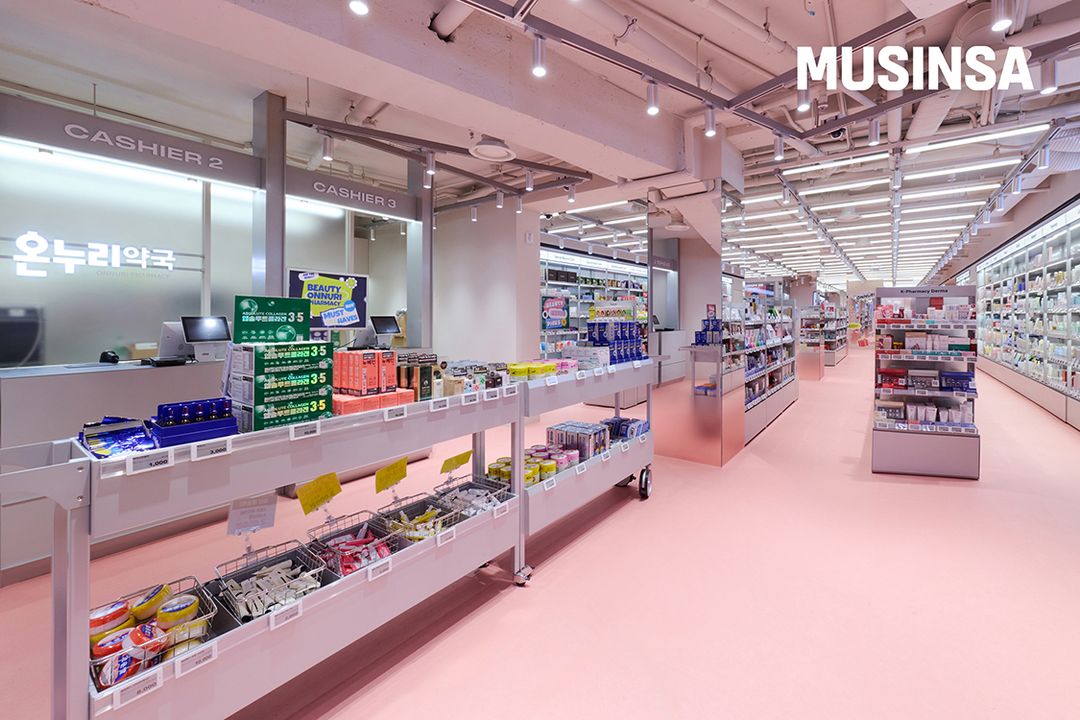
The remaining brands are downstairs. The whole of the first basement level, 176 square metres, is a pharmacy trading as Beauty Nuri, stocking 270 brands and some 2,000 items, of which about 90% are cosmetics rather than medicines. Two or more pharmacists work the floor and it trades from 11am to 11pm.
Read as a store opening, this is a beauty shop with an unusual tenant in the basement. The tenant is the story.

Who actually runs the pharmacy downstairs?
Not Musinsa. Korea registers pharmacies to individuals, not to companies. Article 20 of the Pharmaceutical Affairs Act restricts opening one to a pharmacist or a herbal pharmacist, registration is filed with the district office, and the later clauses of the same article list the grounds for refusing it, all of them concerned with proximity to hospitals: a pharmacy inside a medical institution or on its premises, one carved out of a hospital's own facilities, one joined to it by a dedicated passage.
So the basement pharmacy is run by an independent pharmacist under the Beauty Nuri franchise, and reporting on the opening described that business as separate from Musinsa's own. Musinsa supplies the building and the footfall. The licence belongs to someone else.
This is not a loophole anyone found. It is the shape of the channel, and it decides who can copy the format and how quickly.
Why build a store around a counter you cannot own?
Because the counter supplies the one thing a retailer cannot manufacture. Curation is a claim about taste. A pharmacist's recommendation is a claim about a particular person's skin, made by someone who is licensed to make it and accountable for it.
Musinsa is already good at the part it can do itself. The beauty zone inside its Seongsu megastore opened in April 2026 with 500 brands, and the company reported that daily online transactions for those brands rose 35% within three weeks. It also reported that 83.1% of customers who bought beauty for the first time between January and August 2026 had previously bought from Musinsa in other categories. The platform converts a fashion audience into beauty demand.
What it has never had is clinical authority. In Hongdae it rents that by the floor.
What is pulling the demand, Korean shoppers or foreign ones?
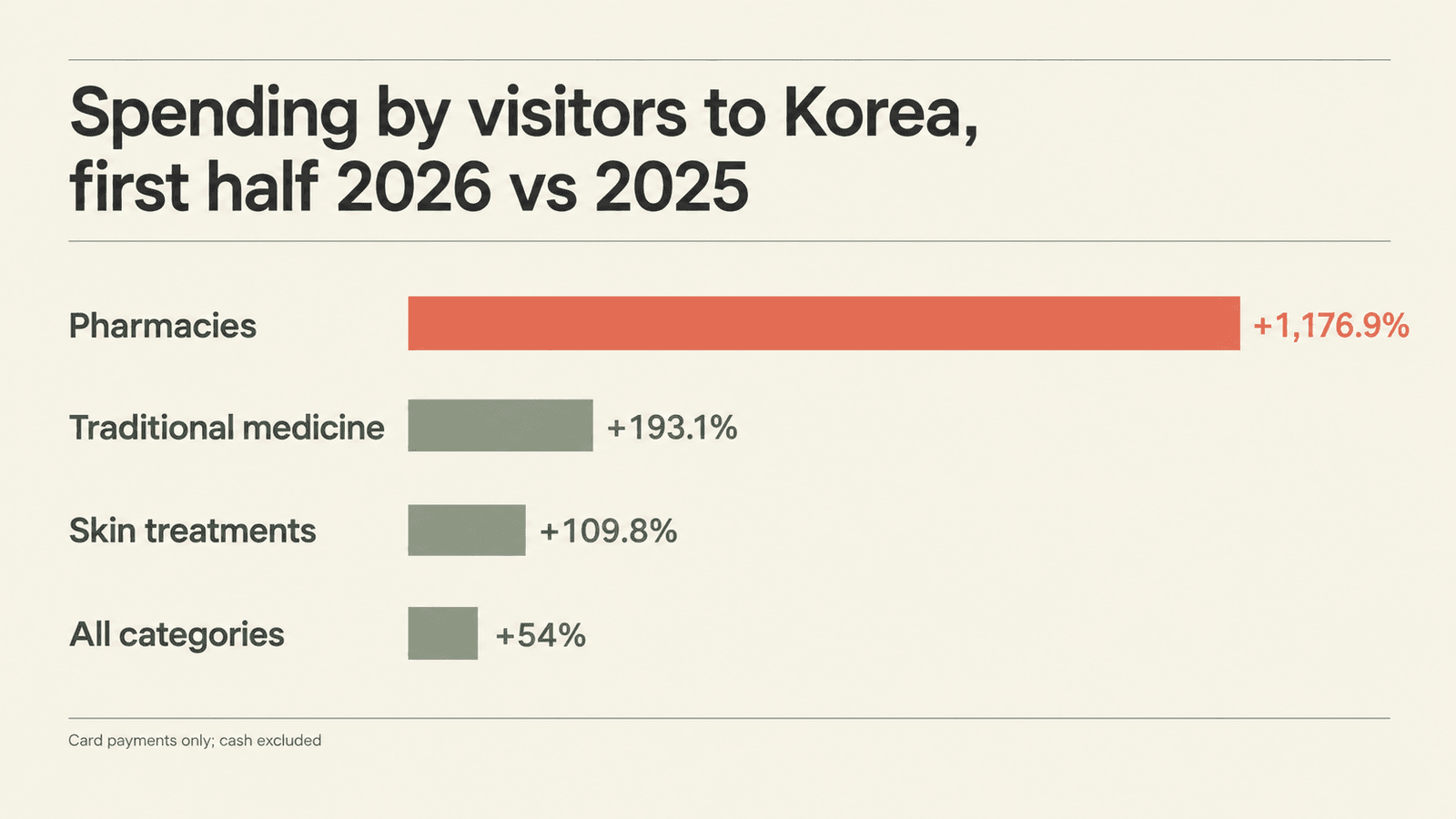
Foreign ones, decisively. BC Card's analysis of first-half 2026 spending by visitors to Korea put pharmacy spending up 1,176.9% against the same period in 2025, while total card spending by those visitors rose 54%. Medical spending nearly doubled, traditional medicine rose 193.1% and skin treatments 109.8%, and plastic surgery's share of the medical total fell from 30.1% to 21.3%. The figures cover card payments only, so cash is missing from the level, and the direction is what carries.
Hongdae is where that traffic lands. Foreign visitors account for 67% of foot traffic in the district, according to the figures cited at the opening.
The composition matters more than the size. A visitor arriving for a dermatology appointment rather than surgery leaves with aftercare rather than a recovery period, and aftercare is bought where medicines are bought. The pharmacy sells both halves of that basket. No beauty retailer sells either half with a licence behind it.
Who else is moving onto the pharmacy shelf?
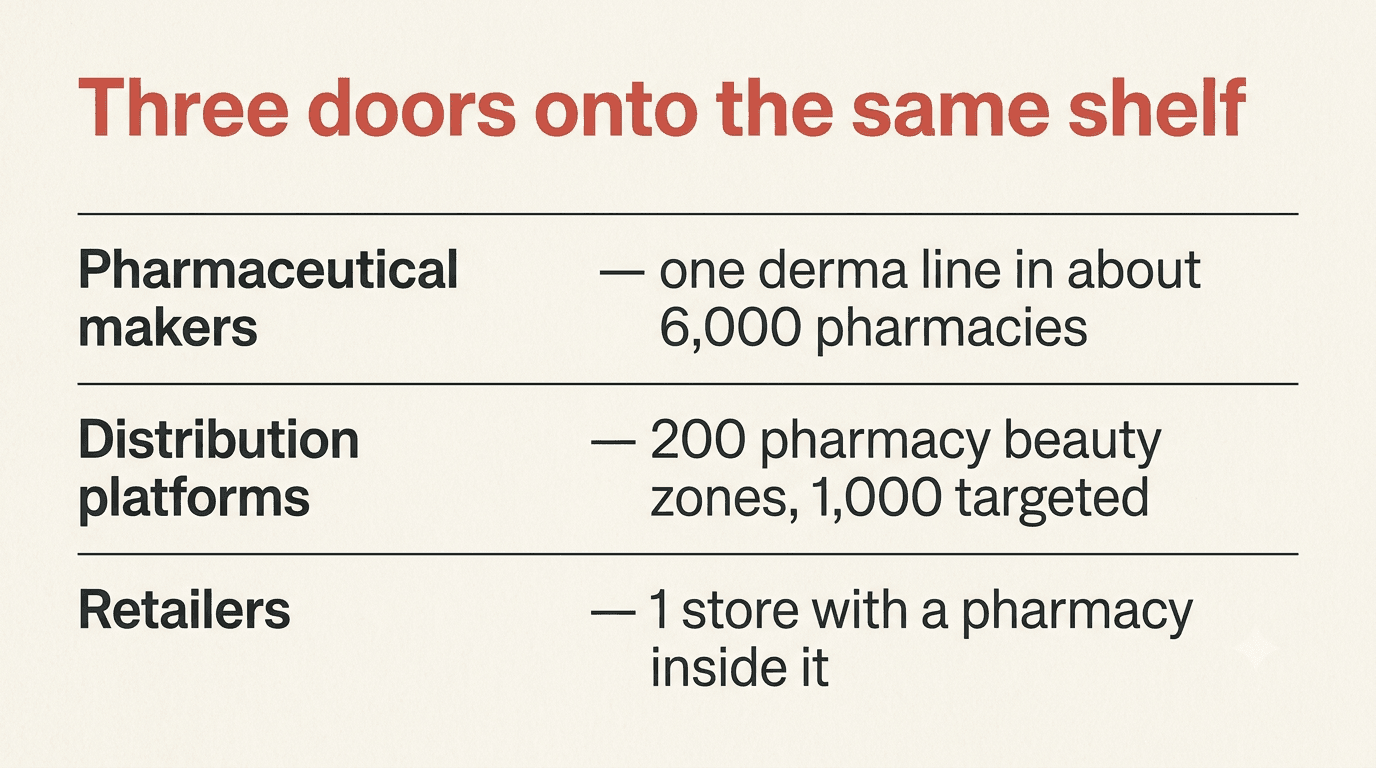
Three groups, arriving from three directions at once.
Pharmaceutical makers are filling the shelf from inside. Dongkuk Pharmaceutical's Madeca Pharmacia line was stocked in about 6,000 pharmacies as of early September 2026, and Daewoong's EzDue and Hanmi's Procam are built for the same channel. These companies already sell through pharmacists and are extending an existing relationship into cosmetics.
Distribution platforms are standardising the shelf from outside. Baropharm's Pharmacy Beauty Zone began in July 2026 with ten independent pharmacies in Myeongdong and Hongdae, passed 100 stores within a month, has since crossed 200, and targets 1,000 before the end of 2026. One brand selling through the format was reported to have raised its sales fourteenfold.
Retailers are the third direction, and Musinsa is the first of them to bring the pharmacy inside its own four walls rather than place product inside someone else's.
How is the incumbent answering?
Not with pharmacies. Olive Young launched an Advanced Derma category in March 2026 and had it running in 650 stores by August, curated on ingredients rather than on trend. Its Myeongdong flagship carries about 1,000 brands and 15,000 products with multilingual staff on the floor.
Scale explains the choice. Olive Young operated 1,369 stores at the end of March 2026, twelve fewer than at the close of the previous year. A format that requires an independently licensed operator cannot be rolled out across 1,369 locations by head office decision, because it does not need 1,369 fit-outs. It needs 1,369 separate pharmacists, each registering their own business, each free to leave.
So the incumbent answers with a category rather than a counter. A category is uniform, cheap to deploy, and owned outright. It also cannot say the one sentence that a pharmacist can say.
Korea tried this in 2004. Why did it stall?
Kolon opened W-Store in 2004 as a drugstore built around a pharmacy, reached roughly 160 franchised locations, and the business was absorbed into Tissuegene in 2017. The format is twenty-two years old and it has already failed once at scale.
What changed is not the format but the customer. In 2004 the proposition asked Korean shoppers to buy cosmetics where they bought medicine, and Korean shoppers had no reason to prefer that. In 2026 the proposition is aimed at visitors who read a pharmacy as a credential before they read it as a shop, and who are arriving in numbers that show up in card data.
Independent pharmacies have noticed the same thing. Chains of beauty-led pharmacies are opening in Myeongdong, Seongsu and Gangnam, and at least one reports more than twice as many followers on its global social account as on its Korean one. The demand is inbound and it is legible.
What does a licence supply that a shelf does not?
Two things. A restricted product set, since over-the-counter medicines are sold nowhere else, and an authorised act of consultation, which is advice a retailer's staff is not permitted to give in the same terms.
That is also the strain in the model. A pharmacy whose stock is 90% cosmetics is being used as a cosmetics store with a licence attached to it. The medicines are not the volume. They are what makes the counter legible to a shopper who is buying trust as much as product.
Authority of this kind is not a renewable resource. It survives while a pharmacist's recommendation is read as clinical judgement. It thins when the same recommendation appears in a thousand standardised beauty zones with the same planogram.
Where does this leave the channel?
For brands and suppliers, Korea now has a second national grid for beauty distribution alongside the specialist chains, and it has different gatekeepers. Winning a category manager and winning pharmacists are different sales operations with different evidence: one wants sell-through data, the other wants an ingredient rationale it can repeat to a customer. A brand that treats the pharmacy shelf as more of the same will be sold by people who cannot explain it.
For retailers, the format resists the arithmetic that retail formats normally run on. A store with a pharmacy in it cannot be multiplied by a property team, because each copy requires an independent professional who owns that part of the business. Musinsa has said its second beauty store follows in Seongsu in November 2026 and a third on Jeju. Whether the pharmacy travels with them is the number worth watching, not the store count.
For regulators and investors, one counter is now regulated as healthcare and merchandised as beauty, with inbound tourist money behind it and 90% of the stock outside the regulated category. That gap is where both the margin and the eventual rulemaking sit.
Musinsa did not open a pharmacy. It leased one and built four floors above it. The shelf moved first, and the store followed.