He Knew Nothing of the Hairdressing World
On a Sunday in 1948, François Dalle was summoned to the Franconville home of Eugène Schueller, the founder of L'Oréal. Schueller kept it brief: Dalle was to remain at the helm of the soap company Monsavon, but he was now joining L'Oréal’s headquarters as well. There were no detailed instructions—just a clear signal that Schueller wanted him close.
Dalle felt flattered, yet thoroughly bewildered. In his memoirs, he captured his sentiment at the time: he knew nothing about the hairdressing industry, nor did he even know what L'Oréal was selling to salons.
The origin story of the man who built a global haircare empire was rooted in his own complete ignorance.
His path to that pivotal moment was a series of fateful coincidences. Born in 1918 in Hesdin, Pas-de-Calais, to a family of brewers, Dalle was originally a law student preparing for the prestigious agrégation exam. World War II upended his legal ambitions. Following France's defeat, a brief stint as a prisoner of war, and months spent drifting between free and occupied zones, he returned to Paris only to find himself unemployed.
An old school connection rescued him from desperation. He reconnected with André Bettencourt, a former classmate from a school run by the Catholic Marist Fathers. (François Mitterrand, future President of France, was also a schoolmate—a single classroom that dispersed young men into the frontlines of French politics and industry.)
Bettencourt was already connected with Schueller and would marry Schueller's daughter, Liliane, eight years later. His crucial move in 1942 was introducing his stranded friend, Dalle, to Schueller.
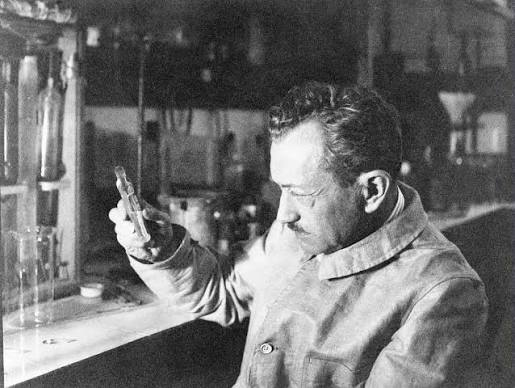
At twenty-four, Dalle entered Monsavon, a small soap factory on the outskirts of Paris, as an apprentice. Soap manufacturing seemed ill-suited for a aspiring lawyer, yet it was there he experienced a fierce desire to throw himself entirely into a cause. He later reflected that this thirst pursued him throughout his entrepreneurial life.
The aspiring lawyer learned soap-making, only to be thrust into learning hairdressing on a sudden Sunday.
His approach to adapting to the field was simple: go directly to the source. At L'Oréal, executives and managers routinely traveled to even the smallest regional salons to demonstrate products—a practice known as faire la route ("hitting the road"). Dalle immersed himself in this culture, later calling it the company's core spirit.
On the road, he noticed damaged hair hiding behind glamourous trends. Brigitte Bardot’s voluminous styles relied on harsh backcombing and heavy hairsprays, while Marilyn Monroe’s signature bleached blonde left strands dry and brittle. Stylists excelled at shaping hair, but lacked the means to restore damaged fibers. Household shampoos were mere degreasers, and consumers believed their hair was healthy whenever chemical coatings smoothed the surface. It was an era when no one questioned the difference between disguising damage and repairing it.
When Schueller passed away in 1957, the thirty-nine-year-old Dalle assumed the role of Chairman and CEO. In 1964, he tasked L'Oréal Advanced Research with designing an entirely new category that did not yet exist in the market. Thus, Kérastase was born in Paris.
The name itself was a statement of identity: a fusion of kéra (keratin, the primary component of hair) and stase (stasis or stability)—a commitment to halting and holding back the degradation of hair protein.
“Savoir saisir ce qui commence” (“Knowing how to grasp what is beginning”).
This phrase became the flagship motto of the L'Oréal Group. Yet Kérastase’s true origin lay in a simple endeavor: a man who knew nothing about hairdressing facing the reality of clients' hair conditions in the field. The brand’s core value—diagnosis—was born from that unvarnished perspective.
Orchestrate Chaos Intentionally
While Schueller left behind the motto "Create, break, build better," Dalle added his own axiom: "Orchestrate chaos." He held that a certain degree of disorder is indispensable to creation, noting that merely managing problems is not a solution, but the very antithesis of entrepreneurship.
This explains why Kérastase never simply flooded the market with new products, but instead systematically dissected individual hair concerns.
Bain Divalent, launched in 1973, was the first proof: the first product to acknowledge that an oily scalp and dry ends could coexist on the same head. In 1979, the brand introduced its first hair mask, followed by the Nutritive line in 1984, establishing a dedicated category for dry and undernourished hair. This granular lineup was not a day-one strategy, but the culmination of accumulated field analysis.
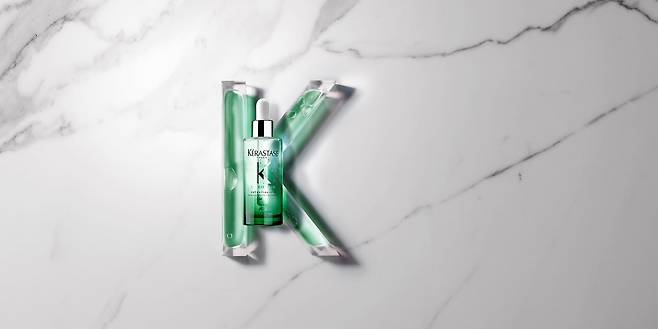
Today, the product architecture addresses hair through three structural components:
- The Foundation (Scalp): The Spécifique line balances the microbiome and reduces scalp stress. It branches into tailored solutions: Symbiose for dandruff and Genesis for hair fallout.
- The Pillar (Hair Fiber Core): The Résistance line injects keratin components deep into damaged, hollow strands to restore elasticity, repairing from within rather than applying a temporary surface coating.
- The Outer Shield (Hair Cuticle): Chroma Absolu, a line dedicated to color-treated hair, smooths and seals cuticles damaged during processing using amino acids and soothing agents.
Ingredient sourcing underwent a similar shift. Components like hyaluronic acid and amino acids are derived through bio-fermentation rather than chemical synthesis, bringing bio-based ingredients to 63% of the brand's raw materials.
This system translates directly to daily ritual: Bain to cleanse impurities, Fondant and Masque to replenish moisture, leave-in treatments to detangle and protect, and serums and oils to refine the surface. This four-step routine transformed mindless daily shampooing into targeted, diagnostic care.

When the Prescriber Vanished
After retiring from executive management in 1984, François Dalle passed away in 2005. Following his departure, Kérastase expanded globally, but this growth diluted a founding pillar: expert salon diagnosis.
As brand recognition surged, unauthorized distributors diverted salon products onto online marketplaces. Sold without professional analysis, consumers frequently purchased items ill-suited for their hair or scalp, leading to poor results and eroding brand trust. The product containers circulated, but the founder's principle of precise professional diagnosis was lost.
In response, L'Oréal’s Professional Products Division (PPD) instituted strict distribution controls, restricting sales to authorized vendors and applying tracking codes to monitor and penalize unauthorized diversion.
Kérastase then expanded directly into official e-commerce platforms and selective retail channels like Sephora and Douglas. Rather than restricting sales strictly to salons, the brand broadened consumer access while redefining its operational standard.
The core challenge shifted from where products were sold to who performed the diagnosis. Salons evolved from simple retail points into specialized spaces for precision diagnosis—modernizing the founder's vision that a product delivers true value only when paired with expert insight.

Authority Springs from Acknowledging and Correcting Errors
One-size-fits-all solutions are convenient, but rarely effective. This reality drove Kérastase to segment its lines by specific hair concerns. However, granular product lines risk confusing consumers and triggering skepticism about sales tactics. Dalle recognized that product segmentation holds value only when preceded by accurate diagnosis; without it, targeted treatments are mere commercial gimmicks.
The history of Kérastase’s diagnostic tools reflects this philosophy. From the Kérascope in the early 1960s to today's in-salon K-Scan precision diagnostic system, the persistence with diagnostic hardware was never about technological grandstanding.
The true value of these devices lies in realizing Dalle’s field-first philosophy and willingness to acknowledge error. The spirit of faire la route—executives visiting salons to listen to hairdressers—evolved into diagnostic systems that augment a stylist's evaluation. Headquarters shifted from issuing top-down directives to empowering field professionals to make precise decisions.
Dalle believed true authority stems not from flawless execution, but from the humility to recognize and correct mistakes. Diagnostic devices transparently display before-and-after comparisons, serving not just to highlight product performance, but to candidly test initial assessments. In Dalle's legacy, only those willing to question and refine their own diagnostic process earn the right to prescribe solutions to clients.
Dalle Left Behind More Than a Product Prescription
François Dalle never lived to see the Burgos plant become a model of sustainable manufacturing. It was in 2017—twelve years after his death in 2005—that the facility in Burgos, Spain, achieved a closed "Waterloop" system that recycles 100% of its industrial water.
Responsible for manufacturing 97% of Kérastase products, the Burgos plant achieved carbon neutrality in 2015 using 100% renewable energy powered by biomass and solar systems. Since 2017, all water used for equipment cleaning and steam generation has been endlessly recycled, limiting external water intake strictly to product formulations and drinking water. In 2020 alone, the plant conserved 32 million liters.

Packaging methods similarly broke with tradition. The brand introduced refill pouches that use 82% less plastic per use compared to producing two standard bottles. Since October 2021, all retail shampoo bottles (excluding caps) have been crafted from 95% post-consumer recycled (PCR) plastic. By 2023, 96% of new products were eco-designed, eliminating 1,110 metric tons of virgin plastic. Kérastase committed to incorporating Green Science technologies across its portfolio by 2030, while parent company L'Oréal pledged to transition 100% of its plastic packaging to recycled or bio-based sources by the same year.
Corporate sustainability claims often devolve into marketing fluff. Yet Kérastase's problem-solving approach mirrors its founder's ethos: rather than masking symptoms with temporary fixes, it acknowledges limits, investigates root causes, and reinvents systems from within.
Dalle left behind far more than a set of product formulas. Unfamiliar with the world of hairdressing, he questioned everything endlessly—and embedded that spirit of inquiry into the company's DNA. Over six decades later, those questions extend beyond hair and scalp to our shared planet.
Ultimately, the question turns back to us. Standing before the mirror each morning, how deeply do we understand our own hair and scalp? Without distinguishing between temporary coverage and fundamental restoration, any product merely grazes the surface of the problem. True transformation begins with assessing our condition accurately and accepting what we do not know—just as one man began a journey on a Sunday in 1948.