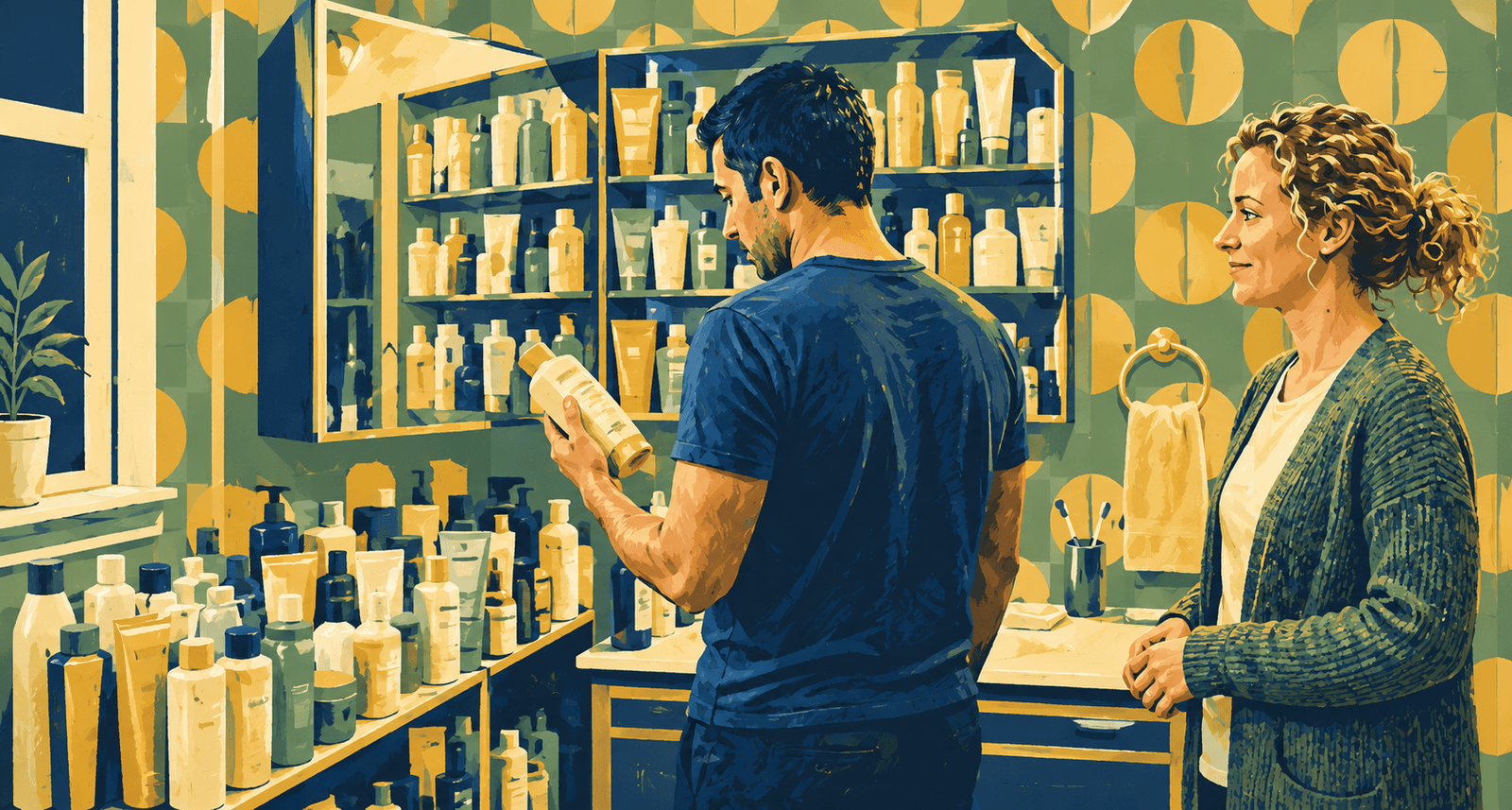
Every great innovation begins with a simple, sharp question. Suveen Sahib was already a successful entrepreneur, running the innovative hair towel brand AQUIS alongside his wife, Britta Cox. One day, staring at the sheer volume of products cluttering their bathroom, Suveen turned to her and asked:
"Britta, do these products actually work? We use them every day, but why does hair texture never truly change?"
Britta laughed bitterly.
"Well, they just coat the hair in silicone to make it feel smooth temporarily. It’s basically an illusion. In this industry, the accepted wisdom is that once hair is damaged, it’s gone for good."
To Suveen, who came from a tech background, this approach was deceptive. Instead of applying a temporary patch to cover up a bug, he believed in rewriting the underlying source code. Sensing the limits of conventional cosmetic chemistry, he turned his focus to molecular biology. He assembled a team of leading European protein engineers, only to be met with widespread industry skepticism. Cynics argued that reconnecting broken protein chains in hair—which consists of dead cells—was a biological impossibility. But Suveen sensed that behind that wall of impossibility lay a massive, untapped market.
Ten Years of Solitude: Crossing the "Valley of Death"
A typical beauty brand takes one to two years to launch a new product. They mix trending ingredients, pour them into sleek packaging, flood the market with advertising, and watch sales roll in. Suveen and Britta chose a radically different path. They spent ten full years strictly on research. For a startup, enduring a decade with zero revenue and skyrocketing R&D costs meant traversing the ultimate "Valley of Death."
One evening, as their capital was running dangerously low, Suveen sighed. "It’s been seven years. Does this amino acid sequence we’re chasing even exist? We’re running out of funds." Britta took his hand. "We aren't just making a product; we're uncovering the truth. If AQUIS was a physical solution, this is the biological completion. Let’s go just a little further."
A camel walking through the desert does not doubt the oasis; it simply keeps walking. They began by mapping out the entire keratin protein structure that makes up human hair, analyzing all 1,242 amino acid sequences one by one. It was a painstaking journey to find the exact key capable of penetrating deep inside damaged hair to reconnect broken molecular chains. Though peers urged them to cut their losses and stick to their towel business, they held firm in their belief in biomimetics—convinced that if they could replicate nature's exact design, hair could be restored to its original, undamaged state.
Over millions of years, living organisms evolve to find the most optimal structures. Just as medical adhesives were inspired by the way mussels cling to wave-battered rocks, Suveen and Britta fought to find the optimal biological code for self-healing hair hidden within human genetics. What sustained them through ten years of intense financial pressure and relentless skepticism was not the pursuit of a quick profit, but an obsessive commitment to shifting an entire industry's paradigm.

Eureka: The Birth of K18Peptide™
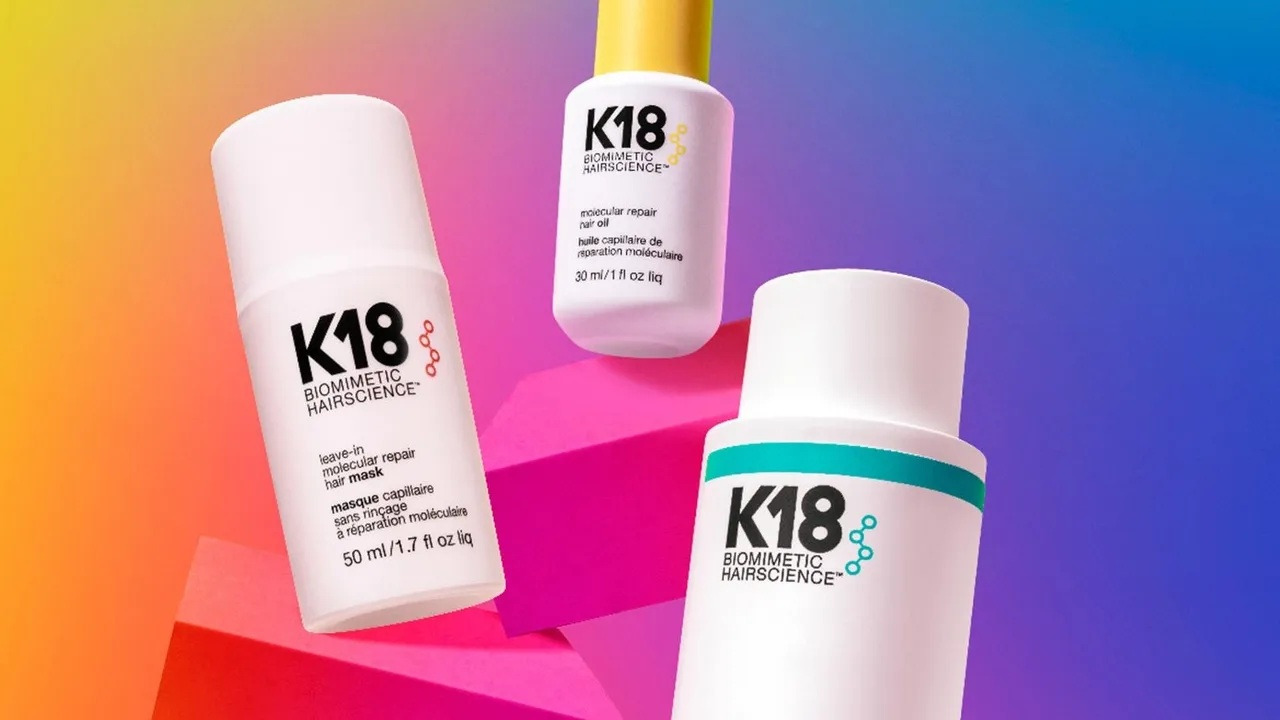
A decade of relentless focus finally yielded a breakthrough. The research team successfully targeted the cortex—the innermost layer of the hair shaft. Rather than merely smoothing the surface, they reconnected broken polypeptide chains and identified a unique amino acid sequence capable of restoring the disulfide bonds that support these chains. This marked the birth of K18Peptide™, an innovation that sent shockwaves through the global beauty industry.
The core of this technology lies in its permanence and simplicity. While traditional products act as temporary patches, K18 rebuilds the actual side ladders of the broken protein chain. The application process takes just four minutes on damp, freshly shampooed hair—no rinses, conditioners, or leave-in treatments required. Because it isn't washed out, the active peptide remains deep inside the hair shaft to continuously restore its structural integrity. Suveen described this breakthrough as the "digitization of beauty": fundamentally fixing core architecture without unnecessary steps.
Where traditional haircare was an "analog overwrite" that reset with every wash, K18 operated like an "OS update," altering the hair's underlying structure. Consumers no longer had to sit through hours of ineffective salon treatments. Watching molecular-level repair take place in just four minutes was a revelation for an eager market.
The Worst Timing, The Ultimate Turnaround
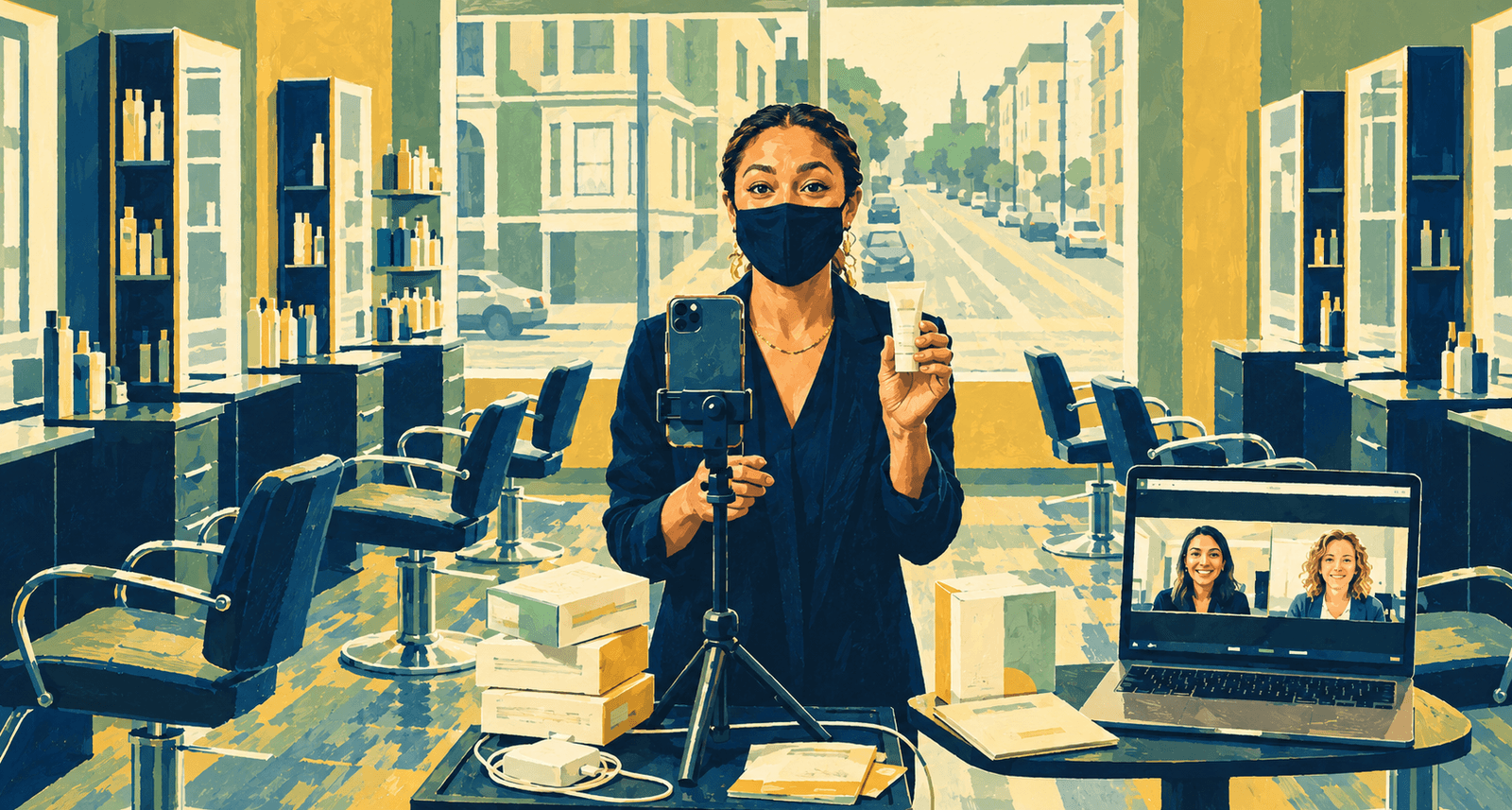
By early 2020, with the product ready for launch, the COVID-19 pandemic struck. K18's go-to-market strategy hinged on a "Pro-First" model—building credibility by having top stylists at renowned global salons use and validate the product. When global lockdowns forced salons to close their doors, Suveen was devastated.
"Our inventory is piling up in warehouses, and every salon is closed. Did we prepare for ten years just to be stopped here?"
Britta saw opportunity in the chaos.
"No, Suveen. The stylists are stuck at home, too, and they're just as frustrated. Let's go directly to them—even if it's through a screen."
They turned to social media, hosting live sessions to educate professionals on the novel concept of "biotech haircare." Isolated at home, stylists began testing K18 samples on their own hair. The results were astounding. Seeing hair that was on the verge of disintegrating from bleach regain its elasticity in just four minutes converted them into passionate brand advocates.
Even with physical salons closed, K18 expanded rapidly online through professional word-of-mouth. The brand became a cultural phenomenon on TikTok, generating over 20 billion views. Stylists voluntarily posted dramatic before-and-after videos, and consumers rallied around the "four-minute miracle." The shutdown of offline retail ended up driving hyper-fast adoption through interconnected digital networks.
Unilever’s Acquisition and a New Legacy
K18’s growth was meteoric. Within four years of launch, the brand expanded into salons and retail shelves across more than 100 countries, sweeping over 25 prestigious beauty awards along the way. Yet their most meaningful triumph wasn't the accolades, but a fundamental shift in consumer demand: shoppers stopped settling for oil-based surface shine and began demanding true molecular restoration.
The global giant Unilever formally announced its acquisition of K18. It was a definitive victory for Suveen and Britta over an industry that, a decade earlier, had dismissed their mission as a biological impossibility. Late one night after the final contracts were signed, Suveen looked over at Britta in their quiet office.
"Britta, we really made it here. Thinking back to the conversations we had in that empty lab ten years ago... to be honest, I was terrified at times. I wondered if this day would ever come."
Britta put down her paperwork and held his hand. "I know. But you always said we had to target the root cause, not the surface. People finally saw that. Knowing our product gave someone their confidence back—that’s what makes me proudest."
Suveen smiled, looking out at the San Francisco skyline. "Now, with Unilever’s scale behind us, we can take this much further. Exactly the way we envisioned."
Epilogue: The Journey Continues
The story of K18 continues to unfold. What began as an audacious endeavor in a small San Francisco office has transformed everyday frustration into confidence for millions of people worldwide. Through ten years of quiet research and the unexpected trials of a global pandemic, Suveen and Britta proved a single thesis: genuine, core technology will eventually reshape the market.
Right now, someone somewhere in the world is washing their hair, applying K18, and waiting quietly for four minutes. Those brief four minutes are not empty time—they are the culmination of a decade of persistence, condensed into a biotech breakthrough working inside the hair. In an era dominated by superficial marketing and flashy claims, sharp, uncompromising technology remains a formidable force.
A close look at the global beauty industry reveals that biotech-driven shifts like K18 are set to accelerate. South Korea, in particular, is home to companies with world-class technical precision and a relentless drive to execute once committed. Yet, too often, promising ideas are obscured by the temptation of quick wins or trendy marketing before they can be fully honed.
K18’s path serves as a valuable compass. One can hope that ambitious founders and companies look to the dedication of this couple, push past temporary distractions, and claim their place at the center of the global stage. The story K18 wrote is not just a past milestone—it may very well be a blueprint for the future.