In the ten days after a Seoul pop-up opened on January 31, 2026, Ongredients sold more than 300 million won of product (about US$221,000). On November 5, 2026, a report placed the same brand in 250 European stores: 120 at an Italian clothing chain and 130 at a Bulgarian drugstore chain. The assumed route for a K-beauty brand into Europe is a perfumery counter or a pure-play online platform. Ongredients takes a cheaper one: one hero lotion, sold on price wherever shoppers buy daily staples.
What exactly did Ongredients report in Europe?
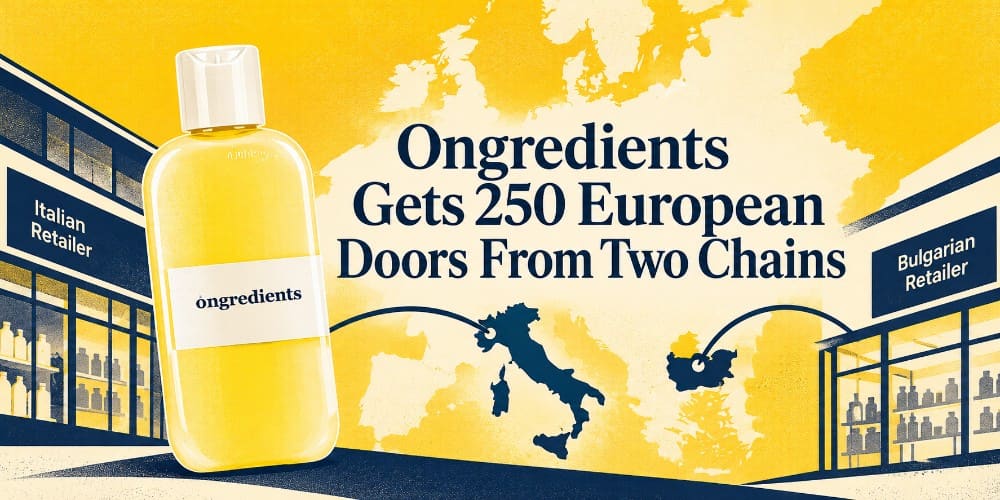
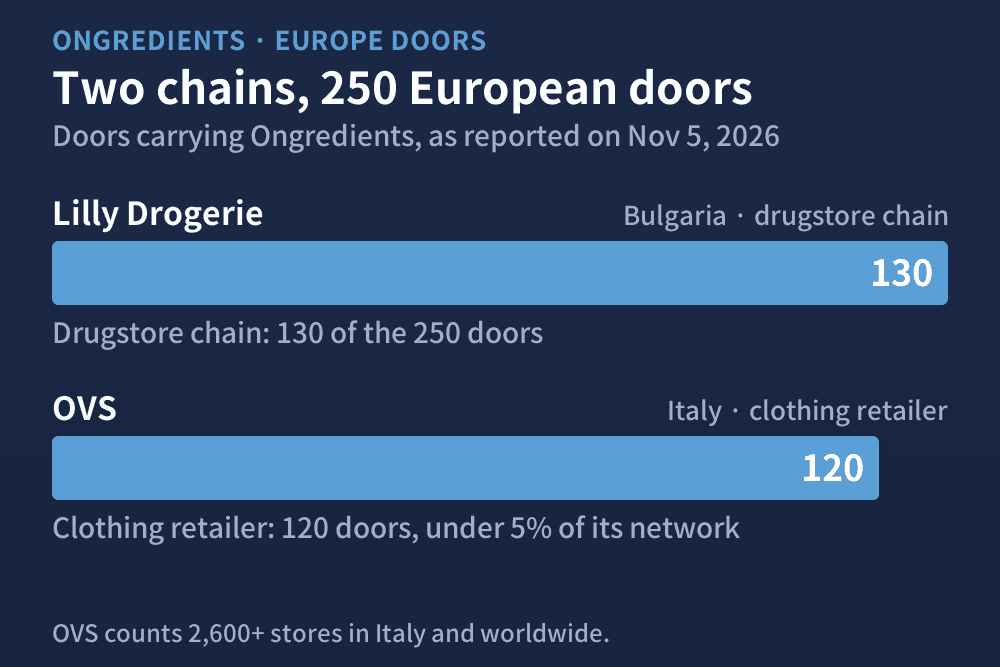
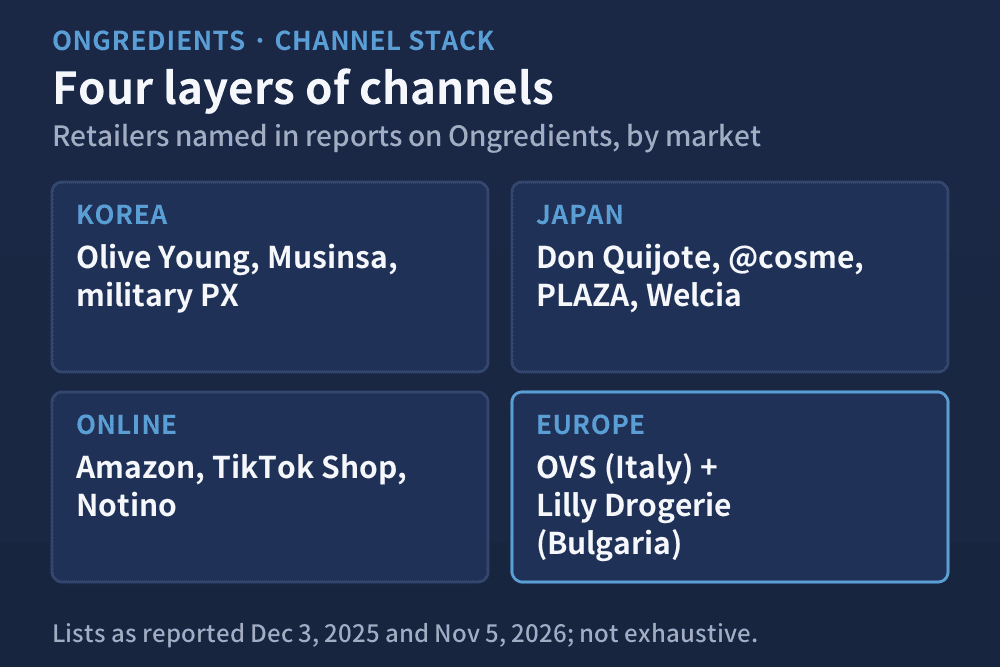
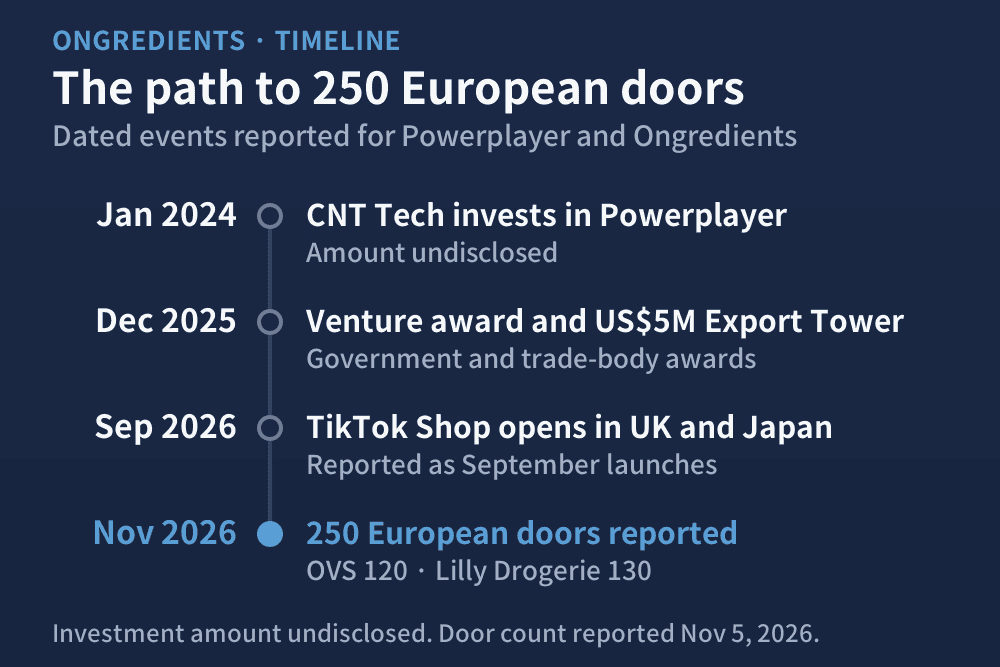
The November 5, 2026 report names two retail partners. OVS in Italy accounts for 120 stores and Lilly Drogerie in Bulgaria for 130. OVS calls itself Italy's leading clothing retailer and counts more than 2,600 stores in Italy and worldwide, so Ongredients sits in fewer than one OVS store in twenty.
The same report lists new Korean outlets at Olive Young, Musinsa and the military PX network, the on-base stores for Korean service members. It adds online sales through Amazon, TikTok Shop and Notino, plus TikTok Shop launches in the United Kingdom and Japan in September.
Who is behind Ongredients, and how big is it?
Ongredients is the skincare brand of Powerplayer, a Korean company led by its founder, Kim Yu-jae, who launched the brand in 2020 after more than ten years in the cosmetics industry. In a February 2026 interview, Kim put 2025 revenue at about 30 billion won (about US$22 million), three times the year before, and set a 2026 target of 100 billion won (about US$74 million). Won figures in this article convert at 1,358.7 won per dollar, the November 6, 2026 rate.
About 70% of revenue comes from overseas, and most sales still come from East Asia: Korea, China, Japan and Taiwan. The brand sells in about 40 countries. Powerplayer is independent, with no conglomerate parent. CNT Tech, a startup investor and accelerator, invested in January 2024, and the amount was not disclosed. In December 2025 the company received the Venture of the Year commendation from Korea's Minister of SMEs and Startups, along with the US$5 million Export Tower, a tier award for annual exports, covering July 2024 to June 2025.
Why does the whole brand rest on one lotion?
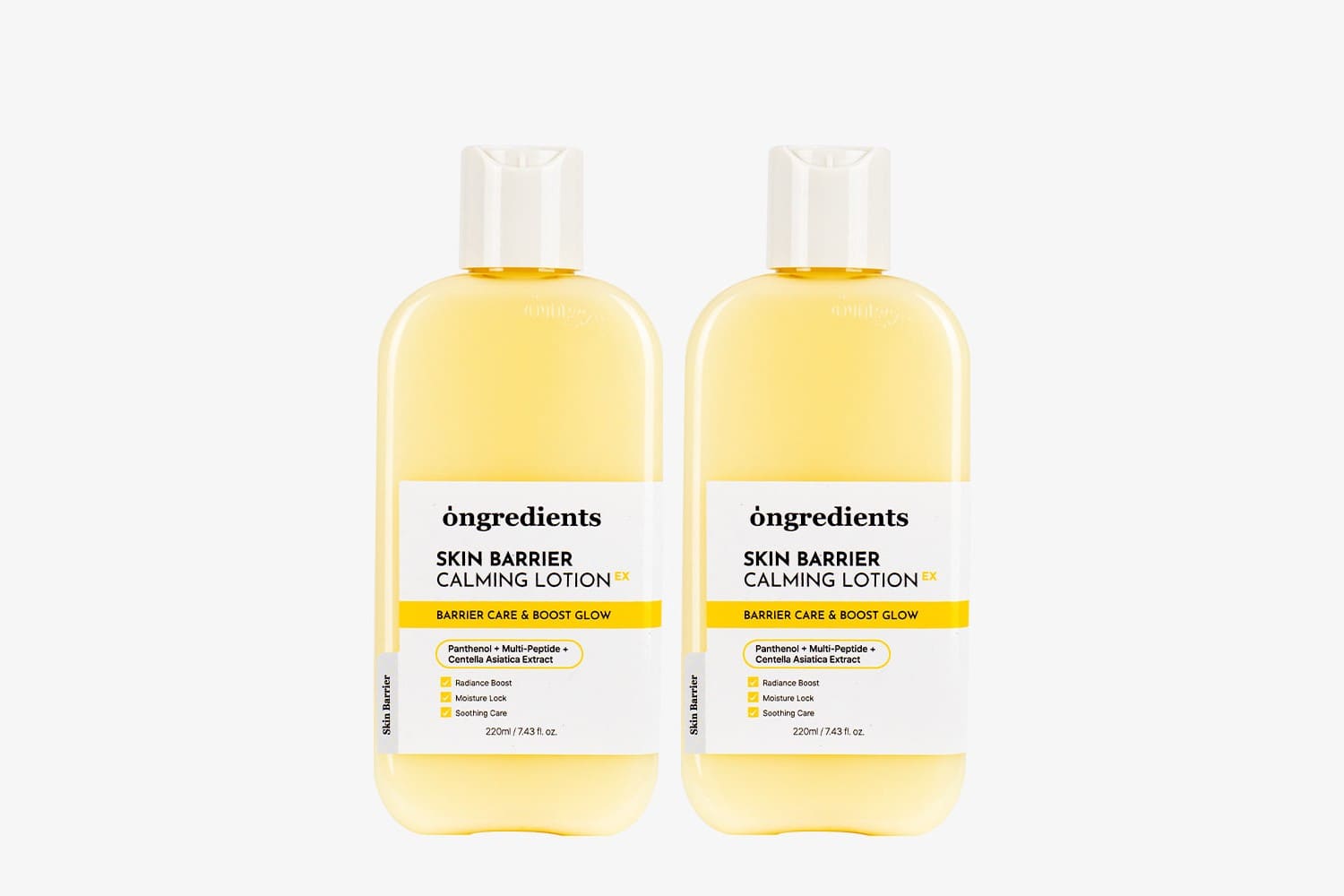
The hero is the Skin Barrier Calming Lotion, which Kim says has sold more than 5 million units. It first drew attention through influencer collaborations, then through makeup artists at Cheongdam shops, who called it the lotion that makes makeup sit well. A second-generation version, Calming Lotion EX, debuted at the January pop-up with a higher peptide count, 12 types against 9. The company's June capsule lotion, BakuGlow, sold 430,000 units in four months, according to the November report.
Kim names CeraVe as the model: a brand known around the world for one category, which in his case is lotion. His reasoning is repeat purchase. A sheet mask is a low-involvement buy. A lotion, once used, gets bought again. That is a narrower bet than the usual K-beauty export catalog of trend products, and it is the reason a drugstore shelf suits the brand.
How did Ongredients change its own pitch?
The brand launched as a clean, vegan skincare line with a minimalist ingredient focus: one key ingredient per product, not many in one bottle. By 2026 Kim treats clean and vegan as the baseline rather than a point of difference. He now positions Ongredients around what the company calls the Glow Barrier System, a routine that treats the skin barrier and inner glow together, and the company has registered the Korean term for "inner glow barrier" as a trademark.
The lotion carries that pitch, and so does the export plan. Kim said the goal is to hold the same inner-glow lotion position in global markets, so the company exports a brand concept, not a product unit. He frames the market as one that rewards a visible change at a reasonable price over high-end luxury, and says the brand's job is to offer a skincare routine with a low chance of failure.
Who makes the lotion, and why did that change?
Kim said the first-generation lotion was made by a small contract manufacturer. An OEM, or original equipment manufacturer, produces to the brand's specification; an ODM also develops the formula. The second generation is made with Cosmecca, which the interview describes as one of Korea's three largest cosmetics manufacturers.
The switch follows the volume. A lotion with 5 million units behind it, now headed for drugstore shelves in Bulgaria and apparel stores in Italy, needs batch capacity, stability testing and the paperwork EU sale requires, including a named Responsible Person under the EU Cosmetics Regulation. A top-tier manufacturer carries that load. 250 stores that reorder on a schedule cannot be served from a small plant.
Why would an apparel chain and a drugstore chain take a Korean lotion?
OVS sells clothing for men, women and children, and its corporate site says it is also active in underwear, beauty and home décor. A shopper walks in for clothes, so skincare there is an add-on purchase rather than the reason for the trip. Lilly Drogerie sells skincare as a routine purchase beside daily staples, and shoppers there compare on price and function.
Both shelves reward the same thing: a familiar format at an easy price. Neither is a prestige perfumery chain, and neither needs a brand story. A hero lotion with a repeat-purchase logic fits both.
What did the Seongsu pop-up prove?
The Ongredients Inner Glow VIP Lounge, the brand's first pop-up store, opened in Seongsu-dong, Seoul, on January 31, 2026 and ran through February 23. It marks a step from an online-centered brand to one with an offline experience. Kim said peak days drew about 5,000 visitors, sales passed 300 million won (about US$221,000) in about ten days, and the conversion rate was about 40%. He called it the best result of any beauty, fashion or food pop-up in Seongsu in the past three years.
The design is sampling at scale. Visitors who reserved in advance received a full-size lotion. Mist and cream came in miniatures, three of five for 10,000 won (about US$7), and on-site prices ran well below Naver, Coupang and Amazon US. The pop-up also carried a limited key-ring mist in a two-layer toner and essence oil format, built from customer reviews that described mixing the lotion with toner. The wager is that a free or near-free first purchase brings the second. A drugstore shelf in Bulgaria does the same job at a different size. ALX Design, a subsidiary of the influencer agency Referee, planned and ran the space.
Why does the founder work the trade shows himself?
Kim lives in the United States and, by his own account, travels to local trade shows, expos and university campus tours himself. The aim is for the brand to read as local, not as K-beauty. At Cosmoprof Worldwide Bologna, held March 26 to March 28, 2026 with about 400 Korean companies, he staffed the Ongredients booth in person. He is known in the industry for covering every trade show himself.
At a founder-led company, the conversation at the booth is the sales channel. The same city shows what the reach looks like on a shop floor. In April 2026, an OVS store in Bologna had a wall of K-beauty shelving, with Unleashia and Amuse displays in front of it, inside an apparel store rather than a beauty specialist.
What does Kim distrust about fast growth?
Kim warns against brands that grow quickly on TikTok or Amazon and then fade, and he said long-term trust comes first. He also plans to raise the share of direct-to-consumer sales on both platforms, with North America first and Europe and the Middle East after. The platforms buy reach; the shelf buys trust. The 250 European doors are the shelf.
North America is the priority and the bridgehead for Europe and India, Kim said. In February he described a North America-only color brand for teenage Hispanic women, starting with a lip oil, due in March, with no plan to sell it in Korea. He also said Ongredients is developing a proprietary ingredient with Konkuk University, where he completed his graduate coursework.
What does the structure mean for the industry?
The same facts read differently by position. For manufacturers, a brand that moves from a small plant to a top-three maker for one lotion shows where the volume sits: in a few formats, reordered on a schedule. Capacity gets booked against those reorders. For brands and buyers, mid-size chains take a hero product and a price, not a whole catalog, so the brand with one repeat-purchase item has the advantage over the brand with fifty trend items.
For regulators and investors, the target is the number to watch. Moving from 30 billion won (US$22 million) to 100 billion won (US$74 million) is more than a tripling in one year, and 250 doors are a listing, not a sale. Diligence on a brand like this starts with sell-through per door.
The assumed route into Europe runs through perfumery chains. Ongredients is building a second one through apparel and drugstore shelves, on one lotion and a low entry price. Sell-through per door decides whether it holds.