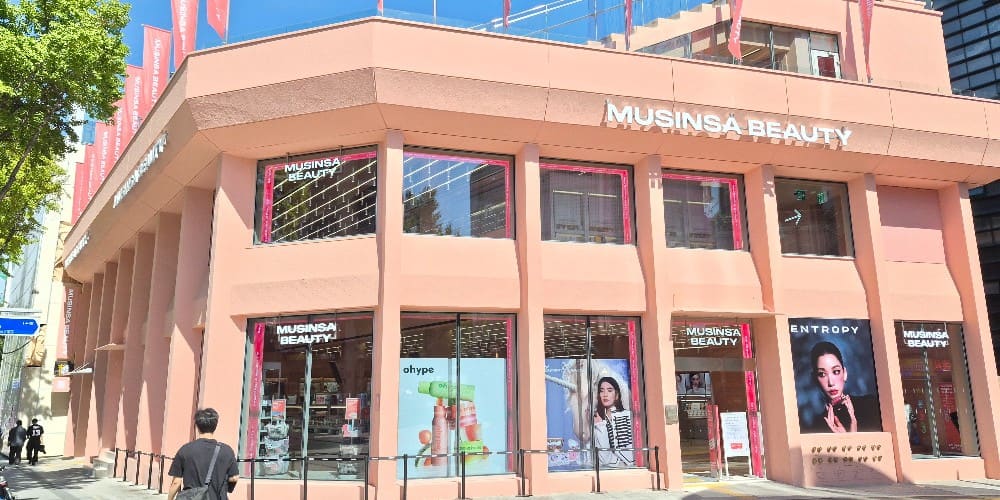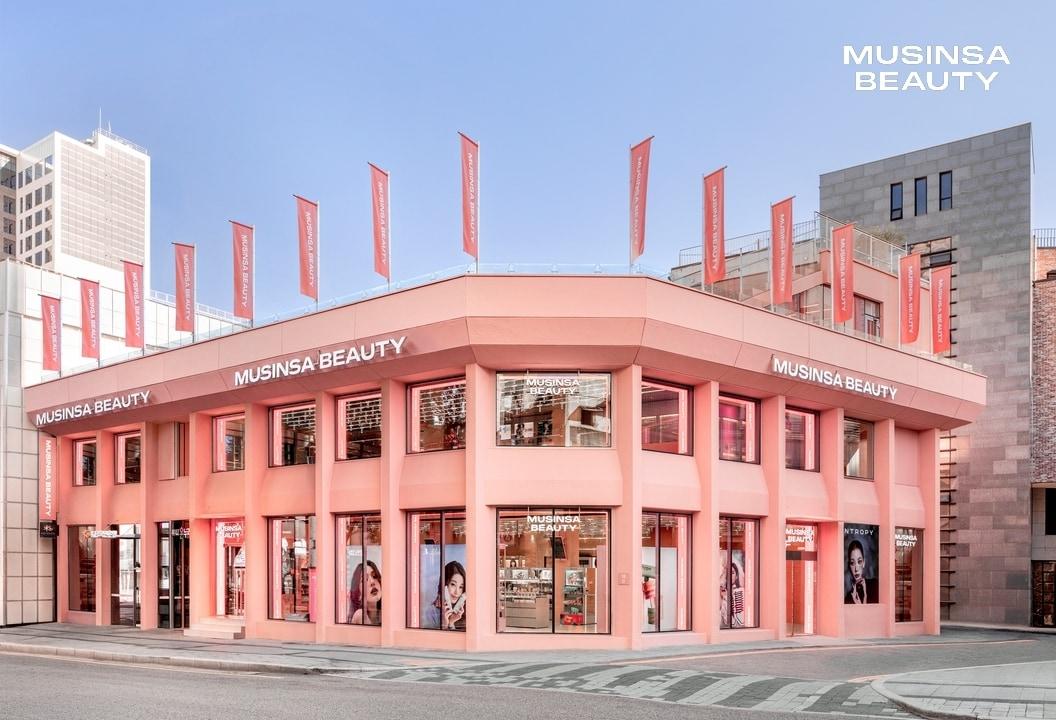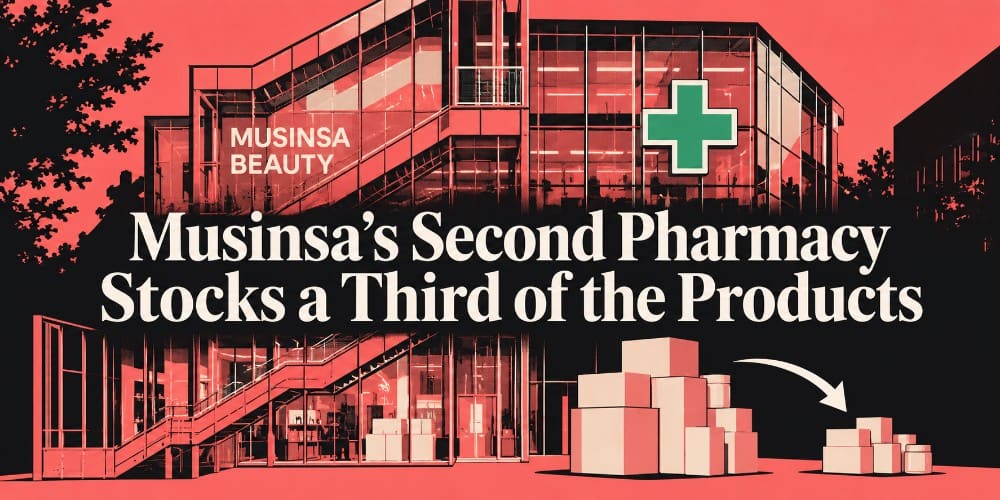
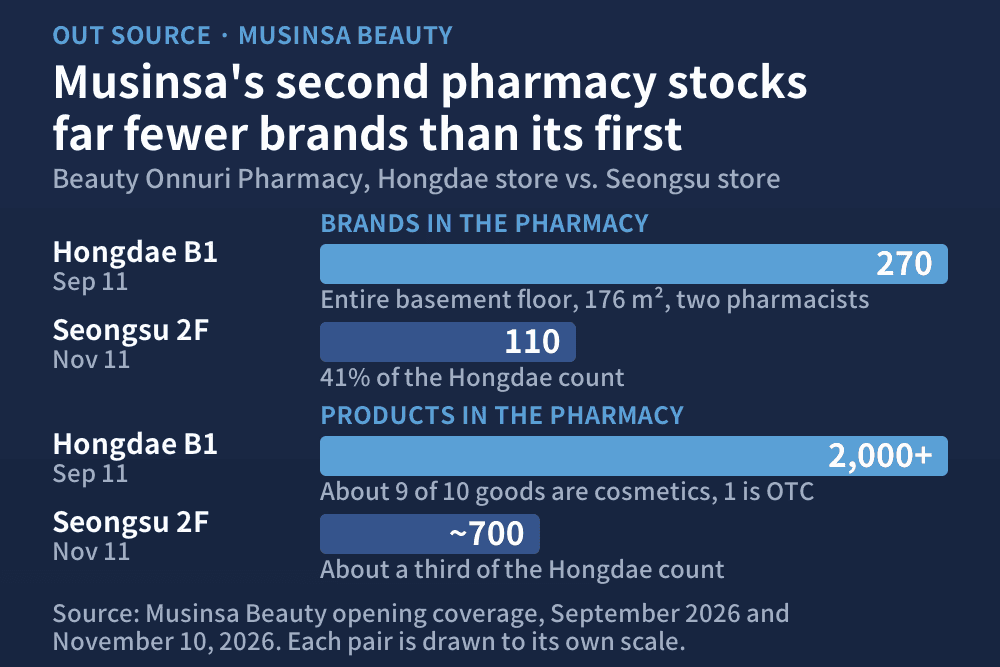
On November 11, Musinsa opened its 100th offline store, a 1,322-square-meter beauty store in Seongsu, Seoul. The pharmacy on its second floor carries about 110 brands and roughly 700 products. The pharmacy in the Hongdae store that opened in September carries about 270 brands and more than 2,000 products. The second pharmacy is the smaller one. A retailer scaling a format usually copies it. Musinsa cut the range to about a third and sorted what remained by four skin and scalp problems.
What did Musinsa open in Seongsu on November 11?
Musinsa Beauty Seongsu is the company's 100th offline store and its second large standalone beauty store, after Hongdae opened in September. It occupies the first and second floors at 87 Yeonmujang-gil, with about 400 pyeong of floor area. A pyeong is the Korean unit of 3.3 square meters, so the store covers roughly 1,322 square meters.
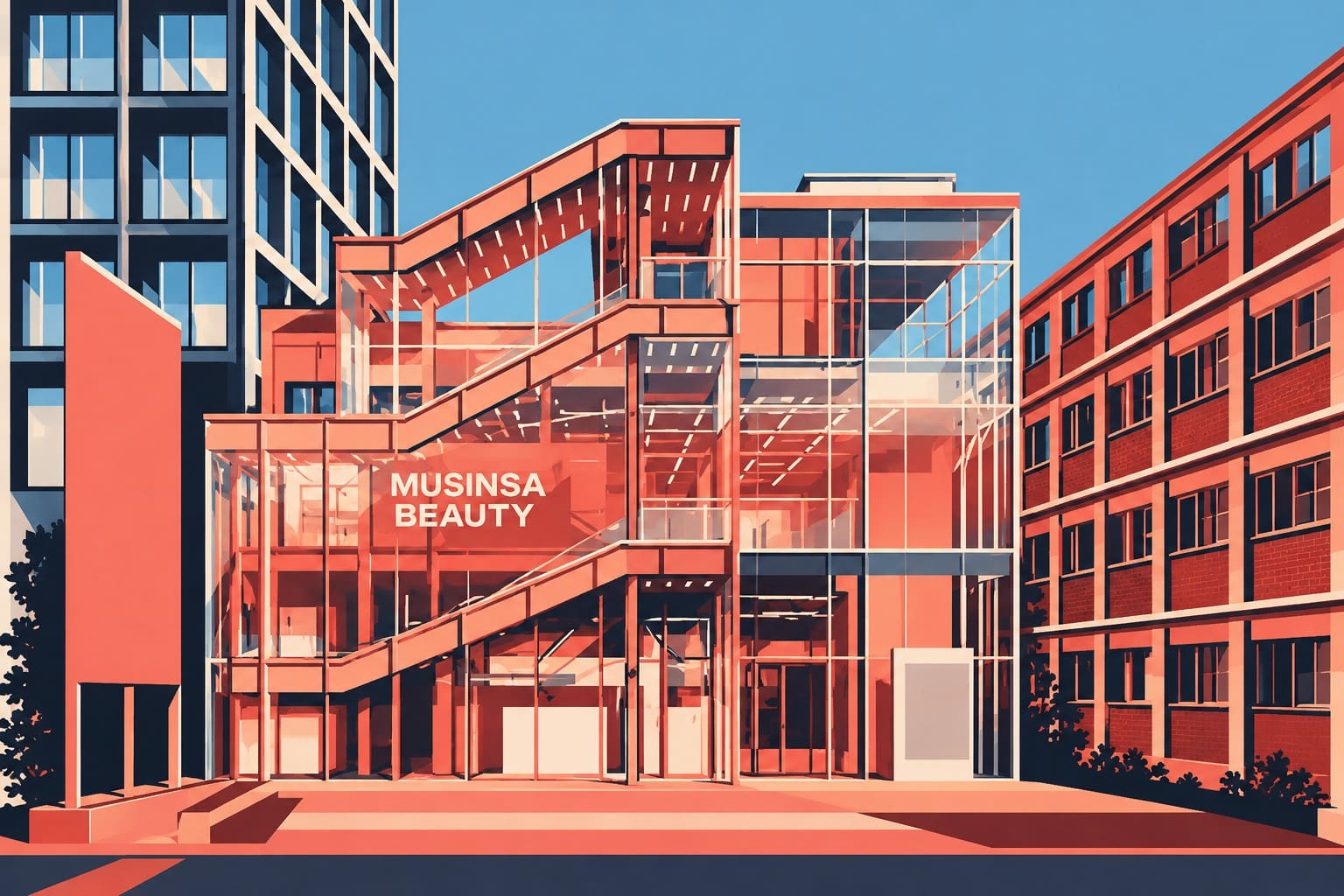
The store carries about 700 brands and more than 10,000 products across skincare, makeup, fragrance, and hair and body care. About 80% of the brands are indie brands, a term used here for small and mid-sized labels with little distribution in the large chains. The first floor holds a 15-pyeong pop-up zone, where the makeup brand 2AN stages its first pop-up, and a touch-up bar offering AI-based personal color diagnosis from the makeup brand Amelie.
Seongsu is also the center of a Musinsa cluster. Musinsa Standard, Musinsa Store Seongsu, Musinsa Megastore Seongsu, Empty, Musinsa Kicks, Igu Home and Igu Kids all sit within the neighborhood, and Musinsa calls the group Musinsa Town. The beauty store is the newest anchor in it.
Why is the second pharmacy so much smaller than the first?
Beauty Onnuri Pharmacy is the pharmacy inside both stores. In Hongdae it fills the entire basement: 176 square meters, about 270 brands and more than 2,000 products, with at least two pharmacists on site. In Seongsu it sits on the second floor with about 110 brands and roughly 700 products, and two pharmacists handle prescription dispensing, over-the-counter sales and medication counseling. The brand count falls 59%. The product count falls about 65%.
Coverage of the Seongsu opening states that the layout and product mix were revised using Hongdae sales data. The reduction is a selection. The assortment that proved itself in the first store is the assortment the second store carries.
The Hongdae pharmacy is also nearly all cosmetics: roughly nine of every ten goods on its shelves are beauty products, and one is general pharmacy goods. A pharmacy that is nine-tenths cosmetics is a beauty shelf with a pharmacist standing behind it. Seongsu keeps that logic and drops the volume.
What changes when a shelf is sorted by skin problem?
The Seongsu pharmacy groups its products under four concerns: acne and trouble skin, pigmentation including melasma, dryness and moisturizing, and hair loss. A shopper walks in with a problem, not a brand name. In a conventional beauty store the brand is the entry point and the label does the selling. Here the concern is the entry point and the pharmacist does the selling.
Hongdae shows how that works on the floor. A reporter who visited the pharmacy there received a melasma consultation, and the pharmacist compared ointments from two Korean drug makers, Dongwha Pharmaceutical and Taikwang Pharmaceutical. The same pharmacist said that pairings of beauty brands and pharmacies are already established overseas, and that the interest and trust foreign tourists place in K-beauty are high enough to sustain the format.
Four concerns share roughly 700 products. A brand does not win a slot with a better label. It wins one with a product that answers one of four problems and holds up when a pharmacist explains it.
Is the pharmacy format Musinsa's idea or the neighborhood's?
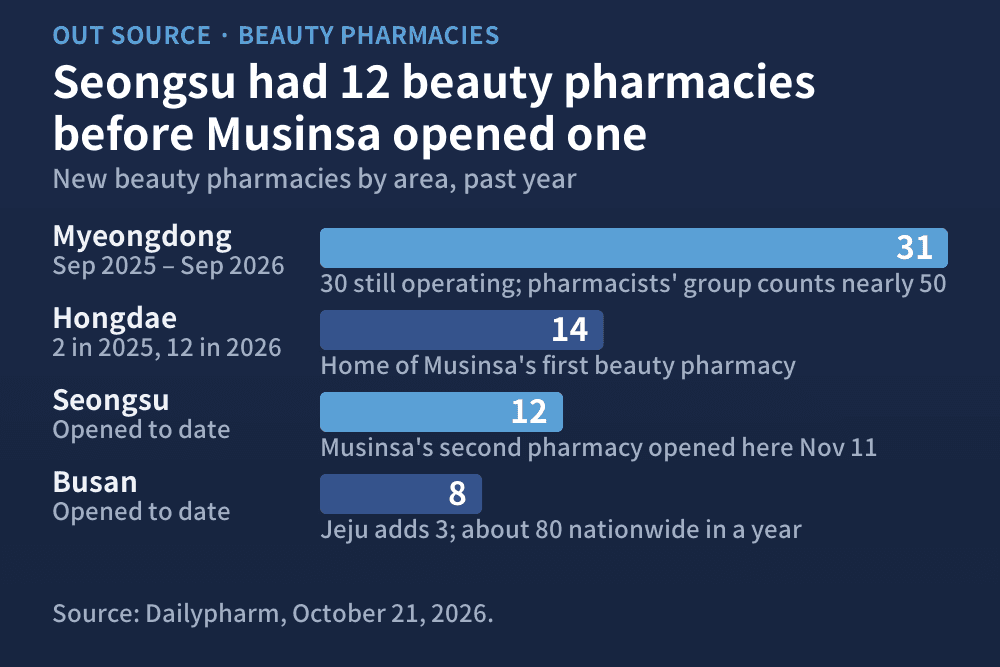
The neighborhood's. Dailypharm reported on October 21 that about 80 beauty pharmacies opened nationwide in the past year, a wave that began in September 2025. Myeongdong accounts for 31 of them from September 2025 to September 2026, according to Ministry of the Interior and Safety data, and 30 are still operating; an official of the Jung-gu pharmacists' association puts the current number near 50. Hongdae has 14 (2 opened in 2025 and 12 in 2026), Seongsu has 12, Busan has 8 and Jeju has 3.
The customer explains the count. Pharmacists told Dailypharm that foreign shoppers spend 20 to 30 minutes in a beauty pharmacy, sometimes an hour, testing products and asking for consultations, while Korean shoppers spend under five minutes. The article compares the format to Welcia in Japan and to pharmacies in France that tourists treat as shopping stops.
Musinsa entered a neighborhood that already held 12 beauty pharmacies. It entered as a store that contains one, in a country where only licensed pharmacists can open a pharmacy. The pharmacy is therefore not Musinsa's to own. In Hongdae, Onnuri H&C runs it, and the Seongsu branch carries the same name. Musinsa supplies the building, the foot traffic and the curation.
Who is the Global Skincare Zone built for?
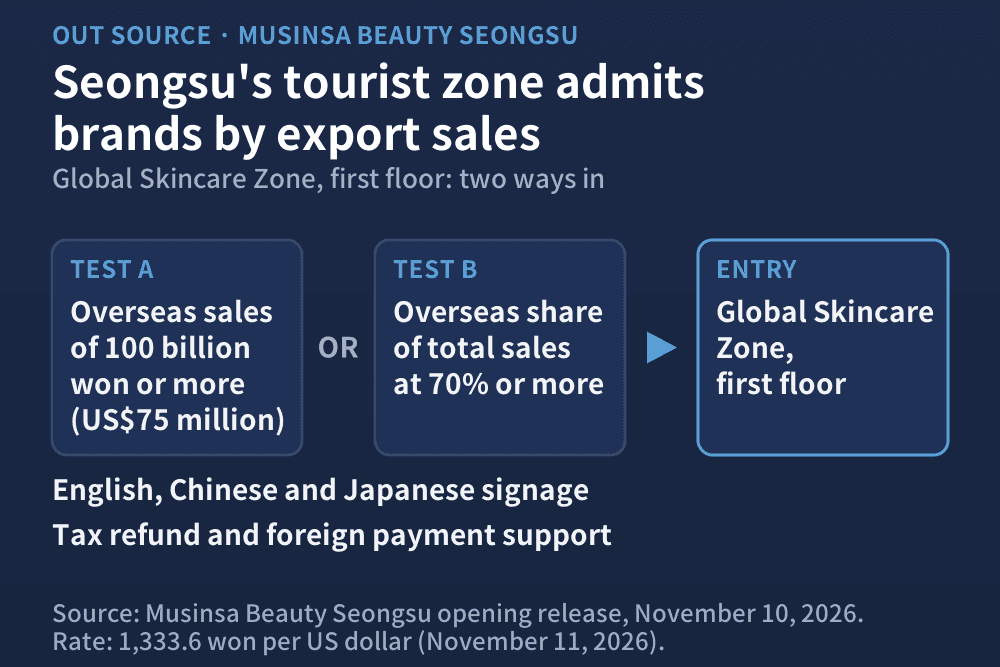
The first floor holds a Global Skincare Zone for foreign shoppers, built on Hongdae customer data that showed strong tourist demand for skincare. Admission follows a sales test. A brand qualifies with overseas sales of at least 100 billion won (US$75 million) or with overseas sales making up at least 70% of its total. Dollar figures in this article use 1,333.6 won per dollar, the November 11, 2026 close in Seoul.
The zone adds signage in English, Chinese and Japanese, tax refund support and foreign payment support. The selection logic is the notable part. A brand earns the shelf by how much it already sells abroad, not by its category or its price tier.
Hongdae supplies the demand. About 67% of foot traffic around that store is foreign. In its first three days, foreign buyers went from about 45% of purchases on September 11 and 12 to nearly 60% on September 13, and their purchase conversion ran about twice the rate at Musinsa's other offline stores. They bought derma and functional skincare; Korean shoppers bought color cosmetics.
What did Hongdae produce before Seongsu opened?
Musinsa's opening statement put the Hongdae store's cumulative sales at 2.5 billion won (US$1.9 million) from its September opening through October, with about 100,000 visitors a month. The first three days brought about 250 million won (US$187,000), an average purchase of about 110,000 won (US$82), and a buyer base that was 76% women, over 80% of them in their twenties or thirties.
Hongdae spreads 1,262 square meters across four levels, from the basement pharmacy to a third-floor café and terrace. Seongsu fits a similar area onto two floors. There is no basement and no café floor. The pharmacy moves up to the second floor and the selling space concentrates.
What does a pharmacy shelf mean for a brand like Tonymoly?
Tonymoly announced on November 4 that it had listed products in the Hongdae pharmacy, the basement unit of the Musinsa Beauty Hongdae store. It chose high-function and moisturizing items, centered on ingredients such as NAD, because pharmacists can advise customers on them. The company called beauty-focused pharmacies an emerging key channel and said it plans to expand there with product lines suited to each region.
That choice shows how the channel sorts brands. A pharmacy shelf takes the products that carry an explanation. A brand sells its most functional line there and keeps its color and trend lines elsewhere.
How does the pharmacy connect to the rest of Musinsa?
Musinsa's own data supplies the logic. About 83% of its new beauty customers from January through October had already bought in other categories such as fashion. The beauty store is built to convert that traffic. Musinsa Standard sits beside the new store, and Musinsa Kicks and Musinsa Megastore Seongsu are within a five-minute walk.
A Musinsa official put the competition in terms of an iceberg: Olive Young is the visible 20% above the waterline, and Musinsa is working on the 80% below it. Olive Young is also present in Seongsu, with six stores, including the experience-focused Olive Young Beauty Mansion Seongsu that opened in June and the wellness-format Olive Better Seongsu that opened in October. The two chains are building the same neighborhood from opposite directions: one from beauty outward, one from fashion inward.
What does a smaller second pharmacy tell the rest of the industry?
Three positions read the same fact differently. For manufacturers and ODMs, the contract manufacturers that develop products for other companies' labels, a shelf sorted by concern rewards formulas built for a single problem. A catalog of 700 products across four problems has no room for a general-purpose line.
For brands and buyers, the slot count is what moved. The pharmacy range went from more than 2,000 products in the first store to about 700 in the second, while the store count doubled. Shelf access in this channel narrows as the channel grows, and the Global Skincare Zone adds an export-sales entry test on top.
For regulators and investors, the channel scales by licensed operator, not by retailer. About 80 beauty pharmacies opened in a year because pharmacists opened them. Retailers rent the trust and the foot traffic; they do not own the license.
Musinsa's second pharmacy is the smaller one because the first one told it what to cut.