
Dr.Reju-All's flagship PDRN cream, per the company, reached 1.5 million units by May 24, 2026 and 4 million by September 7, 2026, a gain of 2.5 million in 106 days. At home it sells through pharmacies and clinics, not online malls or H&B chains. Abroad there is no pharmacist behind the counter, so the recommendation changes form: a boxed three-step set on Amazon, a live-commerce host in Japan and a size ladder at Boots. The brand exports the recommendation, not the pharmacist.
What does a pharmacy shelf buy that a store shelf does not?
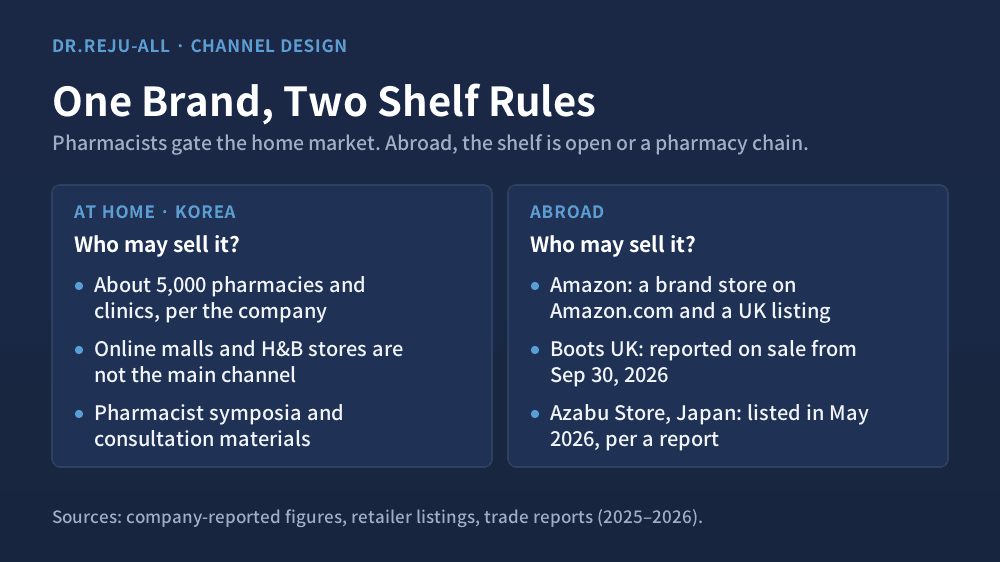
A recommendation at the moment of purchase. NeoSimplix made hospitals, clinics and pharmacies the main channel for Dr.Reju-All and left out online shopping malls and H&B store chains, the Korean health-and-beauty retail format. On a store shelf with no clerk to explain it, a jar competes on its package. In a pharmacy, a licensed professional hands it over, and the sale is a consultation.
NeoSimplix built the product for that moment. The flagship Advanced PDRN Rejuvenating Cream is a gel the company says holds PDRN at 1200 ppm. PDRN, short for polydeoxyribonucleotide, is a DNA-fragment ingredient, and a September 2026 report describes the cream's grade as salmon-derived and purified to 99%. Those are two numbers a pharmacist can say aloud: concentration and purity. Most skincare sells adjectives. This cream sells specifications.
NeoSimplix also says it prioritizes ingredient research and expert recommendation over high-cost marketing. It is the same bet in budget terms: money that would buy media buys pharmacist time instead.
The maker also shares a profession with the person doing the selling. CEO Jeong Jun-ho is one of two pharmacist co-founders, and the company says five pharmacists and four doctors co-developed the line.
Why is the line built as a three-step routine?
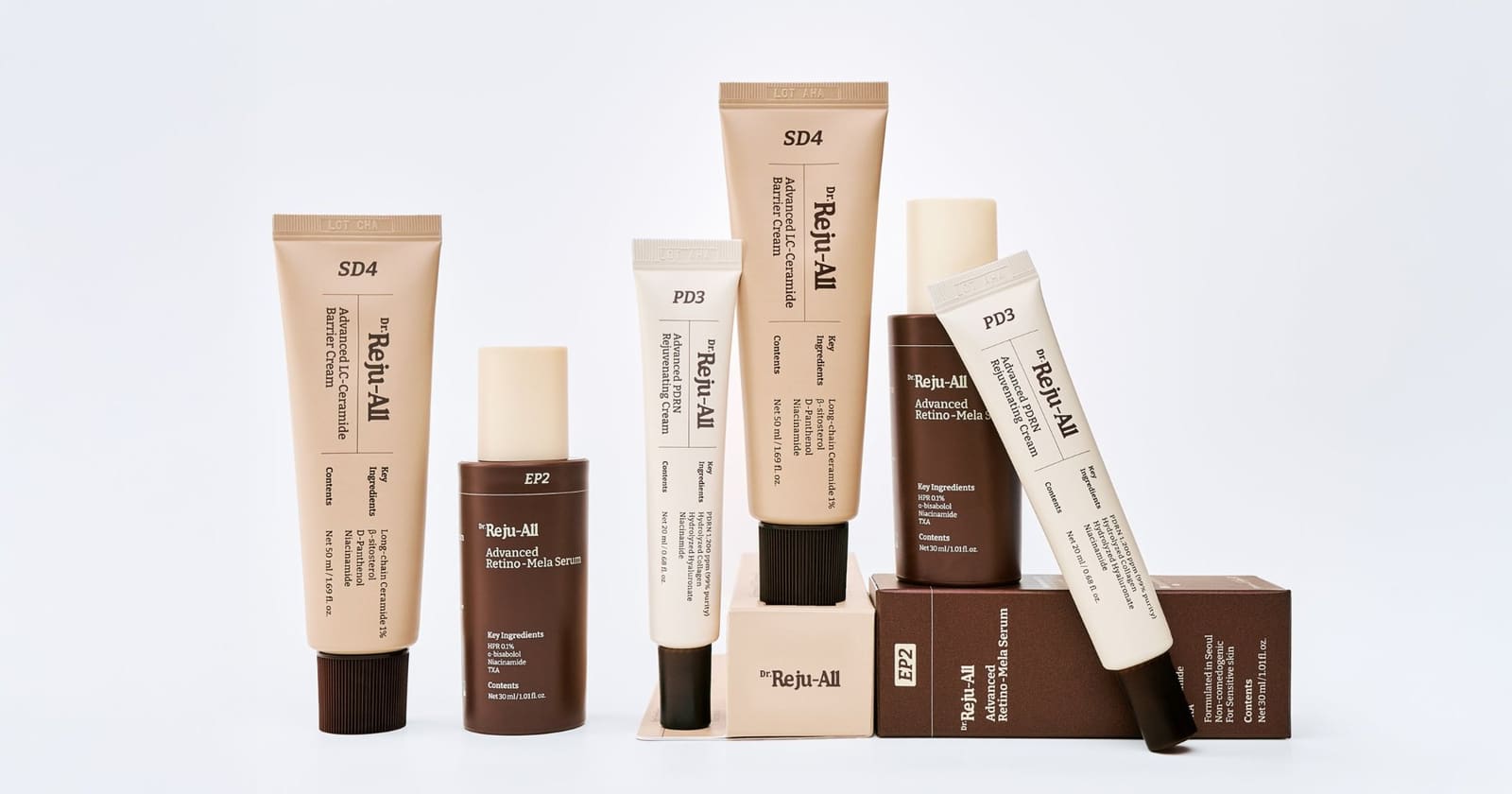
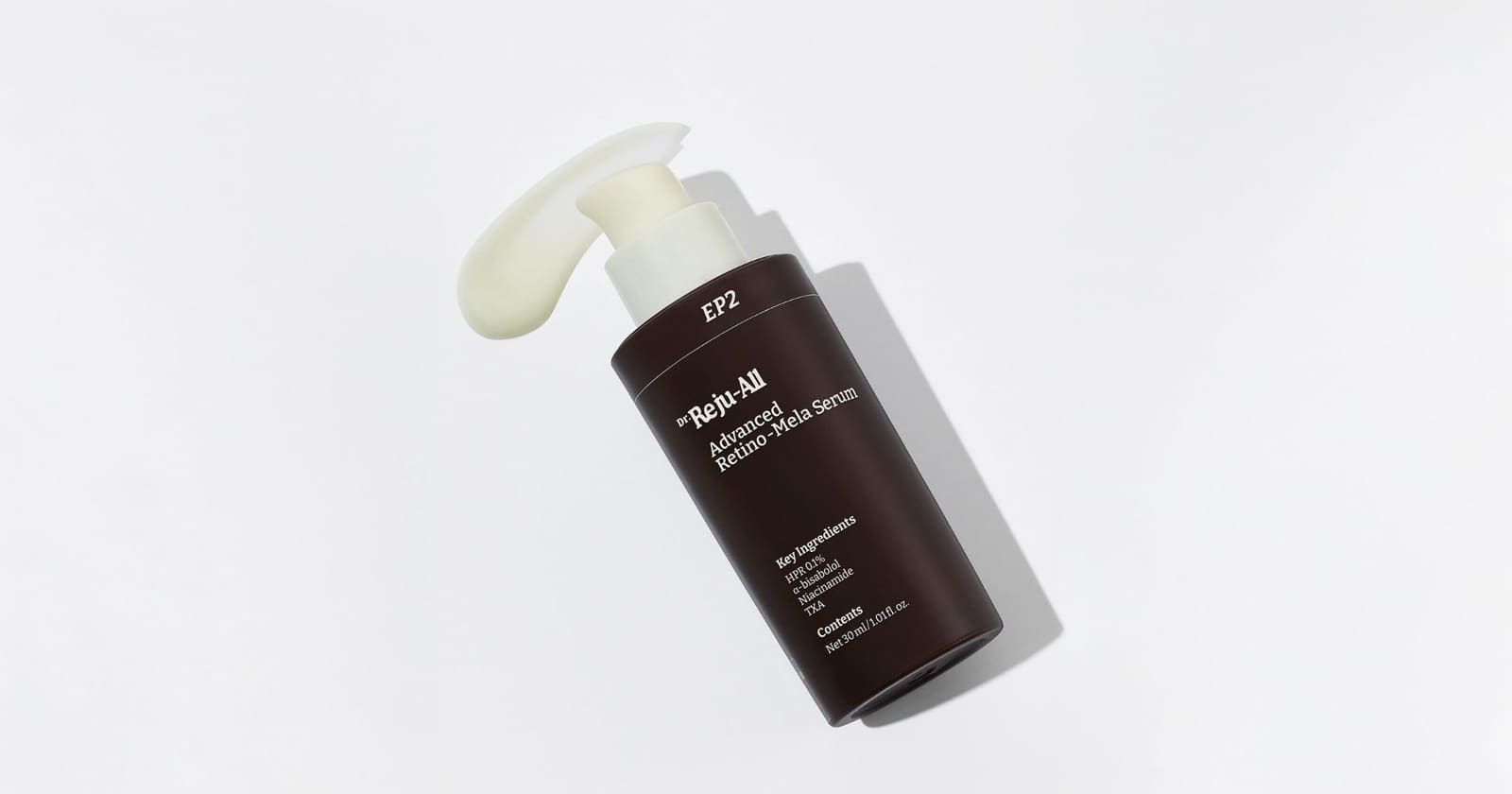
The range reads like a consultation script. It runs to about 10 products. Around the PDRN cream sit an HPR serum, positioned for pigmentation (HPR is a vitamin A derivative), and a long-chain ceramide cream, positioned for soothing and moisture. A pharmacist can recommend one product, two or all three, and each step carries a stated reason.
Three steps give the pharmacist a sequence to say and the counter a bundle to sell. The Japan launch push leads with the retinol serum, the PDRN cream, the ceramide barrier cream and a three-step care set, so the sequence survives the border even where the pharmacist does not.
How does a 60-seat symposium feed thousands of shelves?
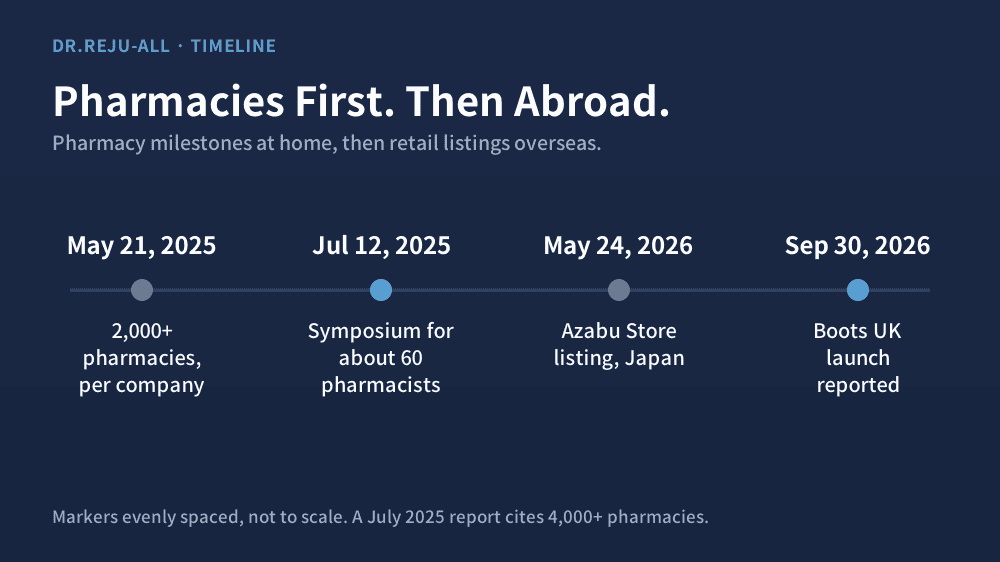
On July 12, 2025, NeoSimplix held a VIP symposium at Chosun Palace Gangnam in Seoul for about 60 pharmacists. A Seoul National University College of Medicine professor spoke on inflammatory skin aging, cell-repair pathways and the role of PDRN, and company presenters covered the PDRN grade and its concentration design.
Sixty seats against a footprint the company put at more than 4,000 pharmacies that same month is 1.5%. The room is a seeding event, not the channel: a credentialed speaker, a content package and a script that each attendee carries back to a counter. A July 2026 report adds that NeoSimplix supplies consultation content and educational materials so a pharmacy can run a skin consultation. The product arrives with its own sales training.
The listings arrived fast. The company counted about 2,000 pharmacies on May 21, 2025 and more than 4,000 by July 16, 2025, then about 5,000 pharmacies and clinics on September 7, 2026. Most of the doors came in the first months. Since then the work has been depth per door.
What does a sellout do for a pharmacy brand?
The company says stock sold out within 72 hours of restocking in some channels. In a channel with no online alternative, a stock-out sends the customer back to the pharmacist and tells the pharmacist the product moves. Scarcity here is not a campaign. It is a side effect of the fence.
The same scarcity sold abroad early. About three months after launch, NeoSimplix joined a New York pop-up run by the Instagram channel Song of Skin, beside Anua, Biodance, Clearday and VT Cosmetics, and says it recorded the highest sales at the event.
How fast is the flagship cream moving?
The company says the cream reached 1.5 million units within a year of launch, as reported May 24, 2026, and 4 million by September 7, 2026. Taken together, that is 2.5 million units in 106 days, about 23,600 a day. The second stretch outran the entire first year.
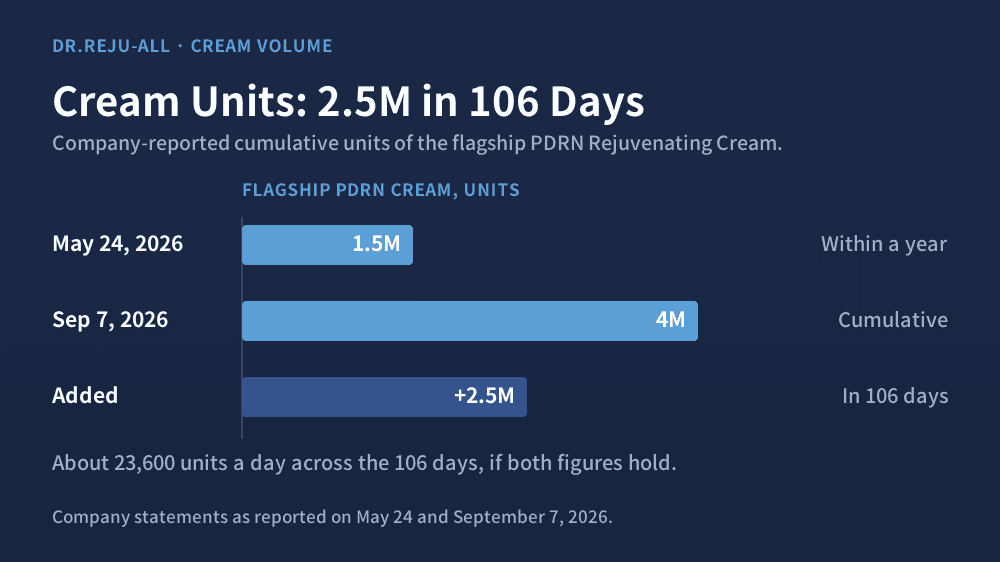
A pace like that does not fit inside a pharmacy-only footprint of roughly 5,000 doors. It shows why the brand needed the shelves it now has outside the fence, and why the cream, not the line of 10, carries the brand.
What replaces the pharmacist abroad?
Three substitutes, one per market. On Amazon.com, a listing titled as a complete Advanced Skincare System pairs the HPR retinol serum, the PDRN cream and the ceramide barrier cream, with travel sizes included. The consultation's three steps become one box a shopper can buy without asking anyone.
Japan uses a person. A May 24, 2026 report said the brand listed on the Japanese platform Azabu Store and held a live-commerce broadcast, and a NeoSimplix release dated January 30, 2026 added a lip serum and a sheet mask going on sale February 27. The recommender is a presenter instead of a pharmacist, and the pitch is the same one.
Boots borrows the setting. A September 30, 2026 UK beauty report said the brand had landed at Boots, online and in store, and placed it inside a K-pharmacy trend, noting its pharmacist founders. Boots is a pharmacy chain, so the shelf's authority comes from the retailer's format rather than a person. The company also says exports reach more than 80 countries.
How is the Boots price ladder built?
Boots lists the lip serum at £12.90 for 10 ml, the cream at £25.90 for 20 ml and the Max cream at £69.90 for 60 ml. Per milliliter that is £1.29, £1.30 and £1.17. The 60 ml jar holds three times the volume of the 20 ml for 2.7 times the price, 10% less per milliliter.
The ladder is a trial path: a lip serum under £13 as the entry point, the standard cream as the proof, the large jar as the commitment. In Korea a pharmacist closes that step-up in conversation. At Boots the price does it.
What does a recommendation-led brand teach the industry?
Dr.Reju-All runs on one asset, trust in a recommender, and spends it differently in each market. At home the asset is a person with a professional title. Abroad it is a box, a host and a retailer's format, each carrying a piece of the credential the pharmacist carries whole.
Retailers weigh the same split when they list it: a pharmacy chain buys the label, and a marketplace buys the volume.
The pharmacist stays in Korea. The recommendation travels.