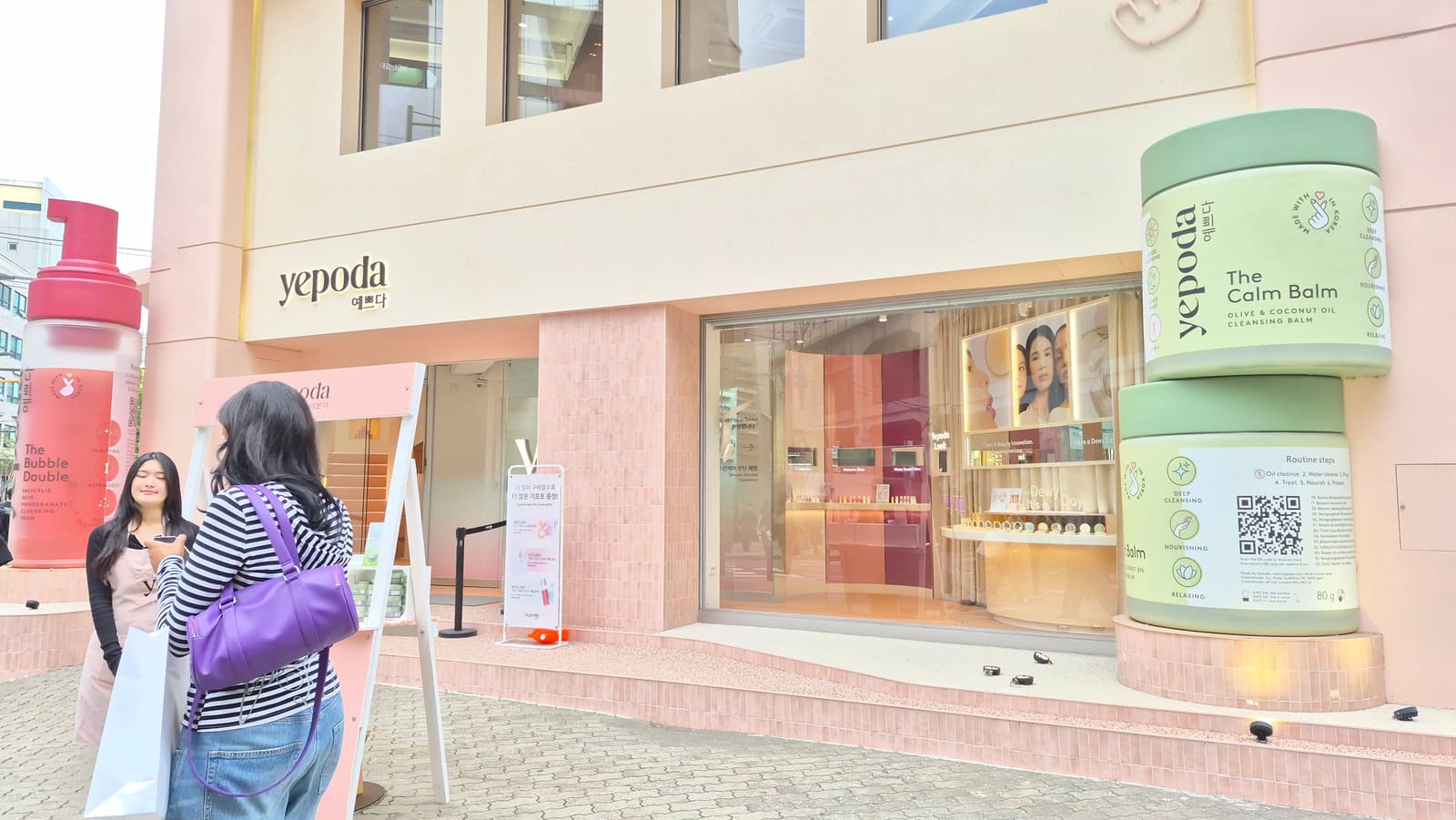
What is Target Beauty Studio?
Target Beauty Studio is a specialty beauty format launching 10 September 2026 in more than 600 Target stores and on Target.com, carrying more than 1,600 products from 90 prestige, emerging and global brands. More than two-thirds of those brands are new to Target.
It succeeds Ulta Beauty at Target, a shop-in-shop partnership of nearly five years that ended on Sunday 16 August. Target is converting the same rooms — roughly 1,000 square feet apiece, in a fleet of more than 2,000 US stores — into a format it controls outright.
NewBeauty described the change precisely: Target now has "full control over the assortment and merchandising it never had under the Ulta deal."
Amanda Nusz, Target's senior vice president of merchandising, essentials and beauty, called Beauty Studio "a powerful example of how our merchandising authority comes to life through an elevated guest experience."
Read that as a supplier. For five years the buying judgement in those rooms sat with a beauty specialist. It now sits with a mass merchant's merchandising organisation, and that organisation has just told the market that its authority is the point.

Which Korean brands are in Target Beauty Studio?
Target's announcement names 26 of the 90 brands and links to the rest. Six Korean names appear under two headings:
- "K-Beauty cosmetics favorites" — Amuse, Kaja and Rom&nd.
- "Top skincare discovery brands" — Dr.Melaxin, Purito Seoul and Sungboon Editor.
Six is a floor, not a total. Because only 26 names were published, the full Korean count is not knowable from the release — and anyone quoting a total should open Target's own brand list and count it rather than infer it.
Why does Eqqualberry matter?
Because Eqqualberry is Korean and Target did not label it that way.
Eqqualberry was founded in Seoul, launched in 2023, and makes its products in Korea. In Target's release it appears under curated skincare, alongside Clearstem, First Aid Beauty and Sunday Riley — not under either K-Beauty heading.
That is not an error, and it is the most useful detail in the announcement. In the K-Beauty group, a Korean brand inherits a category tailwind and a set of shopper expectations about price and novelty. In curated skincare, it stands next to Sunday Riley and gets judged on efficacy claims and price per millilitre.

The second position is harder and worth more. The national label is a merchandising bucket, and graduating out of it is a strategy rather than an accident.
One caution on reading Target's two Korean headings too firmly: favourites is the language of proven rate of sale and discovery is the language of a brand being tried out, so I would treat the second group as being on trial and plan inventory and margin accordingly. That is my reading of the wording, not something Target says — and the trade press did not read it that way at all. Cosmetics Business collapsed all six into a single list of K-beauty favourites.
What does a Beauty Studio listing actually ask of a brand?
Target listed its experience elements in detail. What follows is my reading of what each one asks of a supplier — none of the published sources discusses vendor economics, so treat this as an operator's view rather than reporting.
A dedicated minis assortment. Minis are effectively a second product line: another fill run, another pack, another labelling exercise, and lower revenue per unit. They are a trial mechanic, and trial mechanics are normally funded by the brand.
Product testing opportunities for select items. Testers are inventory that is never sold. Someone buys those units and replaces them as they run down.
Rotating product features — "Editors' Picks", "Most Loved" and "Standouts of the Season" — and a centre table anchoring the space, starting with Lake & Skye's fragrances. Target says the space "will evolve several times a year to showcase new brands, collaborations and editorial-inspired moments." Rotation is not a risk here. It is the published design, and being in at launch is not the same as being in at Christmas.
Dedicated Beauty Advisors in signature uniforms, offering personalised recommendations. This is the element I would value most and expect to be hardest to earn: it needs training material, samples and a reason to be remembered, against 89 other brands competing for the same attention.
Exclusive Target Circle offers. Target presents these as a member benefit. In most retail agreements I have seen, offers of this kind are funded somewhere, and it is worth establishing where before signing.

Why is Target doing this now?
Beauty is doing the heavy lifting in its turnaround.
Cosmetics Business reports Target's first-quarter 2026 sales were driven by a robust beauty performance, with beauty rising to USD 3.39 billion from USD 3.1 billion a year earlier. Retail Dive puts total net sales for the quarter at USD 25.4 billion, up 6.7 per cent.
The category is growing on both sides of the price line. Circana data cited by Retail Dive put US prestige beauty at USD 17.1 billion in the first half of 2026 and mass at USD 39.2 billion, each up 7 per cent.
And the channel distinction that Korean export plans are built on is thinning. Ally McPartland, beauty and luxury manager in Kearney's consumer and retail practice, told Retail Dive: "The line between 'mass retailer' and 'beauty specialist' is getting thinner from both directions at once."
Kearney's forthcoming Future of Beauty report has roughly 45 per cent of US beauty shoppers buying through mass channels and 44 per cent through specialty. Walmart, meanwhile, is expanding a specialised beauty associate role to 425 stores.

What should a Korean brand watch from here?
On the Ulta separation, Target's executive vice president and chief commercial officer Rick Gomez said the company remains committed to a beauty experience "centered on an exciting mix of beauty brands with continuous newness, all at an unbeatable value" — his words, reported by NewBeauty.
Continuous newness is a promise to the shopper. To a supplier it is a statement about tenure.
So the metric that matters is not 600 doors on 10 September. It is how many Korean names are still on that fixture in September 2027, and whether the ones that survive are still filed under K-Beauty or have moved into the categories where the comparison is with Sunday Riley rather than with each other.
The second outcome is the one worth wanting. It is also the more expensive one to fund.