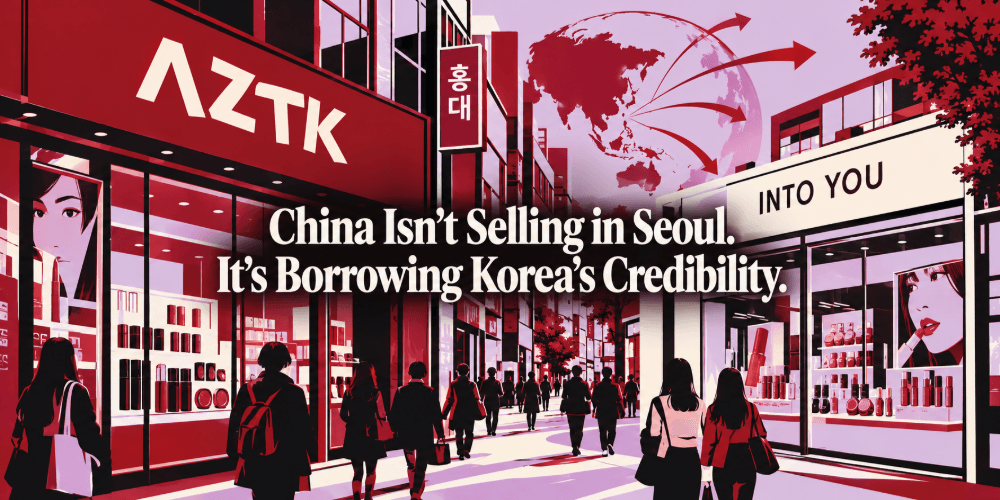
Korea exported US$11.4 billion of cosmetics in 2025 and imported US$71.8 million of them from China, a ratio of roughly 159 to one. The small number grew 84.2 per cent. On 11 September 2026 two Chinese colour brands opened counters in a Hongdae store and did not discount — their Korean prices track Chinese list prices. Every other Chinese entry into Korea this year cut price to get in. The one charging the most is the only one running an experiment.
What is actually crossing the border?
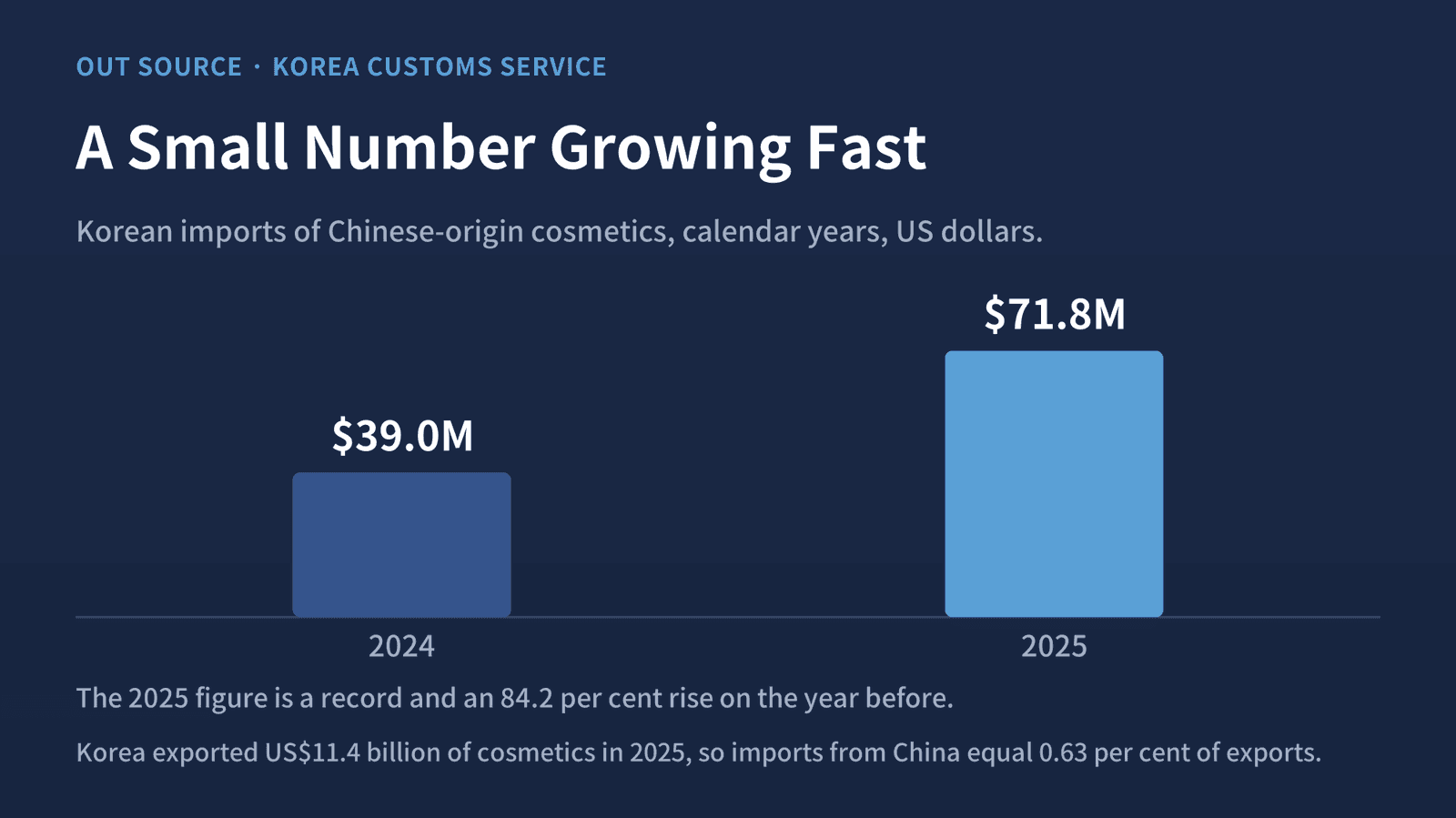
Korea Customs Service figures put imports of Chinese cosmetics at US$71.8 million in 2025, against about US$39 million the year before — an increase of 84.2 per cent and a record for the category. Set beside Korea's US$11.4 billion of cosmetics exports in the same year, also a record and second in the world, the import line is 0.63 per cent of the export line.
Reading that ratio as reassurance misses what the growth rate is doing. A base this small compounds quickly, and the monthly data has been accelerating rather than settling. Chinese customs recorded cosmetics exports to Korea of 121.1 million yuan in August 2026 against 62.62 million a year earlier, a rise of 93.4 per cent and the steepest among its major destinations.
The two national datasets do not reconcile, and they are not meant to. They differ in scope, in product categories, in clearance timing and in currency conversion, so the figures cannot be laid against each other to produce a market share. What they agree on is direction and order of magnitude, which is as much as customs data is built to deliver. Won figures in this article convert at 1,344.6 won to the US dollar, the Seoul close on 15 October 2026.

Who brought INTO YOU and AZTK in, and on what terms?
The importer is GTM Global, a distributor that built its business selling Korean cosmetics into China. By the company's account it reached annual revenue of about 100 billion won, around US$74.4 million, and holds exclusive Chinese distribution for eight K-beauty brands including the colour label 3CE, selling through Douyin and the Wow Color chain. Its chief executive, Jo Seol-mae, describes starting as a purchasing agent in 2008, beginning the business properly in late 2014, and working through door-to-door sales and duty-free retail before signing direct distribution agreements.
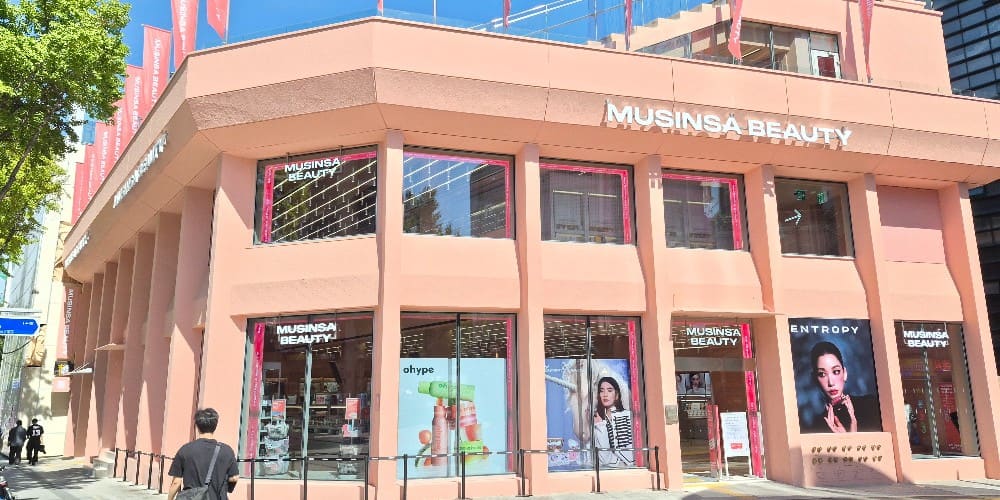
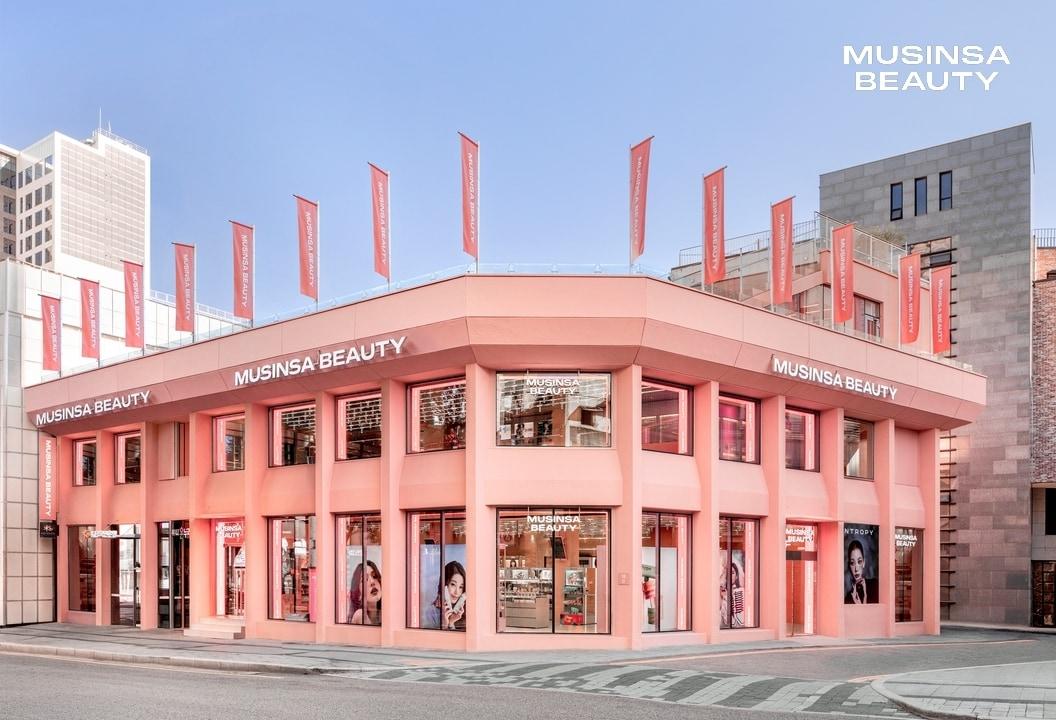
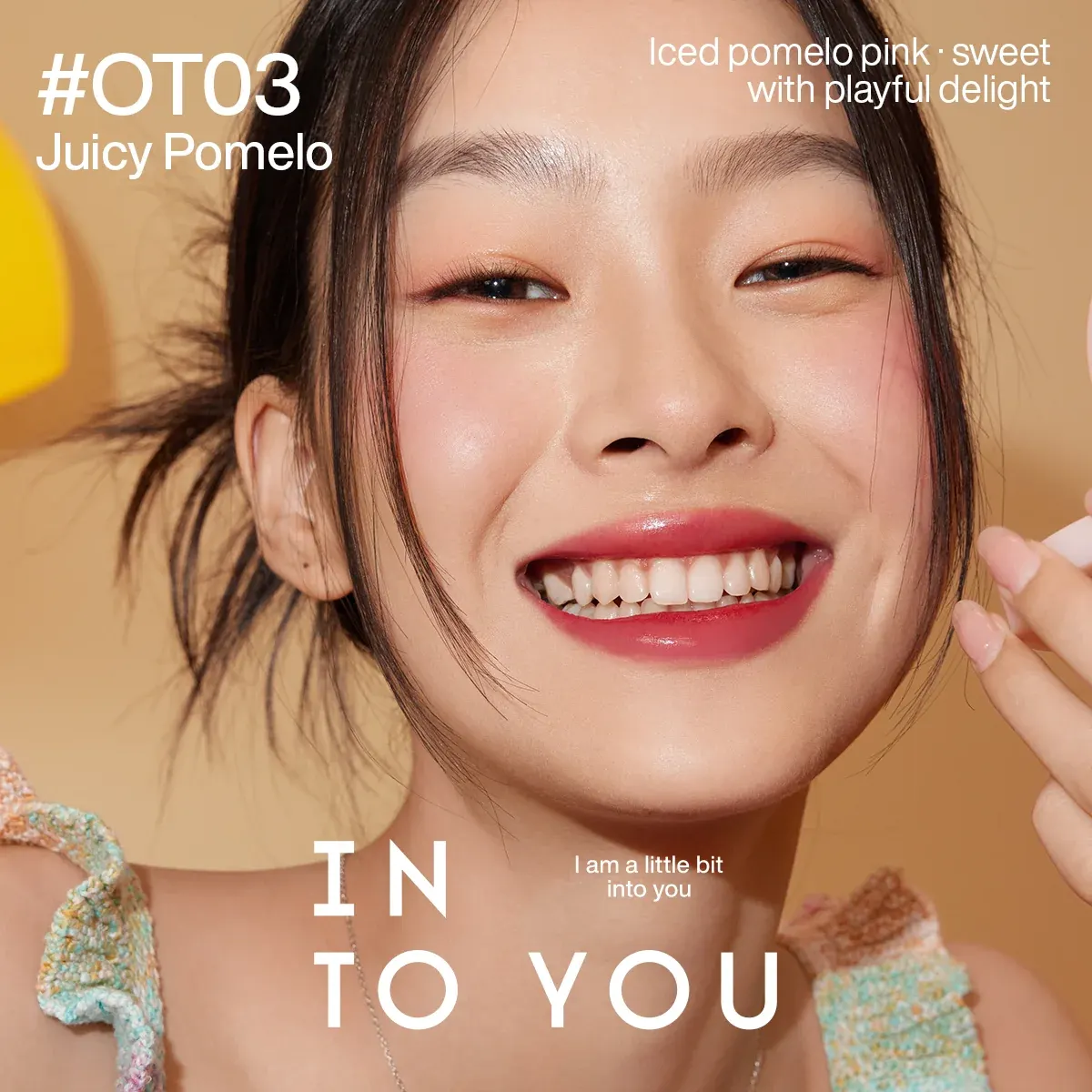
Both brands were formally imported, customs-cleared and tested rather than sold through the overseas direct-purchase channel that has carried most Chinese colour cosmetics into Korea until now. They opened on the ground floor of the Musinsa Beauty Hongdae store on 11 September 2026, the retailer's first standalone shop: about 400 pyeong, roughly 1,320 square metres, across four floors, carrying some 12,000 beauty items, with indie labels at about 70 per cent of the first two floors.
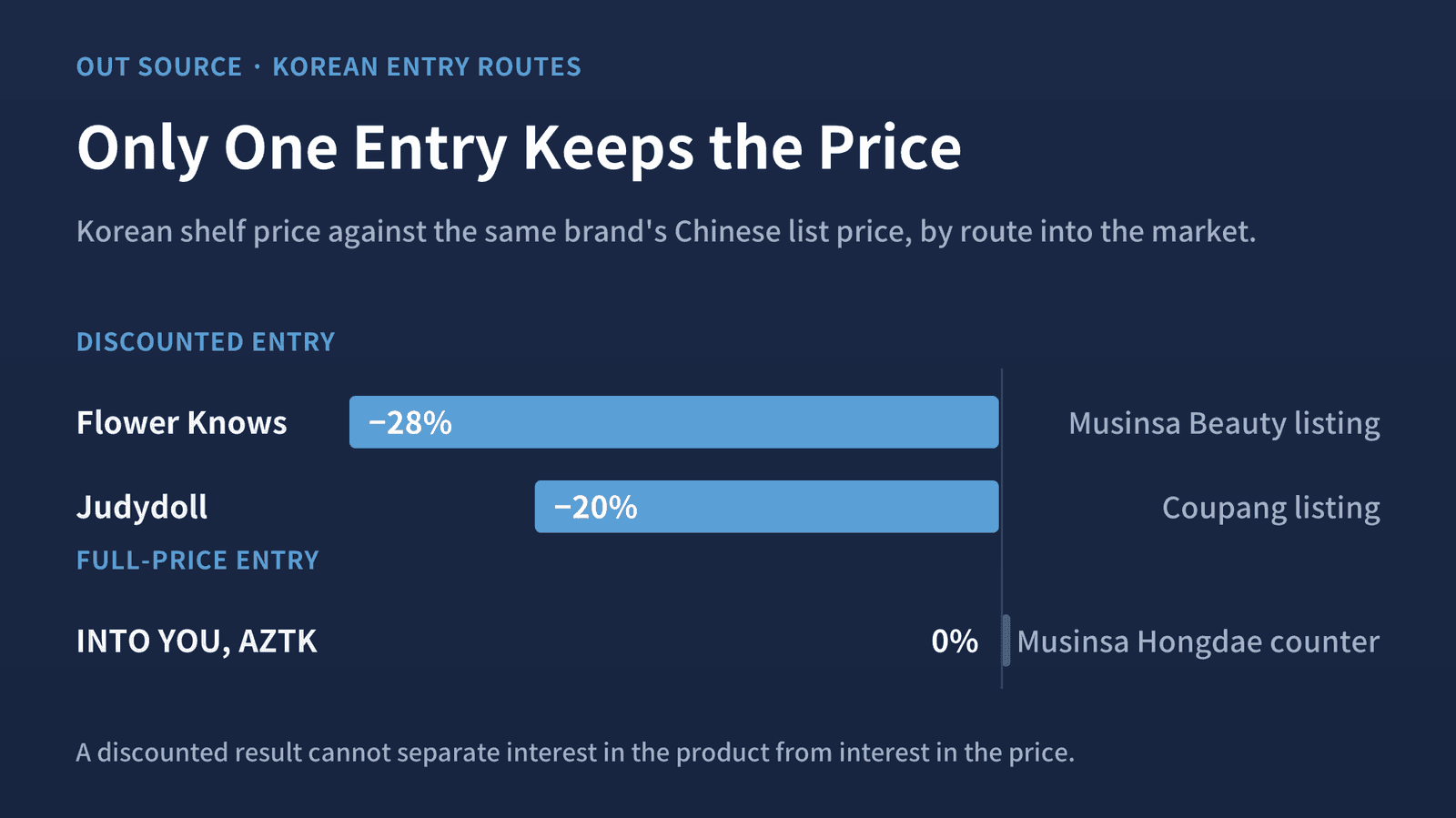
The pricing decision is the one that distinguishes this entry. GTM set Korean prices close to the official Chinese retail prices, declining the discount that Chinese brands have customarily used to overcome Korean resistance. The company reports that average daily sales per brand rose from about 300,000 won, some US$223, at opening to more than 800,000 won, about US$595, within two weeks without separate marketing spend, and that stock sold out and was replenished. Those figures are the company's own and have not been independently verified. It says it will add two more Chinese brands next month, is targeting five to ten in Korea, and is aiming at annual Korean revenue of 2 to 3 billion won, roughly US$1.5 million to US$2.2 million.
Why does holding the price matter more than the revenue?
The revenue target is trivial. Two to three billion won is a rounding error against a distributor already turning over a hundred billion in China, and it would not justify the cost of formal importation, Korean labelling, testing and a counter in one of the most expensive retail corridors in Seoul. The project does not pay for itself as a sales channel, which means it is being funded as something else.
What full-price placement buys is a clean measurement. A Chinese brand discounted 25 per cent on a Korean platform generates sell-through data that confounds two variables: whether consumers wanted the product, and whether they wanted the price. No buyer in Dallas or Düsseldorf can separate them afterwards. Sell-through at the same price the brand charges at home isolates the first variable, and it is the only one that travels.
Korea is an unusually severe place to run that test, which is the point. It has the densest colour cosmetics assortment per capita of any market, the shortest product cycles, and consumers with high baseline expectations of texture and finish at every price tier. A product that holds its price there has survived the hardest available comparison. Jo frames this directly: Chinese brands want their product competitiveness validated in Korea before they move on the United States and Europe, and competing head-on with K-beauty exposes where they are strong and where they are not.
What do the discounted entries buy instead?
The contrast set is well populated. Flower Knows entered Korea in 2025 on a princess-styled concept, began selling through Musinsa Beauty in February, also lists on KakaoTalk Gift, and has been pursuing an Olive Young listing with the United States, Europe and Japan as its stated endpoint. It moved more than half of its allocated stock out of its own Korean mall and onto Musinsa, pricing up to 28 per cent lower there despite absorbing platform fees. Judydoll sells on Coupang at more than 20 per cent below its Chinese prices.
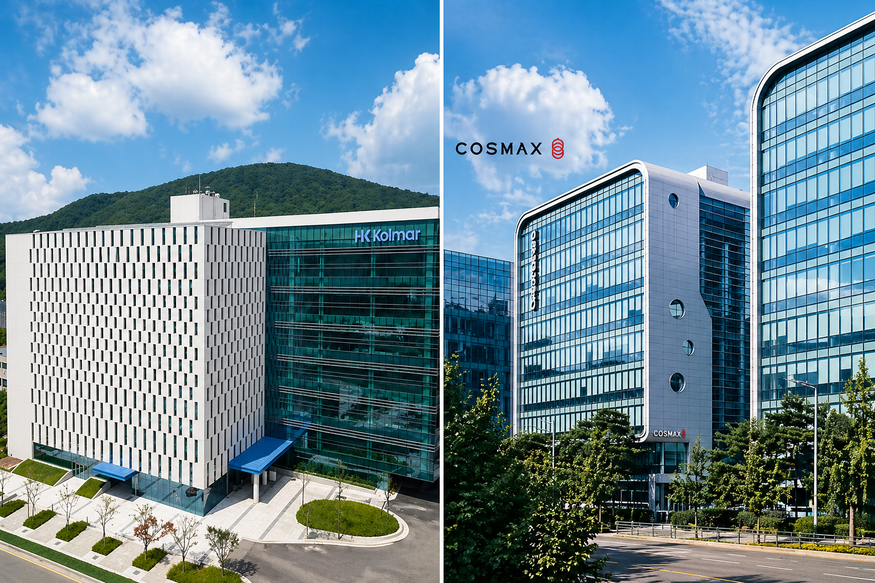
A third pattern skips the question of origin altogether. A Shanghai-headquartered brand whose Korean importer was reviewing an Olive Young listing planned to reposition it as K-beauty, and shifted part of its production away from Chinese suppliers to the Korean ODM houses Cosmax and Kolmar — an ODM being a contract developer and manufacturer that produces a formulation the client sells under its own brand. The reported cost of the move was about 30 per cent of margin.
A fourth is simply physical. Yoyoso, a Chinese lifestyle retailer that built its own colour line, opened a first Korean store in Gunsan in early 2026, planned a large Chungmuro site in Seoul, and has secured locations across six regions including Busan, Daegu and Gwangju.
Each of these buys something real — volume, shelf access, an origin story, footfall. None of them buys a number a Western buyer can read. Discounting proves that a price works. Rebranding as Korean proves nothing about the product and forfeits the brand's own identity in the process. Only the full-price counter generates evidence that survives the flight out.
Why would a Chinese brand route a Western pitch through Seoul?
Because Korea is where the category's credibility is currently priced. For a decade the inference ran one way: a formulation validated in Korea was assumed to be competitive anywhere, and buyers in Europe and North America learned to read Korean performance as a quality signal rather than a regional one. That inference is infrastructure, and infrastructure is available to whoever can meet its entry conditions.
Jo puts the size of the prize in proportion herself: Korea's domestic market is one twentieth to one thirtieth of China's, so Chinese brands are not coming for the revenue. She argues that for cosmetics a product's quality matters more than where it was made, and expects that once young Korean consumers take to Chinese brands the category spreads the way mala soup did — a Chinese dish that moved from novelty to fixture in Korean eating habits within a few years.
There is an irony in the mechanism worth stating plainly. The validation value that Chinese brands are now buying in Seoul was built by Korean manufacturers, Korean retailers and Korean consumers over fifteen years of export growth. It is a public good in the economic sense: non-excludable, and now being consumed by entrants who did not fund it.

Which doors are open, and which are still shut?
Musinsa and Coupang have opened. Olive Young has not. Every Chinese brand in this set is either listed on a platform or working toward an Olive Young listing it does not yet have, which makes the country's dominant health-and-beauty chain the effective gatekeeper for the physical channel.
That gives the gate a measurable value. Platform listings are reversible, self-serve and weakly curated; a chain listing is an editorial judgment that carries over to foreign buyers, who read it as pre-screening. The Hongdae counter is an attempt to buy a comparable signal outside the chain — a physical, full-price, formally imported placement in a flagship, which is the nearest available substitute for a listing the brand cannot get.
The retailer's own positioning makes that substitution plausible. The Hongdae store is Musinsa Beauty's second offline space after its Seongsu zone opened in April, and it is built around discovery rather than scale: a basement pharmacy of about 53 pyeong with pharmacist consultation and some 270 functional and inner-beauty brands, a zone for new ingredients, and a ranking area driven by online sales data. A new foreign brand lands there as a find rather than as an import.
What does the category mix say about where the pressure lands?
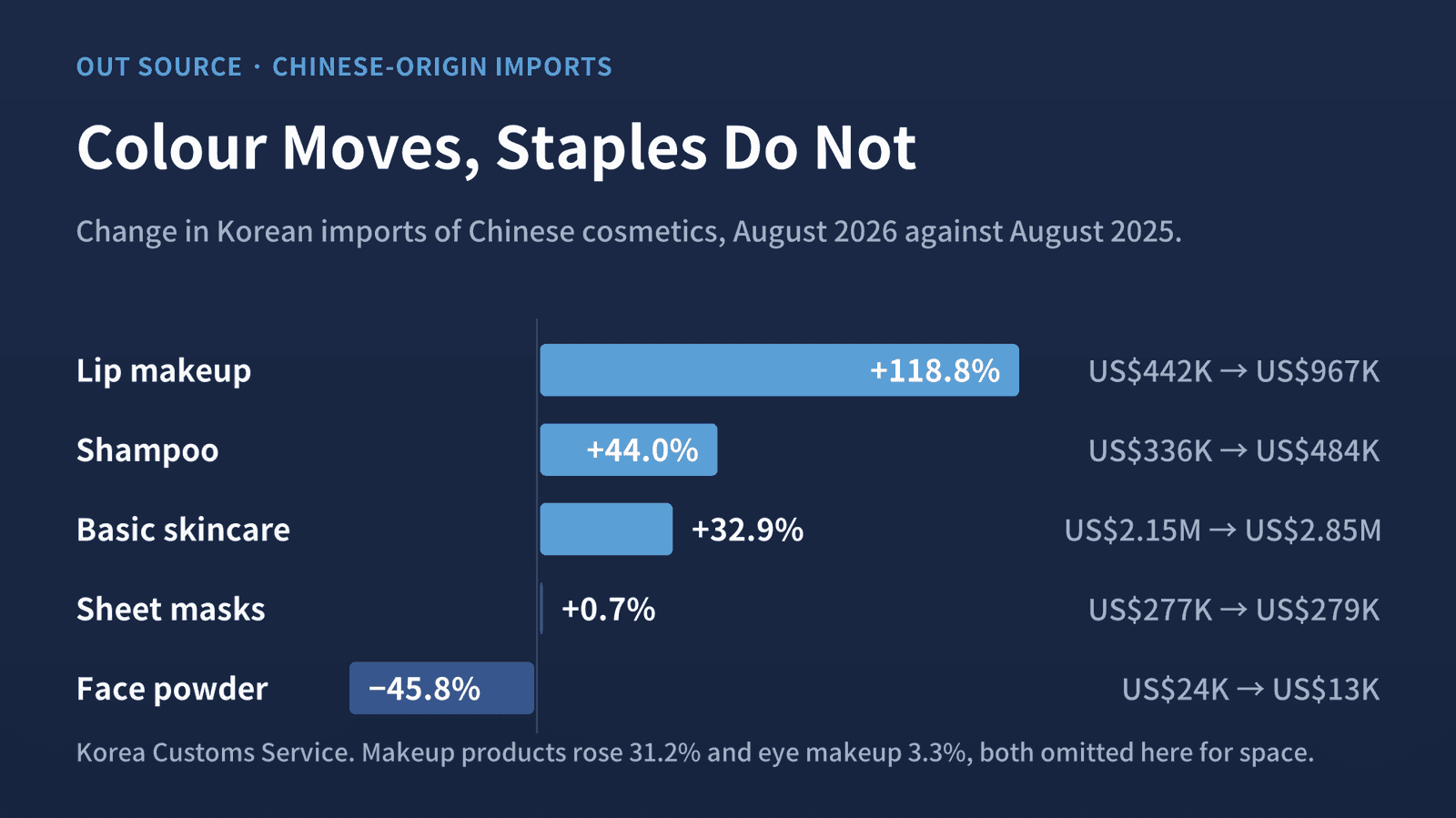
Korean customs figures for August 2026 against the same month a year earlier show the growth concentrated rather than general. Lip makeup imports from China rose 118.8 per cent to US$967,000, the steepest move in the set. Shampoo rose 44 per cent to US$484,000. Basic skincare, still the largest line at US$2.85 million, grew 32.9 per cent, and general makeup products 31.2 per cent to US$307,000.
The flat and falling lines are equally informative. Eye makeup moved 3.3 per cent, sheet masks 0.7 per cent, and face powder fell 45.8 per cent to US$13,000. These are the categories where Korean products are cheapest, most abundant and most firmly established, and where an entrant has nothing to offer that is not already on the shelf at a lower price.
The pattern is consistent with competition on novelty rather than on cost. Lip products carry the most visible formula and finish innovation and the shortest attention cycle, which makes them the natural beachhead for a brand arguing that its product is interesting rather than cheap. That is the same argument the full-price counter is designed to test, and the category data suggests it is already being made at the till.
Does any of this threaten Korean brands at home?
Not at these magnitudes, and claiming otherwise would require ignoring the arithmetic. US$71.8 million of annual imports against a domestic market and an export business of the scale Korea now runs is not a share story, and two counters in one Hongdae store turning over the equivalent of a few hundred dollars a day each are not displacing anybody.
The exposure is not in the domestic shelf. It is in the third market. A Chinese brand that can show a Western buyer full-price Korean sell-through is competing against Korean brands for the same slot in the same assortment, armed with a proof point generated in Korea and a cost base that is not Korean. The contest happens in Dallas, not in Hongdae, and the Korean leg of it is a research expense.
The second exposure is upstream and more ambiguous. When a Chinese brand moves production to Cosmax or Kolmar and gives up 30 per cent of its margin to do it, Korean manufacturing captures revenue it did not previously have, and Korean brands acquire a better-made competitor. Both facts are true at once, and the ODM sector has no obvious reason to prefer the second over the first.
Where does this leave manufacturing, retail and capital?
For the manufacturers, the client list is diversifying in a direction that reduces dependence on Korean brand cycles and raises the capability of the competition. Korean ODM capacity is being sold to whoever can pay for it, which is the correct commercial answer and an uncomfortable strategic one. The sector cannot have the revenue without the consequence.
For the retailers, the gate has become the product. Olive Young's refusal and Musinsa's acceptance are now assets that foreign brands are paying to pass through, and the curation decision carries further than the sales it generates. Whoever controls the shelf controls a validation service with an export value, which is a different business from selling cosmetics.
For buyers and investors, the useful adjustment is to stop reading Korean performance as a proxy for Korean origin. The two have come apart. A brand can now buy the Korean proof point without being Korean, and the diligence question that follows is whether the number was generated at full price or at a discount — because only one of those is a measurement.
Korea spent fifteen years making its market the place a cosmetic has to work. That worked. The proving ground is open to everyone now.