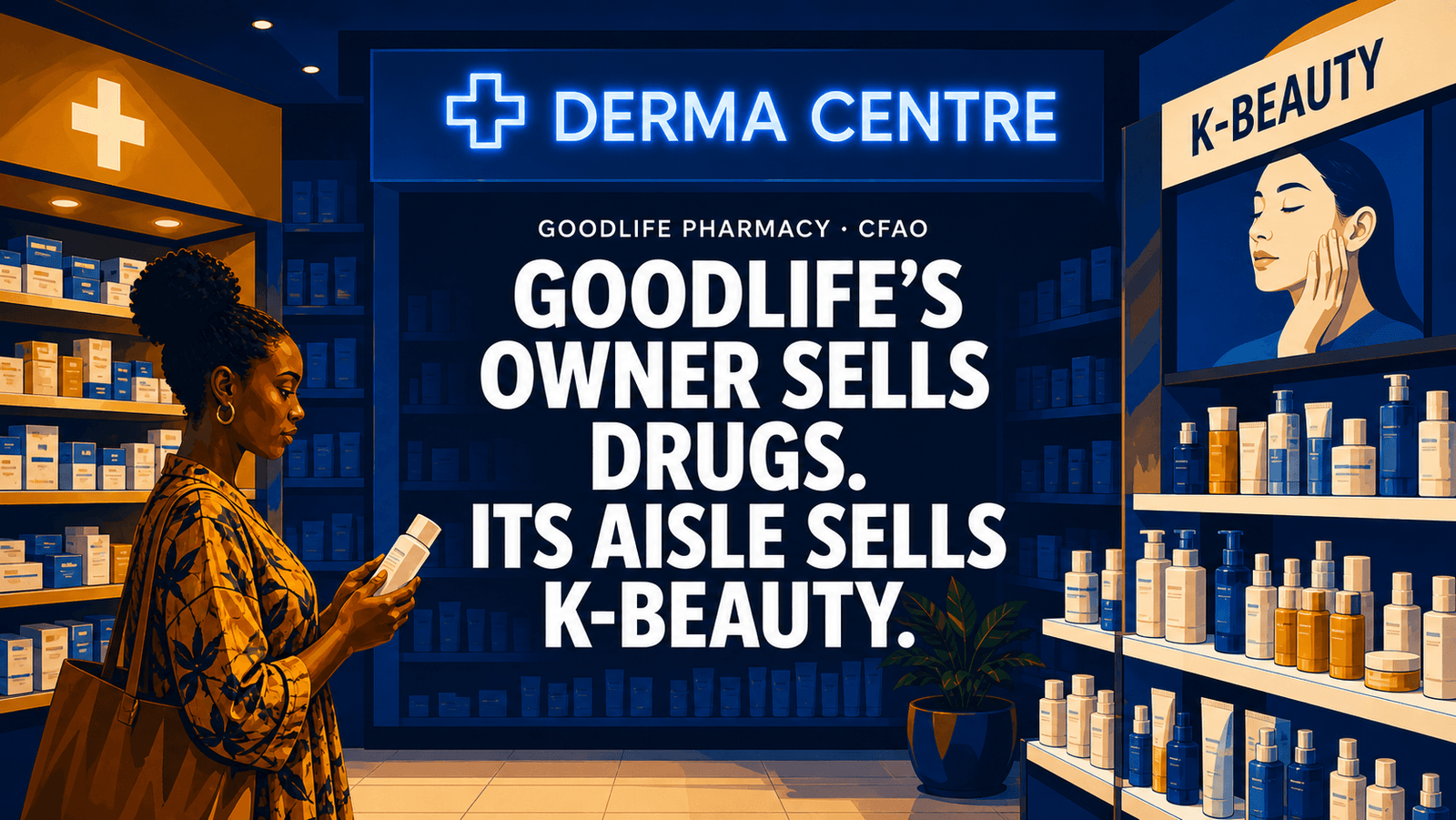
Goodlife Pharmacy has been wholly owned by CFAO Healthcare since July 29, 2025, and it runs 13 stores in Uganda. Photos from one of them show a blue-lit DERMA CENTRE sign and a face-care wall that carries COSRX, Uncover, The Ordinary and La Roche-Posay. A store representative told Jimmy Cho that shoppers ask for brands they know from social media, so the store prefers recognized names. The aisle is where a drug retailer decides which beauty brands count.
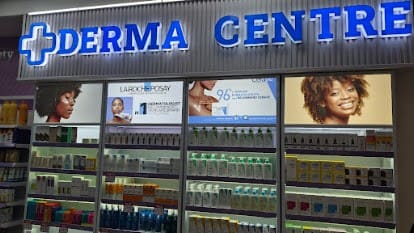
▲ A blue-lit DERMA CENTRE sign with advertising panels inside a Goodlife pharmacy in Uganda. Photo: Jimmy Cho
What does a Goodlife face-care aisle look like?
Goodlife Pharmacy runs 13 stores in Uganda, in Kampala, Entebbe and Jinja, and calls itself a professional pharmacy, health and beauty chain. Photos Jimmy Cho took in November 2026 show a blue-lit DERMA CENTRE sign with a medical cross. Four advertising panels hang beside it, with a La Roche-Posay panel in the center and portraits of Black women on the others.
On the face-care wall, COSRX, Uncover, The Ordinary and La Roche-Posay share the shelves. A Korean brand, a Nairobi brand made in South Korea, an ingredient-led label and a French dermatology line sit under the same pharmacy signage.
The sign says derma, not beauty. The word borrows the authority of a clinic for a shelf where a French dermatology brand, a Korean sunscreen and a Nairobi serum are all sold as skincare. A shopper reading the sign gets a medical frame before reading a single box.
What do the sale tags say?
SALE tags run along the shelf rails. Four of them read 93,400 Ugandan shillings marked down to 84,000, 142,100 to 127,890, 168,000 to 151,200 and 166,000 to 149,400. Each markdown is about 10%.
All four marked-down prices are above 70,000 shillings, the threshold for free delivery on Goodlife Uganda's website. The site promises delivery within three hours, so the aisle in the store and the order on a phone are priced against each other. The shelf shows the price beside the name, and a shopper asking for a brand sees what it costs before reaching the counter.
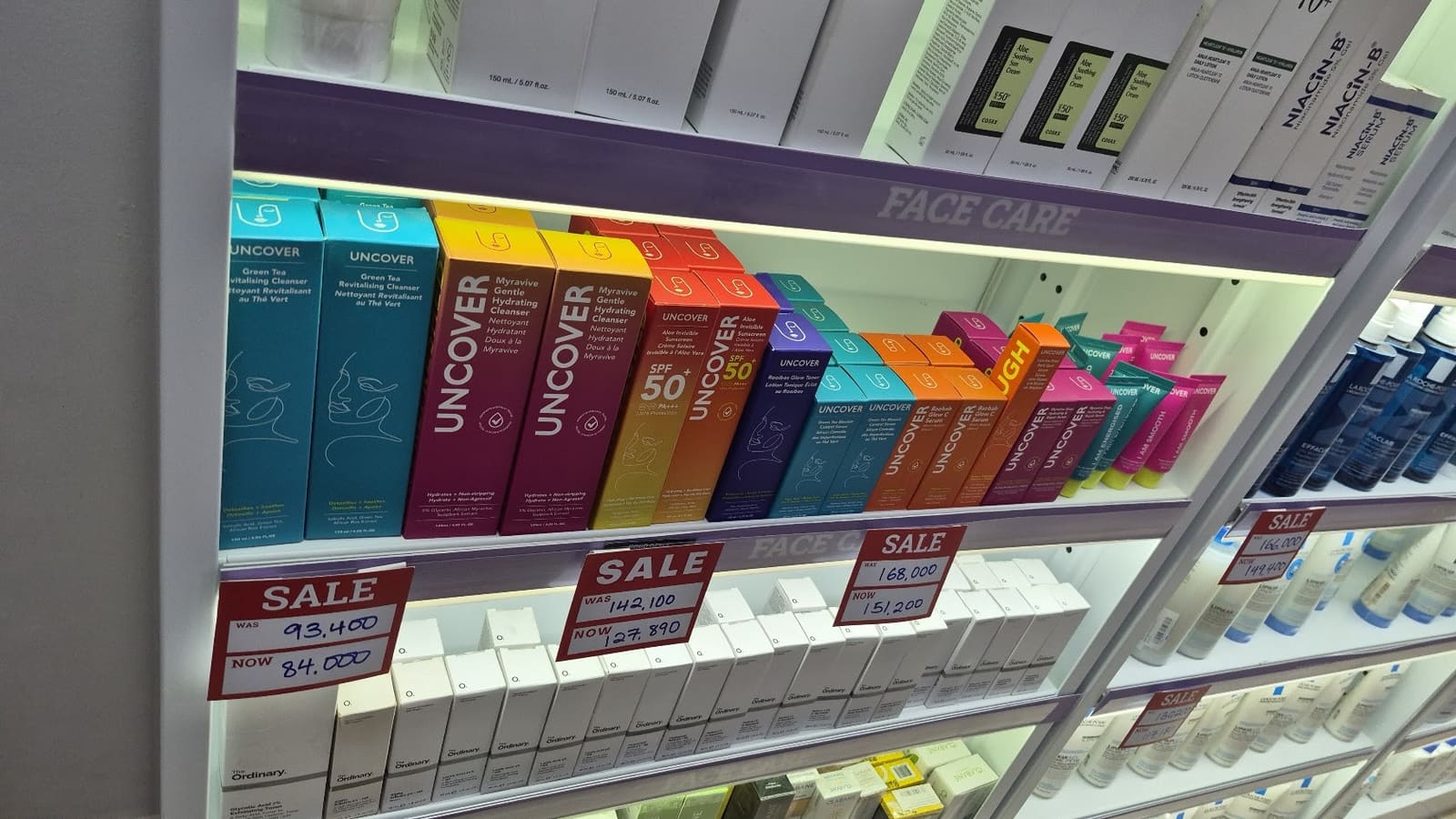
▲ SALE tags on a Goodlife face-care shelf in Uganda show markdowns of about 10% in Ugandan shillings. Photo: Jimmy Cho
Who owns the aisle?
CFAO Healthcare bought a 30% minority stake in Goodlife in 2022 from LeapFrog Investments. The Comesa competition regulator cleared the full acquisition at the start of June 2025, and CFAO announced on July 29, 2025 that it owned 100% of the chain. The release gave no price.
CFAO said the aim is to integrate the value chain from manufacturing to the patient. Jean-Marc Leccia, CEO of CFAO Healthcare, said in the release: "Goodlife has built a highly recognized brand and an extensive network of pharmacies that serve as genuine wellness hubs." He told The Standard: "The value of this deal is in the brand name; we cannot change it." The Ugandan stores now describe themselves as a CFAO Healthcare company.
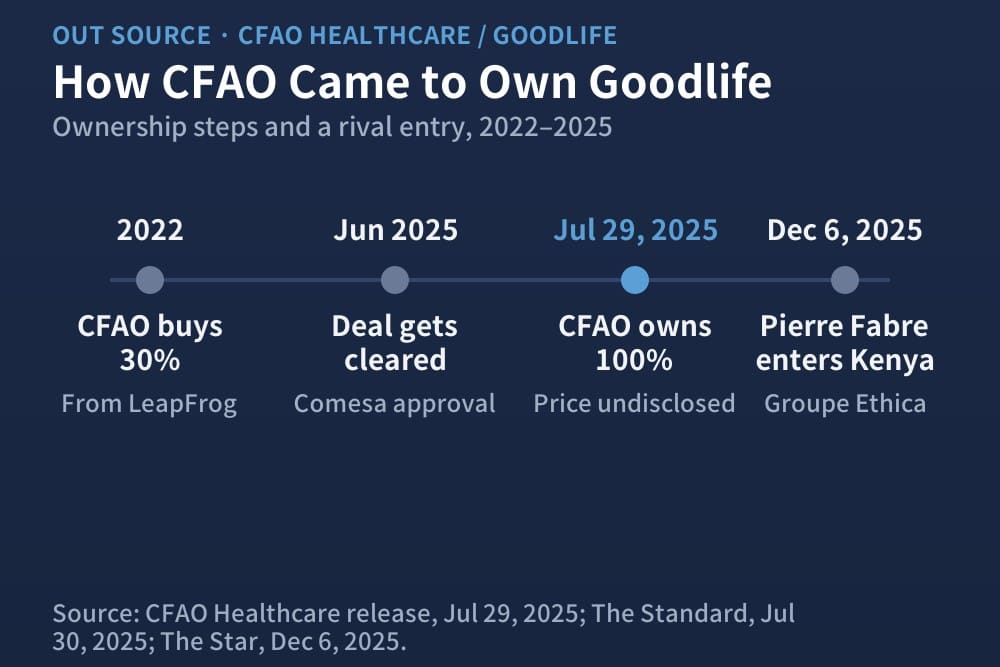
▲ CFAO Healthcare bought 30% of Goodlife in 2022 and 100% on July 29, 2025.
Why does a pharmacy owner talk about counterfeits?
Leccia said CFAO is considering local pharmaceutical manufacturing in Kenya as a response to counterfeit medicine. He said more than 700,000 people die every year from fake medicines in sub-Saharan Africa.
His concern is medicine, and the shelf in the photos is skincare. The two meet at one word: authentic. In Nigeria, counterfeit COSRX circulated from late 2023 to early 2024, and a K-beauty retailer there removed all COSRX products from its shelves. A pharmacy's name is a promise about what is real, and the brand names on its cosmetics shelf draw on that promise. The Standard reported that Leccia described the value of the deal as the brand name itself. That name now sits above shelves that hold dermatology lines, K-beauty and a Nairobi brand at once.
Who gets asked for by name?
A store representative at the Goodlife pharmacy told Jimmy Cho that the customers who come in usually ask for brands they have already heard of on social media. For that reason, the representative said, the store prefers brands with some level of recognition.
Uncover is one of the brands on that shelf. Cosmax, which supplies Uncover a sunscreen and a serum, said the brand is recognized in Kenya, Nigeria and Uganda. Uncover lists Goodlife among its retail partners and has an online community of 200,000 members. The brand built the name first and the pharmacy stocked it second. Early deals with large retailers were on consignment, and later ones were outright purchases.
How does a French dermatology group enter this kind of shelf?
Pierre Fabre entered Kenya on December 6, 2025 with Groupe Ethica, a distributor headquartered in Ivory Coast that is about 25 years old and operates in Kenya, Nigeria, Ghana and South Africa. The group brought Avène and Ducray.
The Kenya Association of Dermatologists endorsed the launch. The products go first into leading pharmacies and selected hospitals. Rosemary Ayieko said, "Kenya is one of the most dynamic dermatology markets on the continent," and Kenya is the group's anchor market in the region.
Pierre Fabre's credential is the dermatologist. The K-beauty credential on the Goodlife shelf is the feed. Both end up in the same aisle, and the aisle takes them on different evidence.
Both brands go through pharmacies. Pierre Fabre names pharmacies and hospitals as its first stops, and Uncover names pharmacy retailers as its source of about 80% of sales. The pharmacy is the shared door, and each brand shows up carrying a different reference.
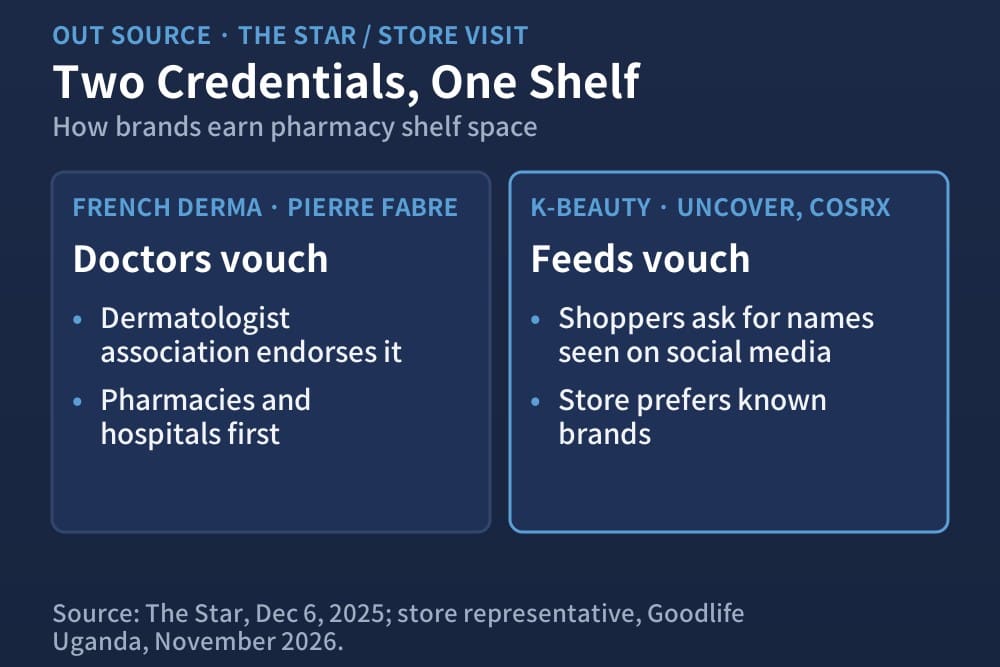
▲ A French dermatology brand's credential is the doctor, and K-beauty's on the Goodlife shelf is the social media feed.
How much K-beauty is flowing into Africa?
The Korea International Trade Association reported that Korean cosmetics exports to Africa reached $13.76 million in 2023, up 70.5%. COSRX entered Africa in 2024, and its monthly orders averaged 500 million won in the first quarter, about $374,000 at the November 20, 2026 rate of 1,336.2 won per dollar.
In Nigeria, the pharmacy chain Medplus, with more than 70 stores, partnered with a Korean distributor in 2022 to open a K-beauty section. Uncover's Aloe Invisible Sunscreen is a bestseller in Nigerian sun care. The path into Africa runs through pharmacy chains as often as through beauty retailers.
Who decides what enters the aisle?
Three parties touch the shelf. CFAO owns the chain and talks about authenticity and a brand name it cannot change. The store representative picks recognized names. The shopper, who learned those names on social media, asks for them.
For a Korean brand, the question is which of the three it has to reach first. In the store representative's account, the shopper's feed runs ahead of the buyer's catalog. The owner's interest in authenticity matters most where a counterfeit costs the most, and that is on a pharmacy shelf.
A Korean brand that wants this shelf has a sequence to follow. It builds a name where shoppers already look, it shows that the product is real, and it gives the pharmacy a reason to stock it that does not depend on a sales call. Each step is visible in the aisle that Jimmy Cho photographed.