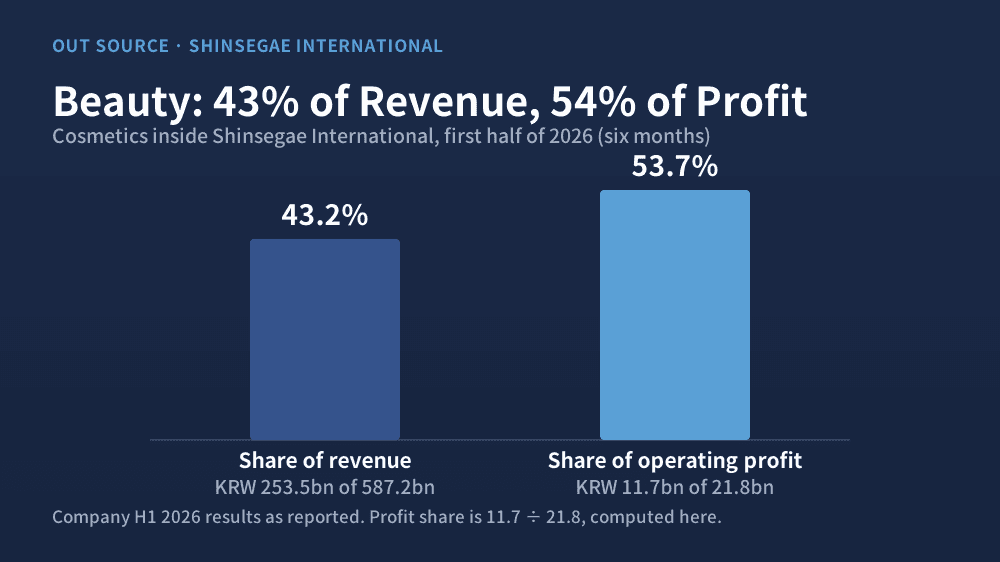
On October 23, 2026, Shinsegae Group split Shinsegae International into a Fashion Division and a Cosmetics Division and put the former CEO of CJ Olive Young in charge of the second. In the first half of 2026, cosmetics produced 253.5 billion won (US$188 million) of the company’s 587.2 billion won (US$436.2 million) in revenue, or 43.2%, and 11.7 billion won (US$8.7 million) of its 21.8 billion won (US$16.2 million) operating profit, or 53.7%. The company’s structure was built around imported fashion. Its profit now comes mostly from beauty.
What changed at Shinsegae International on October 23?
Shinsegae Group’s newsroom published its 2027 regular executive appointments on October 23, 2026. The release is titled for 2027 and dated 2026. All dollar figures in this article use 1,346.2 won per US dollar, the November 2, 2026 close.
For Shinsegae International, the release does one thing. It divides the company into a Fashion Division and a Cosmetics Division, each with its own professional management. Kim Deok-ju, the company’s current CEO, leads Fashion and also heads its subsidiary Shinsegae Tomboy.
Heo Min-ho heads Cosmetics. The release lists him as CEO of the Cosmetics Division of Shinsegae International and, at the same time, CEO of Shinsegae Casa, which runs the Casamia and JAJU brands. It records ten years as CEO of CJ Olive Young among his credentials and states no effective date. The group framed the reshuffle as a personnel overhaul meant to resolve the company’s pressing problems quickly and carry out its growth plans.
A report on November 2, 2026 adds the internal structure. The Cosmetics Division brings the existing Cosmetics 1 and Cosmetics 2 units, which handle imported brands and in-house brands, under one head. Seo Min-sung and Lee Seung-min keep their posts leading the two units.
What does Heo Min-ho’s résumé say about the job?
Heo joined Shinsegae in 1989 and moved to marketing at Shinsegae International in 1996. In 2001 he took sales and purchasing at Dongwha Duty Free. From 2008 he was CEO of CJ Olive Young, the health-and-beauty (H&B) store chain, for about ten years.
A 2018 profile of Olive Young counts 57 stores in 2008 and 552 in 2015, with 2016 revenue of 1.127 trillion won (US$837 million). It describes his focus as store expansion and merchandising aimed at consumers in their twenties, plus sourcing products from small companies. Later reports put the store count above 1,100 when he left in 2018.
He then ran CJ ENM’s commerce business. He became vice chairman and CEO of Cosmax BTI in March 2025 and senior vice chairman in December 2025. Cosmax BTI is the holding company of Cosmax, an ODM, or original design manufacturer: a factory that develops formulas and makes finished products for brands that sell them under their own names.
The path crosses the three layers a beauty company deals with every day: the retailer that sells the product, the commerce channel that moves it, and the manufacturer that makes it. The release cites the Olive Young decade as his credential.
How large is beauty inside a company with a fashion-centered structure?
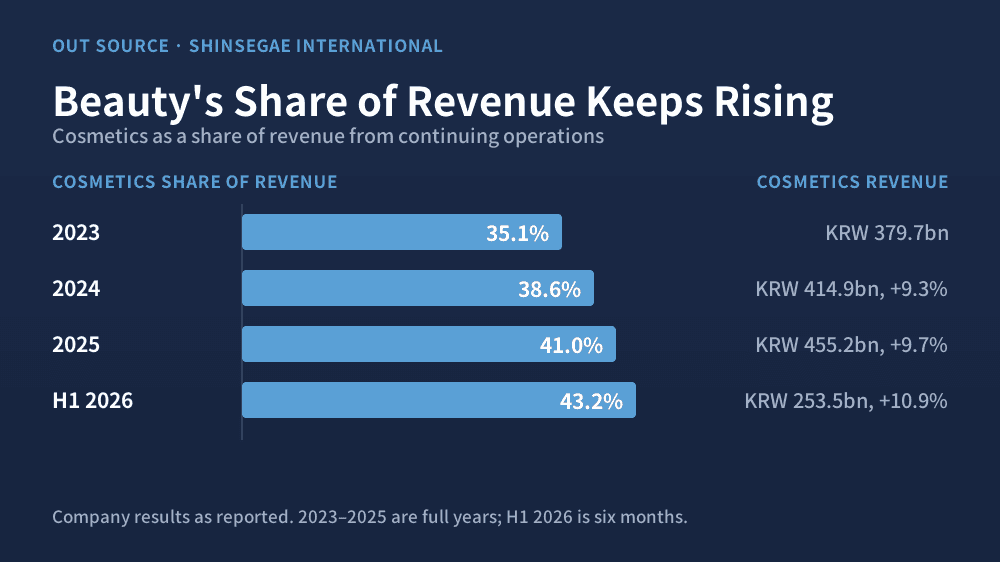
Cosmetics revenue was 379.7 billion won (US$282 million) in 2023, 414.9 billion won (US$308 million) in 2024 and 455.2 billion won (US$338 million) in 2025. As a share of revenue from continuing operations, which excludes businesses sold or moved out, that is 35.1%, 38.6% and 41.0%. In the first half of 2026 cosmetics reached 253.5 billion won (US$188 million), up 10.9% from a year earlier, and 43.2% of the total.
The series starts in 2023 because the revenue base changed. Shinsegae International moved its JAJU household-goods business to Shinsegae Casa and reports it as a discontinued operation. Earlier shares, including a 23% figure for 2022, sit on a larger base and do not line up with these.
Beauty is not the faster grower in every line. Fashion revenue was 333.7 billion won (US$248 million) in the first half of 2026, up 19.1%, against 10.9% for cosmetics. Imported fashion alone rose 31.8% in the second quarter. The case for beauty is made in profit, not in growth.
Is beauty also where the profit is?
In the first half of 2026, cosmetics earned an operating profit of 11.7 billion won (US$8.7 million), up 69.8%. Operating margin rose from 3.0% to 4.6%, according to the company’s disclosure as reported. Consolidated operating profit was 21.8 billion won (US$16.2 million), against a 4.4 billion won (US$3.3 million) loss a year earlier. Cosmetics supplied 53.7% of it.
The company’s overall margin was 3.7%. By simple subtraction, everything outside cosmetics earned 10.1 billion won (US$7.5 million) on 333.7 billion won (US$247.9 million) of revenue, a 3.0% margin.
One half-year is not a trend. Full-year 2025 closed with an operating loss of 11.5 billion won (US$8.5 million) on continuing operations. The 4.6% beauty margin is the better of two thin margins.
What does one head over two cosmetics units change?
Not the units. Cosmetics 1 and Cosmetics 2 remain, each led by its own executive with its own accountability. What is new is a head above both.
Before October 23, Seo and Lee were two of the co-CEOs who ran the company under the leadership team that took over in September 2025. Now they lead units inside a division.
Reports describe the new job as coordination: aligning the strategies and sales channels of the two heads, building own brands as a steadier source of income, and leading distribution and overseas expansion. A Shinsegae spokesperson said the cosmetics business will accelerate the growth of its own brands under Heo. Those are stated aims, not results.
Why is the leadership structure itself part of the story?
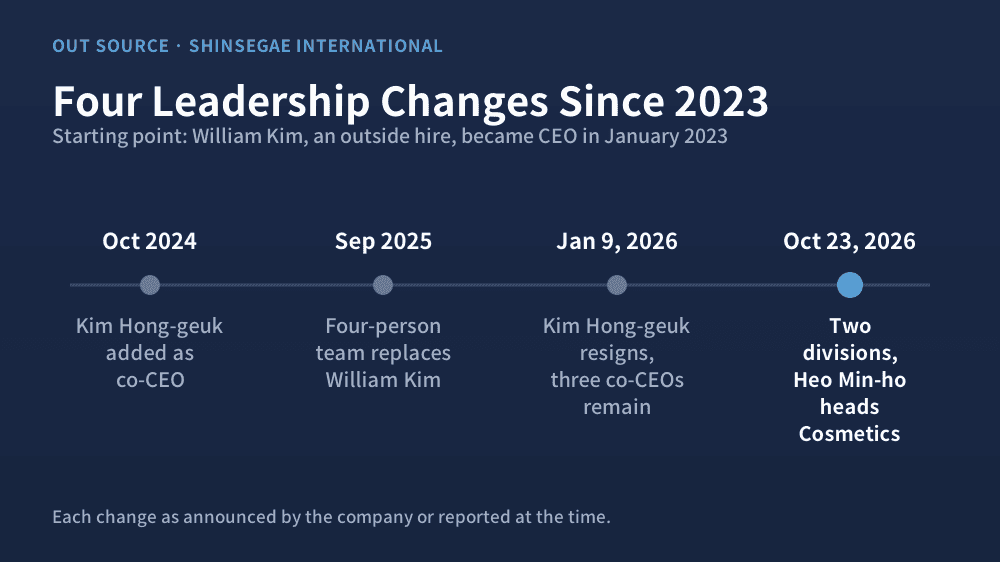
Shinsegae International has changed how it is led four times since January 2023, when William Kim, an outside hire, became CEO. In October 2024 Kim Hong-geuk joined as co-CEO. In September 2025 a four-person team replaced William Kim: Kim Deok-ju, Kim Hong-geuk, Seo Min-sung and Lee Seung-min. Kim Hong-geuk resigned on January 9, 2026, after the household-goods business moved to Shinsegae Casa, and three co-CEOs ran the company until the October 23 divisions.
One account ties the changes to weakness in the imported-fashion model, including the end of several overseas-brand distribution contracts. Distribution contracts end on the brand owner’s terms. Own brands do not carry that exposure.
What does the new head inherit at Amuse?
Shinsegae International bought 100% of the color-cosmetics brand Amuse in 2024 for 71.3 billion won (US$53 million). In the second quarter of 2026, Amuse Korea reported revenue of 13.4 billion won (US$10.0 million), down 36.1%, and an operating loss of 0.6 billion won (US$0.4 million). For the first half, the company cites revenue of about 23.5 billion won (US$17.5 million) and an operating loss of about 1 billion won (US$0.7 million).
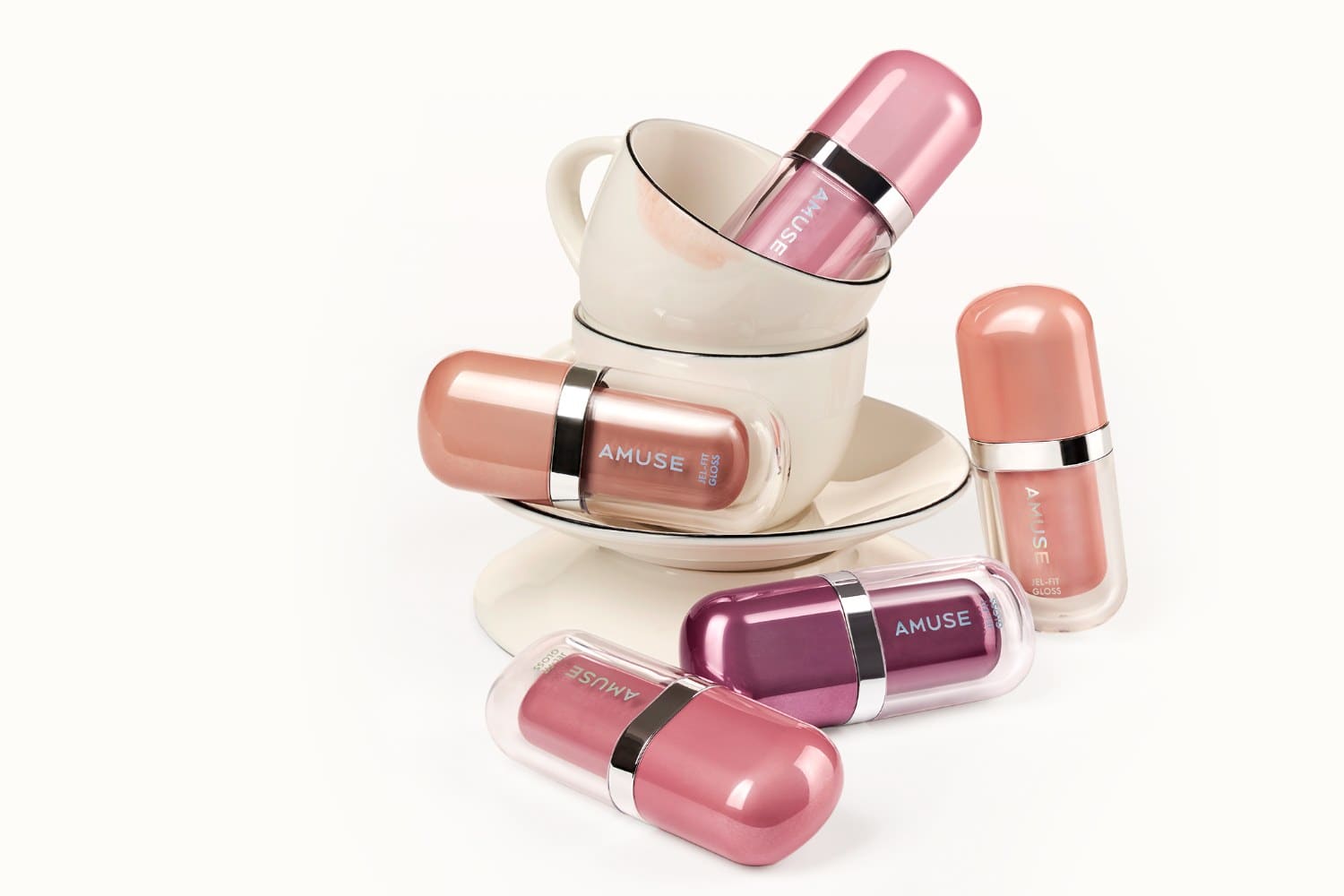
The company attributes the loss to up-front costs for overseas distribution, country-by-country regulatory approvals and brand investment. It expects Amuse’s profit to improve gradually in the second half of 2026.
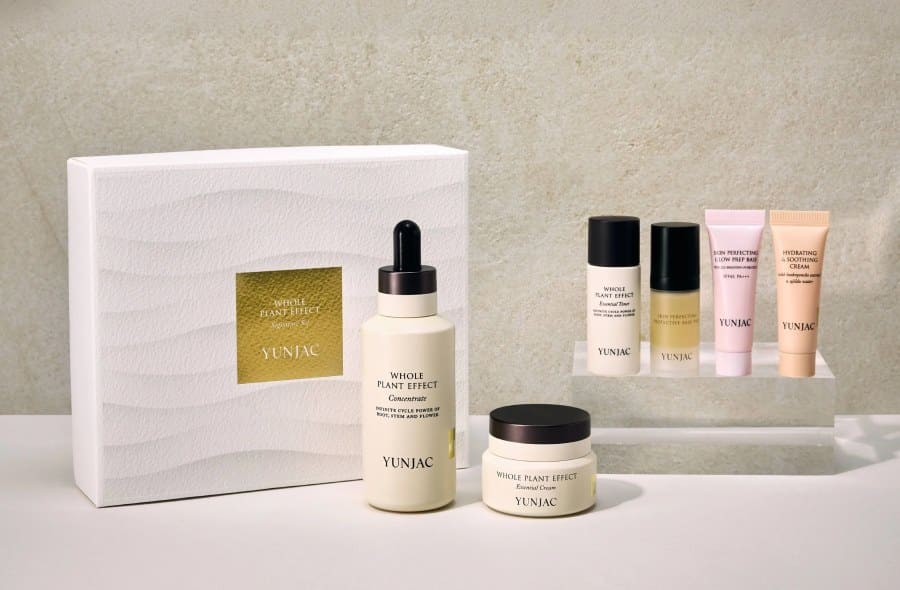
Two other own brands move the other way. The company says Yunjac and VIDIVICI each grew revenue by more than 50% in the second quarter of 2026, and that Yunjac’s 2025 global sales were the highest since its launch. Those figures are the company’s own. One division now holds a loss-making brand and two brands the company says are growing past 50%.
Who reads this move differently?
Each side of the industry reads the same appointment through its own interest.
- Manufacturing. A former Cosmax BTI CEO now leads a brand owner’s beauty division. For ODMs that supply brand owners, the buyer’s side of the table now includes someone who has run an ODM group.
- Brands and buyers. A retailer’s former chief now sets the plan for brands that retailers sell. Reports expect him to lead distribution expansion.
- Investment and oversight. Cosmetics reports its own revenue and profit. The 4.6% beauty margin, the 3.0% margin outside it and Amuse’s loss now sit side by side, and one named executive answers for them.
Beauty carries 53.7% of the profit and 43.2% of the revenue. It now has its own head. The structure follows the numbers.