Kérastase was founded in Paris in 1964 by François Dalle, then Chairman and CEO of L'Oréal, and has been owned by L'Oréal Group since day one. It is not an independent startup that L'Oréal acquired later; it was built inside L'Oréal's research labs to create a luxury salon haircare category that did not exist. Today it sits inside L'Oréal's Professional Products Division as a billion-euro flagship, backed by a parent company controlled by the Bettencourt Meyers family (34.79%) and Nestlé (20.16%).
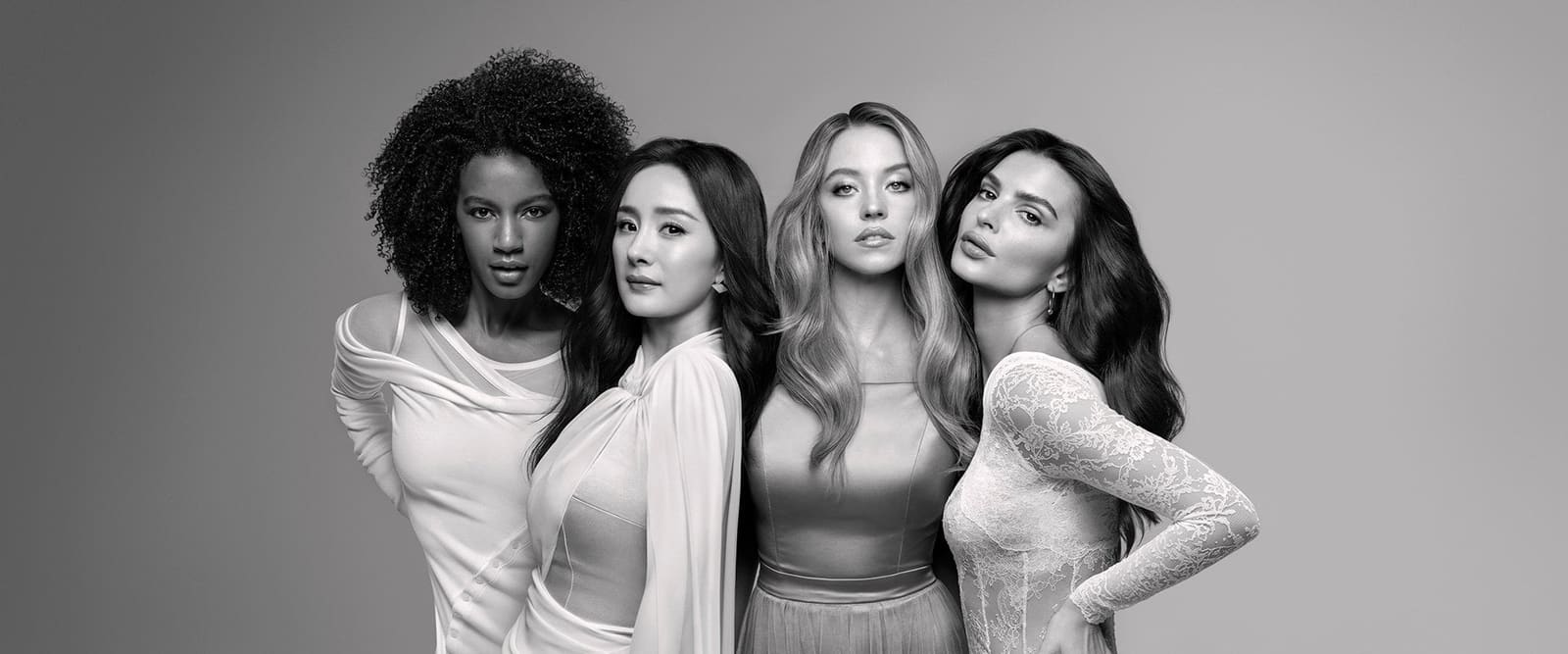
▲ Kérastase operates across more than 60 countries and 36,000 salons worldwide, selling roughly 58 million products a year. Image: L'Oréal
Who founded Kérastase and where did it originate?
François Dalle launched Kérastase in Paris in 1964, seven years after succeeding L'Oréal founder Eugène Schueller as Chairman and CEO. At the time, hair routines were treated as basic hygiene—household shampoos stripped oil without repairing damage caused by backcombing, heavy hairsprays and bleaching. Dalle tasked L'Oréal Advanced Research with building a skincare-inspired diagnostic care line exclusively for salons.
The name itself states the thesis: kéra from keratin, the primary protein in hair, and stase from stasis, meaning stability and preservation. In 1968, four years after launch, Kérastase became the first haircare brand to introduce retail products inside hair salons for home follow-up, turning stylist diagnosis into recurring consumer revenue. (For the full story of Dalle's salon field research and product architecture, see our earlier piece on Kérastase's innovation history.)
Who owns Kérastase today?
Kérastase is 100% owned by L'Oréal S.A. (Euronext Paris: OR), headquartered in Clichy, France, with Kérastase's own brand offices in Paris. Every bottle sold—whether in a Seoul flagship salon, Sephora, or official e-commerce—rolls up into L'Oréal Group's consolidated financials.
At the parent level, L'Oréal's ownership has been anchored for decades by two strategic shareholders. According to L'Oréal's 2025 Universal Registration Document (as of December 31, 2025), Mrs. Françoise Bettencourt Meyers and her family hold 34.79% of the company, while Swiss food and nutrition giant Nestlé S.A. holds 20.16%. Public float accounts for 42.99%, and L'Oréal employees hold the remaining 2.06%.
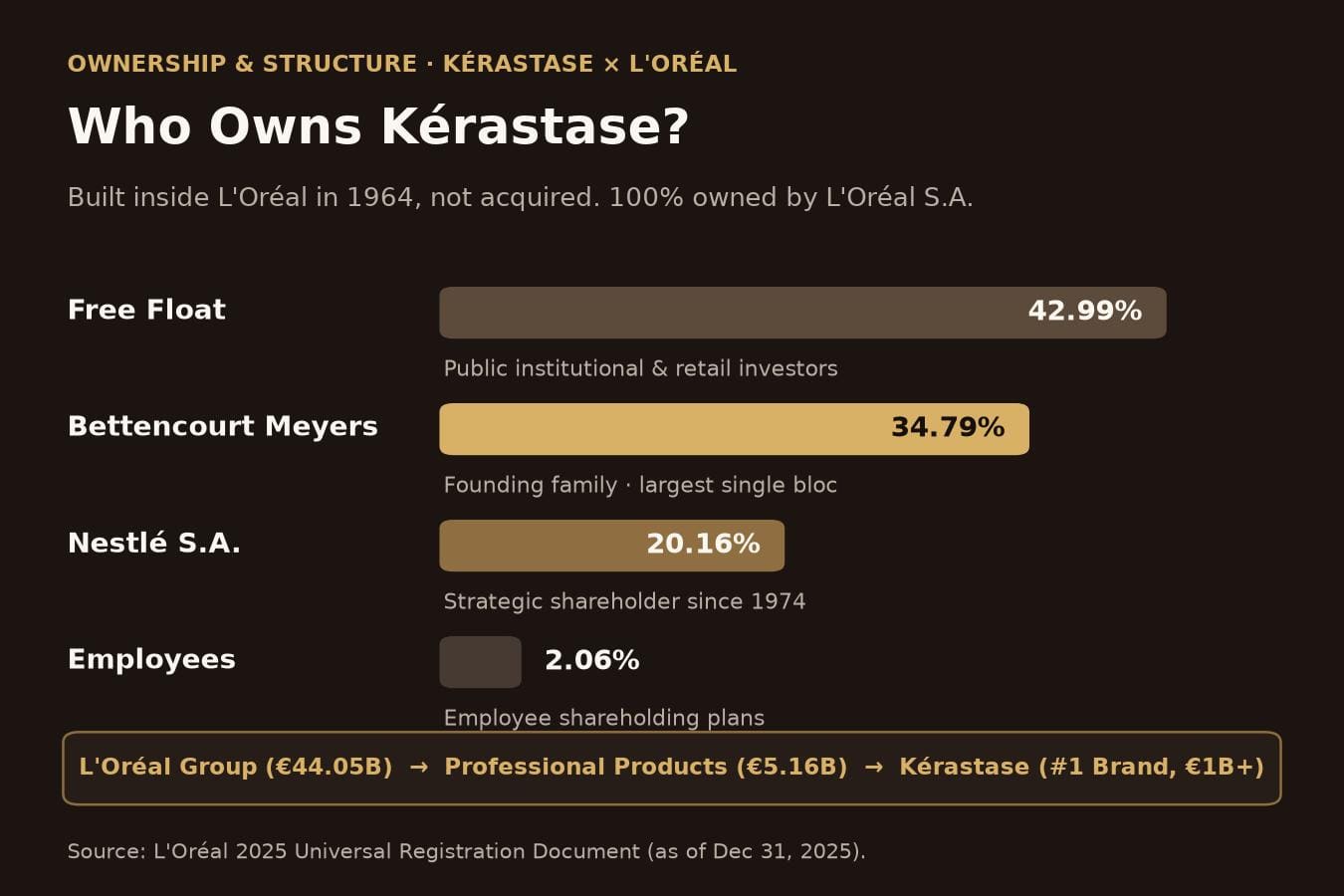
▲ L'Oréal S.A. shareholding as of December 31, 2025 and Kérastase's position inside the Professional Products Division. Source: L'Oréal Universal Registration Document 2025
Who leads Kérastase and how big is it inside L'Oréal?
L'Oréal Group is led by CEO Nicolas Hieronimus and organizes its 37+ global brands into four divisions: Consumer Products, L'Oréal Luxe, Dermatological Beauty, and Professional Products. Kérastase sits at the top of the Professional Products Division (PPD) alongside L'Oréal Professionnel, Redken, Matrix, Pureology, and newly acquired Color Wow.
At the brand level, Kérastase is led by Global Brand President Amber Zak Yopp. Inside PPD, Kérastase is already a "billionaire brand" (generating over €1 billion in annual sales) and became the division's single largest brand in 2024. In 2025, Kérastase recorded another year of double-digit growth, propelled by the launch of Gloss Absolu—the division's biggest product launch to date—and the rollout of AI-powered scalp diagnostic device K-SCAN.
That momentum pushed the entire Professional Products Division past the €5 billion mark for the first time in 2025. Divisional sales reached €5,163.0 million, up +7.5% like-for-like (+5.7% reported) on 2024's €4,886.2 million, making PPD L'Oréal's fastest-growing division of the year. Operating profit reached €1,180.3 million, a 22.9% operating margin—higher than L'Oréal Luxe's 21.4%.
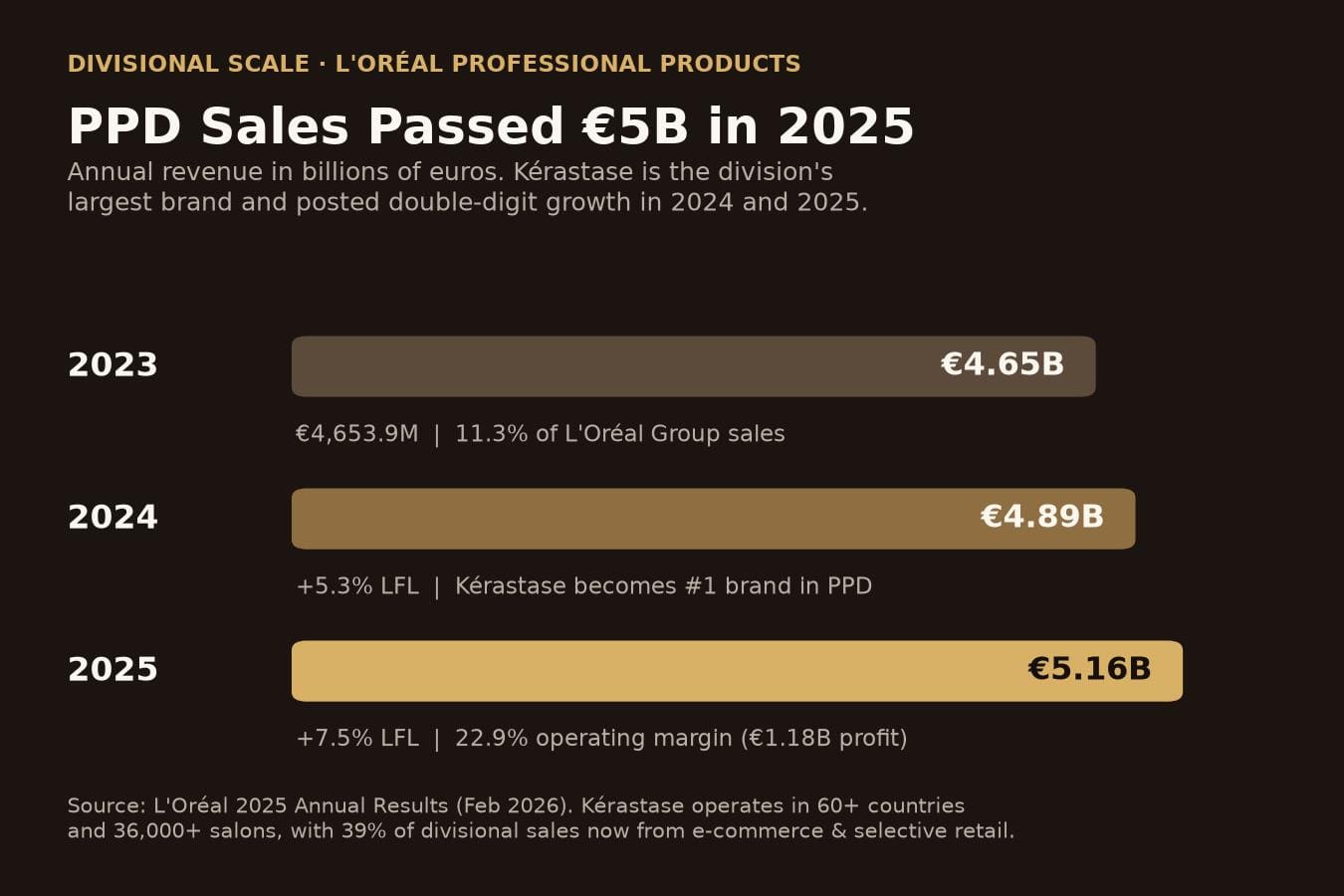
▲ L'Oréal Professional Products Division revenue crossed €5.16B in 2025, outpacing group-wide growth of +4.0% like-for-like. Source: L'Oréal 2025 Annual Results
Why does Kérastase's ownership structure matter for beauty brands?
For founders and brand strategists watching premium haircare, Kérastase's origin explains its moat. Because it was born inside L'Oréal rather than bought at scale, it had six decades of access to group-wide R&D—from bio-fermented actives to patented molecules and K-SCAN hardware—without sacrificing salon credibility.
Equally telling is how L'Oréal manages channel expansion without breaking luxury pricing. Professional Products still anchors its authority in 36,000+ partner salons worldwide, yet e-commerce and selective retail (such as Sephora and Douglas) now account for 39% of divisional sales. Tight distribution tracking and salon-first diagnostic rituals allow Kérastase to capture online volume while maintaining a 22.9% divisional margin. For K-beauty hair and scalp brands entering Europe or North America, the lesson is clear: clinical claims and premium pricing hold only when backed by a verifiable diagnostic ritual and disciplined channel control.