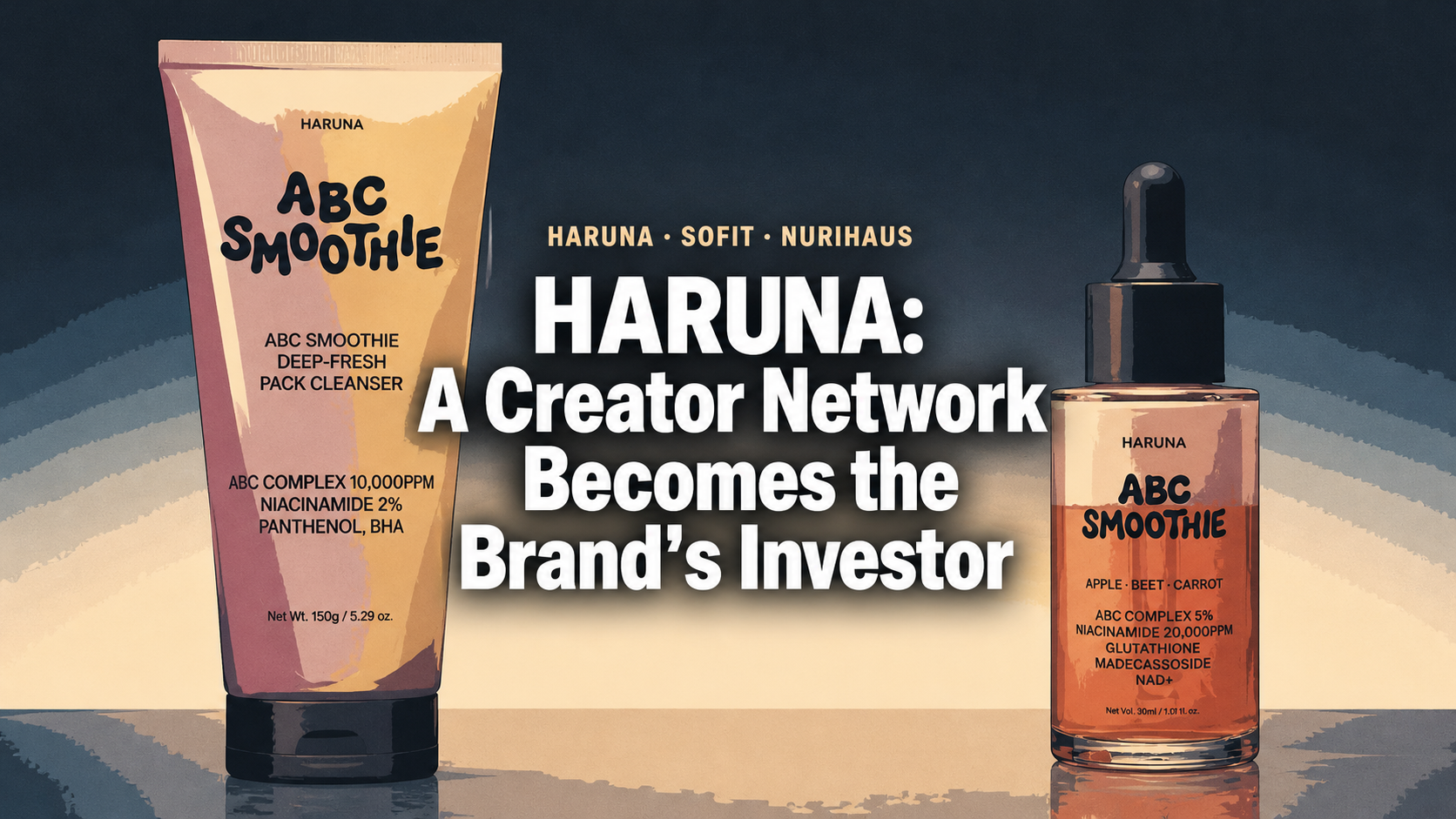
HARUNA began in 2026 as a body care brand made by SOFIT, a Seoul company that started in 2022 as a women's wellness shopping platform and grew into influencer marketing. On September 8, 2026, NURIHAUS, which runs a creator network with AI matching and overseas distribution support, made a strategic investment in the brand. The investor sells the same thing the brand most needs to buy. For an independent brand, that is a different kind of capital.
What did NURIHAUS actually invest in?
NURIHAUS invested in HARUNA, the wellness beauty brand SOFIT launched in 2026. The announcement frames the deal as more than financing. It combines SOFIT's consumer insight, brand building and influencer marketing with NURIHAUS's global creator network and distribution infrastructure. SOFIT owns the brand and the audience data, NURIHAUS owns the creator network and the channels, and HARUNA sits where the two meet.
NURIHAUS describes itself as a creator economy operating system company, meaning a platform that bundles a creator database, matching tools and campaign management in one place. It supports the overseas growth of K-beauty brands, and in 2026 it formed a K-beauty venture fund, the Helios Nuri Gongbang Venture Investment Fund I, to tie investments to its marketing and distribution platforms.
What kind of company is SOFIT?
SOFIT started in 2022 as a shopping platform built around women's wellness. It then widened into influencer marketing and brand growth work, and it now offers content strategy and production, influencer marketing, performance marketing and commerce. HARUNA is its own brand, built by a team whose business is selling for other brands. The result is a company that can run a client's marketing and, with HARUNA, test the same playbook on its own product.
That origin matters for what a brand like HARUNA starts with. The team arrived with more than 30,000 consumer reviews from its platform and a working relationship with influencers. A typical indie founder starts with a formula and goes looking for an audience. SOFIT started with an audience and went looking for a formula.
How do reviews become a product brief?
SOFIT says its reviews kept returning to the same concerns: dryness, loss of firmness and skin sensitivity. Founder and CEO Park So-hyun said that running the platform let her watch women's bodies and daily routines over a long period. The complaints she lists about existing body care are specific: stickiness after a shower, discomfort when pulling on clothes, a stuffy feeling when product mixes with sweat, and moisture that fades quickly.
Park reads those complaints as limits of product design, not of skin type. HARUNA's formulation is built around a polysaccharide from white tremella mushroom paired with hyaluronic acids of different molecular weights, aimed at a finish that is dry to the touch. Her stated aim is skincare that does not interrupt the flow of daily life, and she calls the result a lifestyle-integrated skincare brand.
Why body care before the face?
HARUNA launched as a body line. Face care follows in two phases: basic facial care in the first half of 2026 and a more segmented lineup in the second half. The ABC Smoothie facial line, built on a concept of apple, beet and carrot, is the next step.
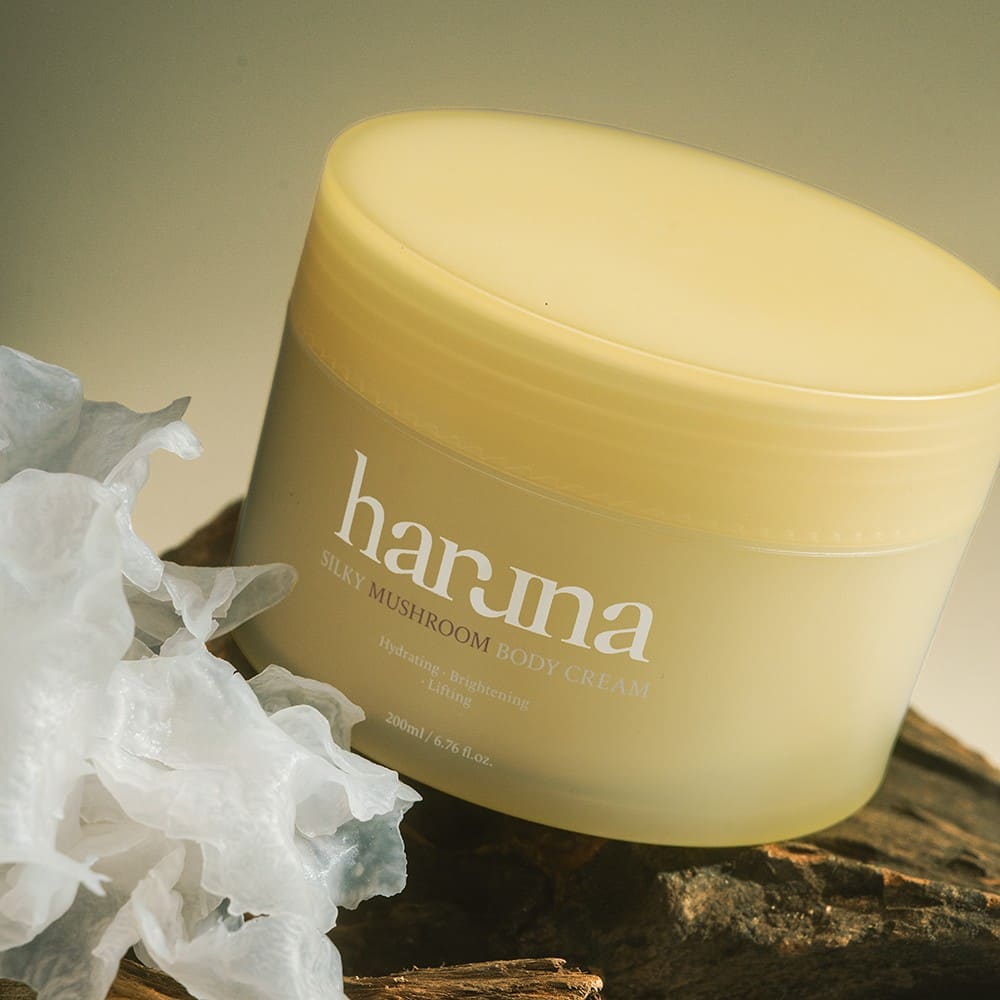
The order follows the founder's observations. Park's list of complaints is about body care, so the brand started there, and face care follows in the same year once the brand is in market.
Why would a creator platform take equity instead of a campaign fee?
A creator platform earns from campaigns. An investor earns from the brand's sales. The first is a vendor relationship that ends when the campaign does. The second makes the platform a stakeholder in what the creators sell.
For NURIHAUS, HARUNA also works as a showcase. The venture fund exists to link investments with the platform's marketing and distribution services, and a brand that grows through the platform is the best proof of what the platform does. The investor gets a portfolio company that doubles as a case study.
How did HARUNA reach an audience before the investor arrived?
Super Junior's Choi Si-won and Wonder Girls' Yubin shared the products on social media as organic exposure, not paid placement. In the first half of 2026, HARUNA was a wellness partner at the Morning Rave event that involved Ottogi, a Korean food company, and Hyoyeon of Girls' Generation.
A brand that shows up with a food maker and a pop star at a morning event is building a lifestyle position, and its message is built the same way: A Day for Me. The brand's plan treats beauty, fitness, food and music as one set of touchpoints.
The sequence is unusual. Most indie brands raise money first and buy attention later. HARUNA gathered attention first, through the founder's network and its event partners, and the investor arrived when the creator relationships already existed.
What does the ABC Smoothie line show about the roadmap?
The ABC Smoothie line is built on a concept the brand calls ABC COMPLEX, short for apple, beet and carrot. It includes a Glow Cream and Serum, and an upcoming Deep Fresh Pack Cleanser that works as a face pack on dry skin and turns into a cleanser when water is added and the product is massaged. Two steps become one product.
The naming borrows from food: Skin Smoothie is the umbrella concept, and more products are planned under it. That fits the Ottogi tie-up and the food touchpoint in the brand's plan. The line gives creators something easy to demonstrate on camera, and demonstration is what a creator network sells.
What does the North America plan change?
HARUNA plans to expand its skincare lineup, accelerate partnerships with global creators and pursue international distribution in phases, starting with North America. Park said the brand is meant to be built with a global consumer in mind from the beginning.
That sentence explains the investor. A brand that wants a global audience from the first product needs creators in each market, and NURIHAUS holds the creator database and the overseas channel support. The strategic investment turns an export plan into a partnership that already has the contact list.
The brand's list of touchpoints, which spans beauty, fitness, food and music, is a list of places creators already work.
What does this deal say about how indie brands get funded?
For a founder, the lesson is that the scarce input is attention, not capital. An investor who brings creators, matching tools and channels delivers more of the scarce input than the same sum in cash.
For a platform, the lesson is the reverse. Equity in a brand gives a platform a customer whose success it shares. Both sides gain in this structure, and both are now tied to the same sell-through.